
From the Editor-in-Chief
Governance exposes whether a politician can move from mobilisation to delivery, from grievance to growth, from winning power to using it

ISSUE DATE: May 25, 2026 | UPDATED: May 15, 2026 19:22 IST
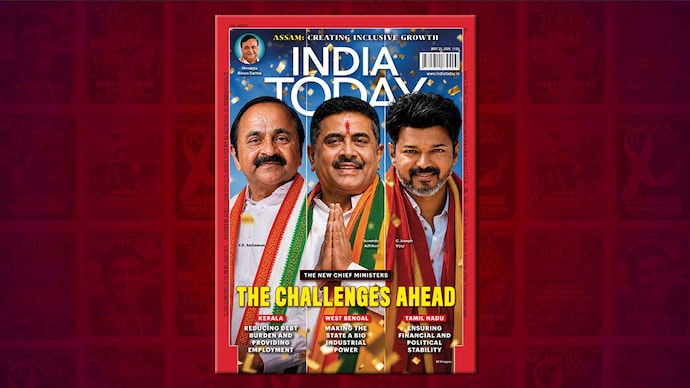
Elections have the capacity to bring a certain novelty to the political field, a reinvigoration that helps guard against stagnancy. The summer of 2026 fulfils that mandate, with India getting three new chief ministers. West Bengal has armed its first helmsman from the Bharatiya Janata Party (BJP), Suvendu Adhikari, with a decisive verdict. Tamil Nadu has handed actor Vijay a dramatic new role in public life. Kerala was made to huff and puff before the Congress high command settled on the face of its victorious campaign, V.D. Satheesan. Now, attention must shift to the real purpose of winning power: governance. Electoral rhetoric can win a mandate. It cannot create jobs, revive investment, repair institutions or balance the finances.
In Bengal, Adhikari’s first moves suggest clarity. He has spoken of restoring the distinction between party and administration. This line had almost disappeared under Mamata Banerjee’s autocratic rule, where even sections of the police functioned like party cadres. A key challenge before Adhikari will be to adhere to his word in practice, balancing ideology with the imperatives of governance. The BJP had promised to put national security front and centre in the state’s priorities. Adhikari duly transferred land to the BSF for border fencing, besides formally instating the Bharatiya Nyaya Sanhita, Ayushman Bharat and other central policies kept pending under Mamata. His biggest challenge, though, lies away from politics. It is to revive Bengal’s economy, the holy grail in vain pursuit of which many past chief ministers have lost their reputation. Bengal’s per capita income is about 20 per cent lower than the national average. That it has no jobs is clear to almost all parts of India: over 5 million Bengalis migrate out for employment. The debt burden is enormous at Rs 7.71 lakh crore. Foreign investment inflows are an appalling 0.7 per cent of India’s total. This is a legacy of a half-century in which flight of capital ruined Bengal’s productive capacities and left it with its own rust belt. It’s after a long period that the Centre and state will be governed by the same party. Hopefully, this opening is not frittered on low-hanging fruit or merely harvesting emotive issues. If the people adjudged the outgoing regime a failure, it is so that Bengal can exorcise its old ghosts and get some genuine industrial revival going.
In Tamil Nadu, ensuring stability is Vijay’s top priority. He seems to have sewn it together for now, winning a dramatic trust vote on May 13 after 25 AIADMK MLAs cross-voted to back the Tamilaga Vettri Kazhagam government. But the length of his honeymoon period will depend on how fast he learns on the job. His cinematic campaign was more form. Now, it’s time for substance. He must evolve a policy personality, build a serious team and create an effective implementation machinery. Since comparisons are drawn to MGR, he must remember that the late actor-politician, as well as his protge, J. Jayalalithaa, did not rule just by charisma. They gave administrative flesh to the Dravidian model of governance that, though much derided then, put the state on top on several indices.
In a sense, that itself constitutes a curious challenge for Vijay. What he inherits is not a broken state or merely a welfarist white elephant but one of India’s most industrialised economies, with robust manufacturing, healthcare and social infrastructure. An opening salvo against the Stalin dispensation for leaving him with “empty coffers” referenced one flaw: India’s highest absolute public debt at nearly Rs 10 lakh crore, even if with a manageable debt-GSDP ratio. Fiscal discipline will be necessary, but panic would be unwise. That Vijay will not yield to pure revenue-chasing was clear from one of his first moves: the shutting down of 700 public liquor outlets in the vicinity of schools and other sensitive locations. That is welcome. But he must reassure industry and citizens that ethical correction will not become administrative overreach. Tamil Nadu does not need a revolution against itself. It needs continuity with correction.
Kerala’s story will have to move from political management to fiscal management. Satheesan is well liked by the people and independent-minded in the way the late Marxist V.S. Achuthanandan was, and the consensus is the Congress has dared to make the right choice. Politically, he showed the skills that won him the election by outwitting a formidable rival with a head start, Rahul Gandhi loyalist K.C. Venugopal, in an extended accession battle. But the exchequer may yield less willingly. The fiscal imbalances are daunting, even if growth is reasonably robust. Public debt is nearly a quarter of GSDP. A persistent revenue deficit means the state must borrow for routine expenditure. Salaries, pensions and interest consume two thirds of its cash in hand, leaving scant room for capex. Satheesan needs to be creative.
The new chief ministers have earned their mandates. Himanta Biswa Sarma in Assam, whose authority remains undiminished, has earned his own challenge: of converting dominance into deeper development.
Elections test stamina, organisation and instinct. Governance tests something harder. It exposes whether a politician can move from mobilisation to delivery, from grievance to growth, from winning power to using it. This week’s cover story examines leaders at that point of transition. Their campaign is over. Their real test has just begun.
- Ends