
Karan Johar's love letter to Indian art, legacy and friendship after Met Gala debut
Karan Johar said his Met Gala debut was a deeply personal moment shaped by Raja Ravi Varma's legacy. In a post on social media, the filmmaker said the appearance placed Indian art, culture and storytelling before a global audience.
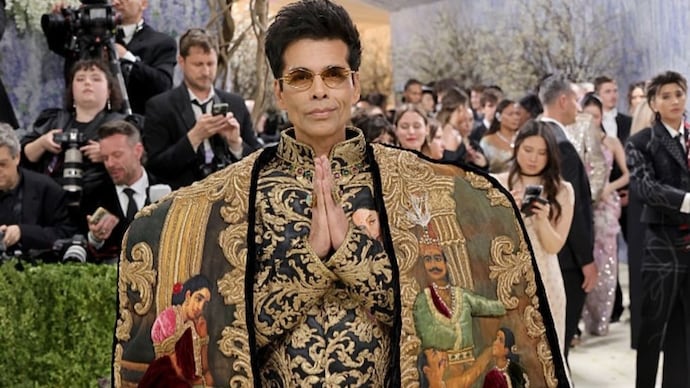

Filmmaker Karan Johar said his 2026 Met Gala debut was a deeply personal and symbolic milestone, describing it as a moment that reflected not only his own journey but also India’s artistic legacy on a global stage.
In a note shared after the event, Johar said the appearance was about more than fashion. Drawing inspiration from celebrated Indian painter Raja Ravi Varma, he said he wanted to bring the artist’s work alive in motion and present Indian art, heritage and storytelling to a worldwide audience.
Calling the moment a full-circle experience, Johar wrote, “From loving cinema and costume as a wide-eyed dreamer to standing on the steps of THE Met Galalife really does come full circle in the most unexpected ways. This moment wasn’t just about fashion for me. It was about storytelling. About taking the legacy of Raja Ravi Varma and letting it live again this time, not on canvas, but in motion. To representing India and our culture, our art and our storytelling on the global ‘steps’ (sic).”
He also described it as a proud moment for the country and underlined the importance of showcasing India’s culture and creativity on a platform like the Met Gala. Johar thanked designer Manish Malhotra, saying their three-decade friendship and collaboration had continued to create firsts together.
He wrote, “Thirty years of friendship and collaboration with Manish Malhotra and still creating firsts together - so grateful to you and your team for this core memory.”
Karan Johar's Met Gala look
For his Met Gala debut, Johar wore a heavily embroidered black bandhgala with matching trousers. The centrepiece of the ensemble was a cape inspired by Raja Ravi Varma’s work, translating the painter’s vision into fabric. The look drew from paintings such as Hamsa Damayanti, Kadambari, and Arjuna and Subhadra, and brought together hand painting, 3D sculpting, quilting and traditional zardozi embroidery.