
Aishwarya Rai's Cannes poster absence was bound to sting. Outrage over it is valid
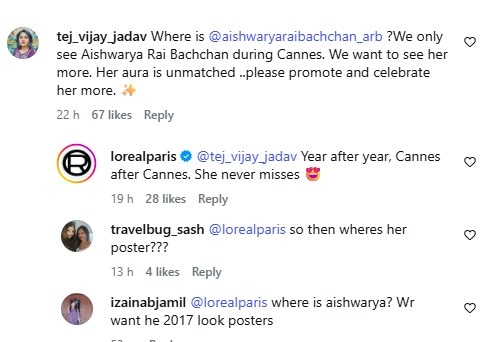
Aishwarya Rai Bachchan's absence from L'Oreal's Cannes banners has triggered outrage on the internet. And while it may look like a case of just a face missing from the promotional materials, it is far more layered and deeply emotional. Because, Aishwarya at Cannes is not just red-carpet fashion for India.

Aishwarya Rai Bachchan at Cannes 2019 (Photo: AFP)

New Delhi,UPDATED: May 14, 2026 13:50 IST
Aishwarya Rai Bachchan does not appear on a banner for a makeup brand she has represented for over two decades, and suddenly the internet erupts. You could argue that the outrage is excessive. After all, it is just a beauty brand's poster, so why should anyone care? Is missing from an advertisement really such a big deal?
But the reaction is not just about a poster at a luxury hotel in Cannes. It is about legacy, memory and cultural association. And in this case, the outrage is entirely understandable. Even valid.
Aishwarya is not just another celebrity ambassador. She is, in many ways, India's original global beauty icon.
She was already there -- in the West, being adored, representing Indian culture, cinema and beauty -- long before Indian actors became regulars at international fashion weeks, luxury campaigns and Hollywood parties. She was the face people associated with Cannes itself long before social media turned the festival into an annual Bollywood content factory.
For an entire generation growing up in the 2000s, Cannes was not first understood through cinema politics or European arthouse culture. It was understood through Aishwarya Rai Bachchan walking the red carpet.
And we are not talking about cinema-literate audiences like me, whose job revolves around films, or you, who clearly has some interest in cinema if you are reading this piece. We are talking about a generation that grew up without global networking, Instagram feeds or easy internet access for most of their lives. For them, Aishwarya was their only connection to Cannes.
Now, why that is also sad in many ways -- because Cannes is fundamentally a cinema platform, not a beauty pageant or fashion spectacle -- is a different discussion altogether. But that conversation can wait.

The point is: this relationship did not happen overnight. Aishwarya built it over years of consistency, visibility and cultural impact.
After winning the Miss World 1994 title, Aishwarya quickly became one of India's most recognisable international faces. But Cannes changed something bigger.
In 2002, she arrived at the Cannes Film Festival alongside Shah Rukh Khan and Sanjay Leela Bhansali for the premiere of Devdas. The images from that year became historic. It was one of the first moments modern Bollywood truly entered the global red-carpet conversation.
A year later, she became a global ambassador for L'Oreal Paris and also the first Indian actor to serve on the Cannes jury. That mattered then. It matters today. It signalled that Indian representation at Cannes was not merely ornamental. It had arrived institutionally.
And then came the years that followed: the gold Neeta Lulla sari, dramatic gowns, over-the-top makeup looks, the purple lipstick moment that broke the internet before "breaking the internet" was even a thing, and the appearances with her daughter Aaradhya that slowly became annual photo traditions. Even in the years when fashion critics mocked her outfits, people still waited for her Cannes appearance with curiosity and excitement.
Aishwarya at Cannes has been ritualistic for Indians. That is what many brands misunderstand in the age of rotating ambassadors and social-media metrics: some celebrities endorse products, some become inseparable from the identity of the brand itself.
For many Indians, L'Oreal Paris became emotionally familiar because of Aishwarya. She could simply say, "Because you are worth it," but the way she said it became part of our collective pop-culture memory.
And then there was the larger issue of representation. Aishwarya, often described as one of the most beautiful women in the world, became an aspirational Indian beauty face at a time when global beauty campaigns rarely centred on Indian women. In many ways, she made Indian audiences feel included in a world that otherwise felt distant, exclusive and overwhelmingly Western.
This is exactly why her absence from the giant Cannes banners this year felt jarring to many people, and not just to her fans.

The posters did feature newer ambassadors like Alia Bhatt alongside international names such as Viola Davis, Eva Longoria and Helen Mirren. But the issue was never about pitting one woman against another. It was about sidelining the one person most audiences instinctively associate with the brand's Cannes history in India.
You may call the backlash emotional. We would argue it had to be. Why? Because it does hit emotionally. These are not merely consumers upset over a marketing decision. These are people reacting to what feels like a cultural chapter being casually pushed aside.
Some associations go beyond contracts. Aishwarya Rai Bachchan may be one of L'Oreal Paris's ambassadors on paper, but to many Indians, she is the Cannes story.
- Ends