
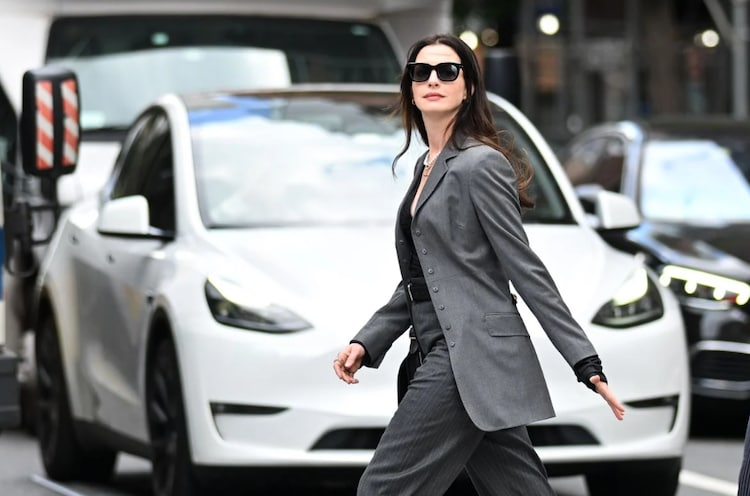
The Devil Wears Prada returns after 20 years. Here's why it shouldn't have
The Devil Wears Prada 2 banks on nostalgia but, unlike the first film, is no cultural landmark. The sequel touches upon several contemporary topics, though only superficially.
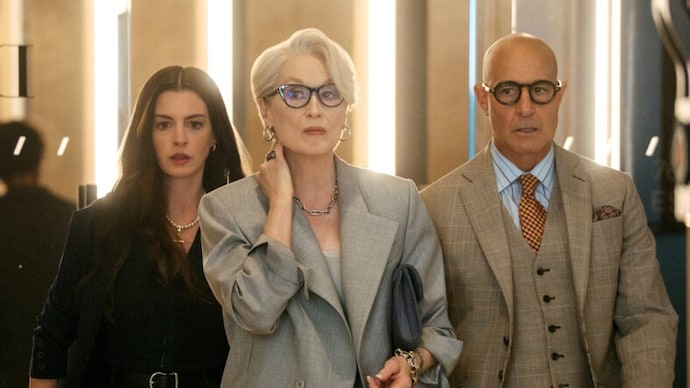
The Devil Wears Prada 2 released in theatres on May 1, 2026.

New Delhi,UPDATED: May 8, 2026 18:16 IST
Nearly two decades after The Devil Wears Prada became a cultural landmark, its so-called sequel arrives not with purpose, but as nothing more than just a cash grab.
The Devil Wears Prada 2 leans heavily on nostalgia, banking on audiences who grew up idolising Runway magazine and fearing Miranda Priestly. But instead of building on that legacy, it reduces it to a hollow, profit-driven exercise designed to squeeze one last drop out of a globally loved property.
On paper, the premise sounds timely. Print journalism is dying. Magazines are shrinking. Gen Z is entering newsrooms. Cancel culture is shaping conversations. It’s all very 2026.
But the film doesn’t explore these ideas, it only skims them.
It wants to feel relevant without doing the work.
Miranda Priestly, once the embodiment of power and precision, is now written as a shadow of herself. This is a character who once commanded rooms with a glance, now reduced to someone navigating corporate constraints that strip her of authority. The film confuses vulnerability with dilution. In trying to humanise her, it dismantles everything that made her iconic.
Watching Miranda hang her own coat or fly economy is unbelievable and unrealistic. Are we really expected to believe the editor of the world’s biggest fashion magazine can’t afford business class on her own terms? This is just lazy writing disguised as relatability.
Then there’s Andy Sachs, whose arc feels almost frozen in time. Twenty years later, there is little to no meaningful evolution. The woman who once chose integrity over ambition is given nothing new to say, no new ground to cover.
And that’s where the film falters the most. It gestures at big, complicated shifts without ever unpacking them.
The decline of print media is reduced to budget cuts.
Stricter HR policies appear without context.
Gen Z’s influence is treated like a buzzword rather than a cultural shift.
And the transformation of journalism into a clicks-driven industry is barely scratched at.
These were supposed to be the defining changes of the last two decades. But the film treats them like set dressing.
The result is a story that screams underdeveloped as it tries to say everything, and ends up saying nothing.
In the real world, fashion journalism has evolved in far more complex ways than the film acknowledges. The way authority operates today looks different from what it did 20 years ago. Editors are no longer the only gatekeepers, but that doesn’t mean influence has disappeared. It has moved to new platforms, new people, and new systems. The film doesn’t seem to understand this shift in any meaningful way.
The original Devil Wears Prada worked because it was specific. It understood ambition, hierarchy, and the cost of success. This sequel, on the other hand, feels like it was assembled by viral reel makers, chasing trends rather than telling a story.
Some films deserve a second act.
This wasn’t one of them.
- Ends