
This man-made algae tree can suck as much carbon dioxide as 25 trees. What is it?
The Algae Tree can work with actual trees by offering an extra tool for improving air quality in crowded city spots like parks, markets, or roadsides.
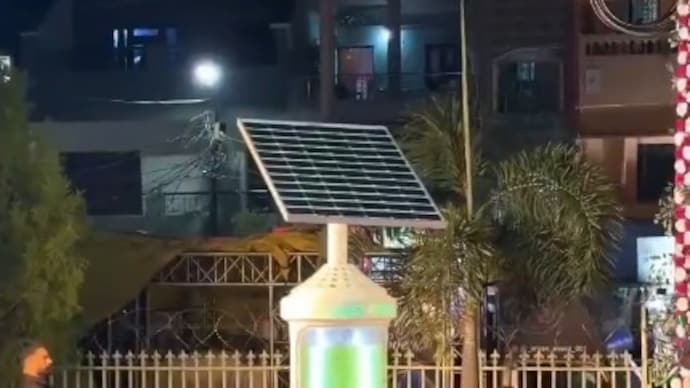

A glowing green cylinder now stands in Swami Vivekananda Park in Bhopal, and it's India’s first algae tree, a solar-powered device that uses tiny algae to help fight air pollution.
The tree was recently inaugurated in the park by local officials and the Mushroom World Group, garnering the attention of the locals towards the innovative and potentially game-changing move against climate change.
But what really is this algae tree, and how does it work?
WHAT IS ALGAE TREE?
Let's start with the fact that an algae tree is not a real tree.
It is a tall, specially built tank filled with water and millions of microscopic algae, and is powered by a number of solar panels on top. Using the Sun, the tank powers its lights, pumps, and sensors inside the system.
As it functions, air from the surroundings is drawn into the tank, where the algae use sunlight to grow. As they grow, they take in carbon dioxide and release fresh oxygen, similar to how plants work in nature.
Furthermore, the device also helps trap small dust particles in the air, and can potentially alleviate the situations in various cities across India dealing with dust pollution.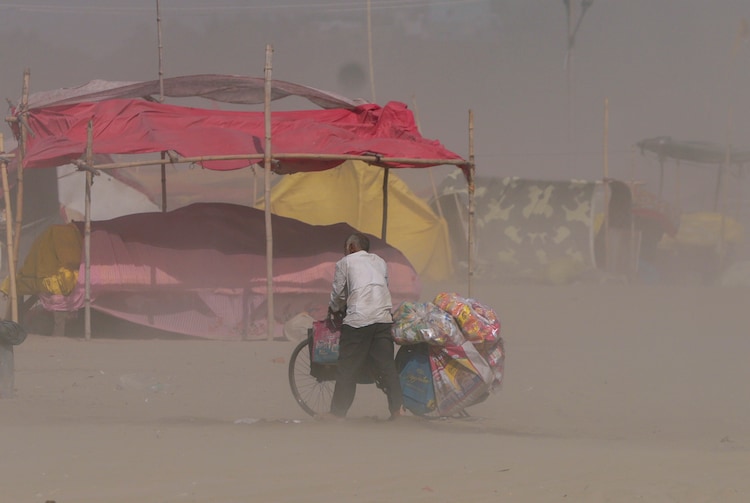
The tree has intentionally been designed as a compact unit that needs very little space and can run on solar energy, making it suitable for busy urban areas.
Despite the innovation, the tree is not without limitations. Without sunlight, the process of photosynthesis would slow significantly, affecting its functions. The system, however, includes LED lights and battery backup for partial operation.
HOW CAN ALGAE TREE HELP?
According to the developers, one Algae Tree can absorb roughly as much carbon dioxide as 20 to 25 mature trees, which is about 1.5 tonnes of CO2 per year. It works especially well in places with high traffic or limited space for planting real trees.
This invention is meant to support, not replace, traditional trees, as real trees are still essential for keeping the soil healthy and providing shade during hot days.
The algae tree, on the other hand, can work in tandem with actual trees by offering an extra tool for improving air quality in crowded city spots like parks, markets, or roadsides. Bhopal, the place where the tree is placed, could make use of the benefits.
Bhopal currently experiences moderate air quality, with AQI levels typically ranging from 50 to 150.
PM2.5 and PM10 are the main pollutants, and often remain elevated due to traffic, construction, and seasonal dust. The tree aims to help tackle this by capturing CO2 and particulates locally. The tree also includes monitoring systems that will track its performance.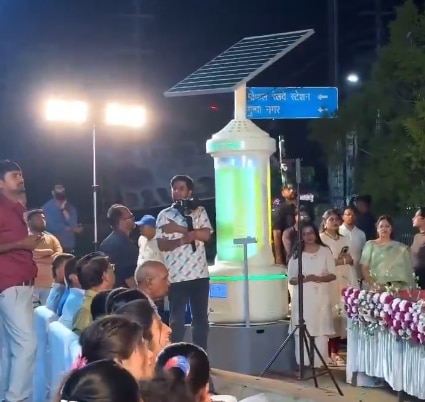
The Mushroom World Group said it took nearly two years to develop the technology, with a team of over 50 experts, researchers, and engineers working on it.
The company also plans to install it in public spaces, institutions, and busy areas of other cities in the future.
Inputs by Dharmendra Sahu