
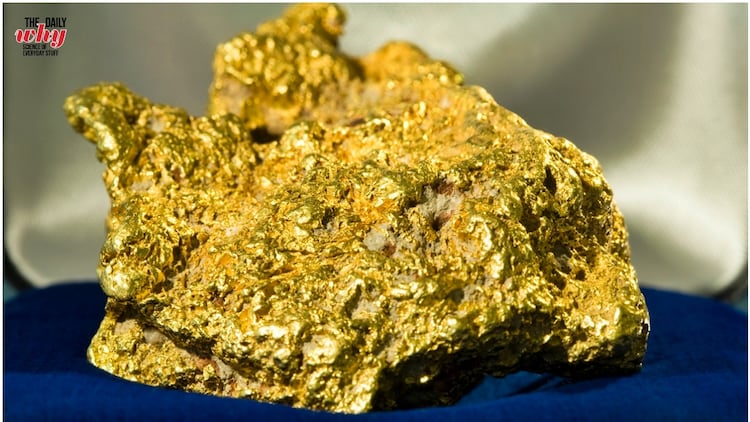
PM Modi warns against buying gold. But, why does it last forever and never rust?
Prime Minister Narendra Modi has urged Indians to avoid buying gold for a year as oil prices rise and the rupee faces pressure. The appeal clashes with gold's enduring appeal, rooted in its chemical resistance to rust and corrosion.
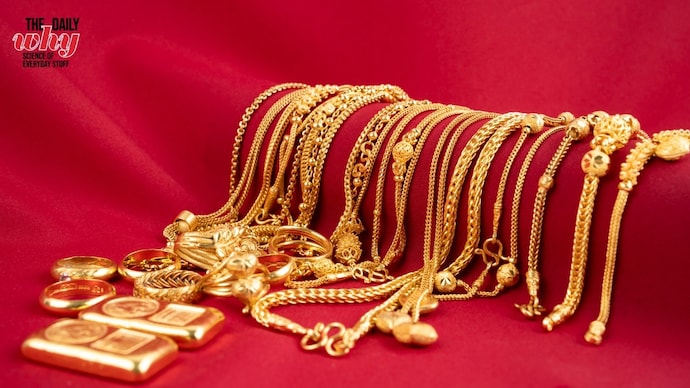
India, the world’s second-largest consumer of gold, imports nearly all the gold it uses. (Photo: Getty)

New Delhi,UPDATED: May 25, 2026 11:34 IST

Prime Minister Narendra Modi recently urged Indians to avoid buying gold for a year as the country battles rising oil prices, pressure on foreign exchange reserves and a weakening rupee amid global geopolitical tensions.
The appeal comes at a time when gold prices in India have surged to record highs, with 24-carat gold trading near Rs 1.61 lakh per 10 grams in parts of the domestic market, while international bullion prices continue climbing as investors rush toward safe-haven assets.
India, the world’s second-largest consumer of gold, imports nearly all the gold it uses. With crude oil prices soaring due to disruptions linked to the Iran conflict and the Strait of Hormuz crisis, New Delhi fears a dangerous outflow of dollars. Gold imports alone touched nearly $72 billion in the last financial year, worsening pressure on the rupee and India’s trade balance.
Yet despite repeated calls to delay purchases, gold’s appeal remains almost impossible to erase. The reason lies not just in culture or investment psychology, but deep within chemistry itself.
WHY GOLD LASTS FOREVER AND NEVER RUSTS
Gold is one of the least reactive elements on Earth. Unlike iron, which reacts with oxygen and moisture to form rust, gold barely reacts with air, water, acids or most chemicals. This extraordinary stability comes from its atomic structure.
Chemically known as Au from the Latin word aurum, gold has 79 protons packed inside its nucleus.
Its outer electrons are arranged in a way that makes them unusually stable. In simple terms, gold’s electrons are held so tightly that oxygen molecules in the atmosphere struggle to steal them away and trigger corrosion.
Rusting is essentially a chemical reaction called oxidation. Iron atoms lose electrons to oxygen, producing iron oxide, the flaky reddish-brown material known as rust.
Gold resists this process because it does not easily give up electrons. Scientists classify it as a “noble metal,” a group of metals famous for resisting corrosion and tarnish.
Even water and humidity fail to affect gold significantly. Ancient gold coins recovered from shipwrecks and tombs often emerge shining after spending centuries underwater or buried underground. Archaeologists have found Egyptian gold artefacts more than 3,000 years old that still retain their brilliance.
Gold’s resistance is so powerful that it dissolves only in a rare chemical mixture called aqua regia, a combination of nitric acid and hydrochloric acid strong enough to break apart its stable atomic bonds.
This near-eternal nature is precisely why civilisations across history treated gold as a store of wealth during uncertainty.
In periods of war, inflation or currency weakness, investors worldwide still rush toward the yellow metal because, unlike paper currencies or industrial commodities, gold does not decay, corrode or disappear.
And as global markets tremble once again, chemistry may be proving stronger than government appeals.
#TheDailyWhy
- Ends