
Older than Harappa: Archaeologists discover 5,000-year-old man-made island
The discovery is exciting not just for what it tells us about ancient engineering, but also for the new ways it shows us how to study underwater sites.
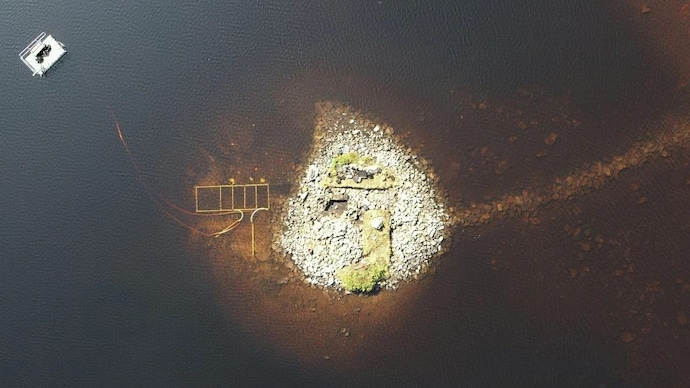

Archaeologists have uncovered the hidden wooden foundations of a 5,000-year-old artificial island in a Scottish loch, revealing the remarkable building skills of prehistoric people.
The discovered site in Loch Bhorgastail on the Isle of Lewis shows that ancient humans were creating these special islands much earlier than previously thought.
AN UNDERWATER DISCOVERY
At first glance, the small island looks like an ordinary pile of stones in the water. But scientists from the University of Southampton found much more when they looked closer.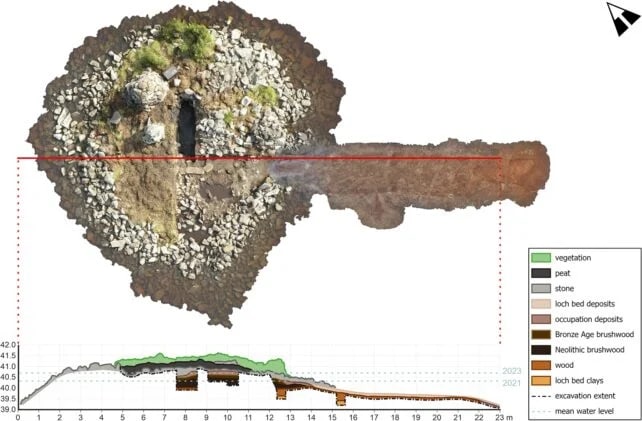
Beneath the stones lies a large circular wooden platform, about 75 feet wide. Prehistoric builders carefully laid down timbers and topped them with brushwood, like a thick mat made of twigs, to create a strong base.
They built this around 5,000 years ago during the Neolithic period. Later, around 2,000 years after that, people added more layers and covered it with stones. Archaeologists believe that a stone path once linked the island to the shore.
These artificial islands are known as crannogs and while hundreds exist across Scotland, many are thought to be much younger.
This new evidence proves some were first built between 3800 and 3300 BCE.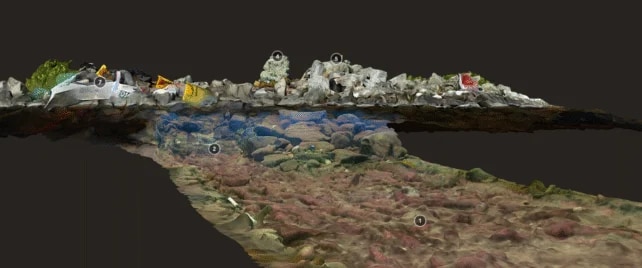
SCIENCE REVEAL SECRETS
For years, people had known about the stone island and pieces of ancient pottery found in the surrounding water.
These broken bowls and jars hinted at human activity long ago, but understanding the full story was difficult because much of the structure sits underwater in shallow, murky conditions.
To solve this, the team used certain photography methods.
A diver swam with special cameras to create detailed 3D models of the underwater parts. This helped the team to plan careful excavations.
On executing their plan, they found that the land and water sections formed one continuous structure.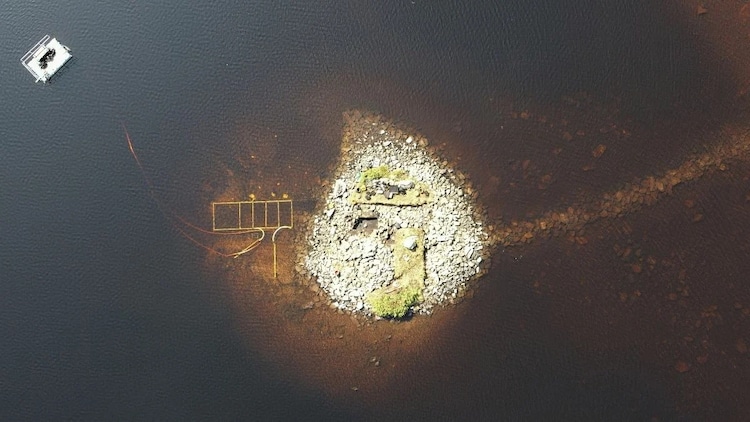
Furthermore, radiocarbon dating confirmed the ancient age of the wooden timbers, confirming the ancient origin and offering the discoverers a rare window into the distant past.
This crannog was likely an important place for the people who built it. The scattered pottery suggests it may have been used for gatherings, meals, or special events over many centuries, though its exact purpose remains unclear. Experts also believe that the artifical island probably served communities well for a very long time.
The discovery is exciting not just for what it tells us about ancient engineering, but also for the new ways it shows us how to study underwater sites.
It reminds us that humans have been shaping their environment with creativity and skill for thousands of years and adds a fascinating new chapter to humanity's prehistoric story.