
 Handcrafted ByOur Editors
 Pixxel-perfect moonshot, this Bengaluru startup aims to match SpaceX and NASA
For several Indian startups, space is the next frontier. And of these, Pixxel, and its team led by CEO Awais Ahmed, is firmly focused on creating a company that can not only serve consumers across the world but also India's strategic needs for sovereign space technologies.
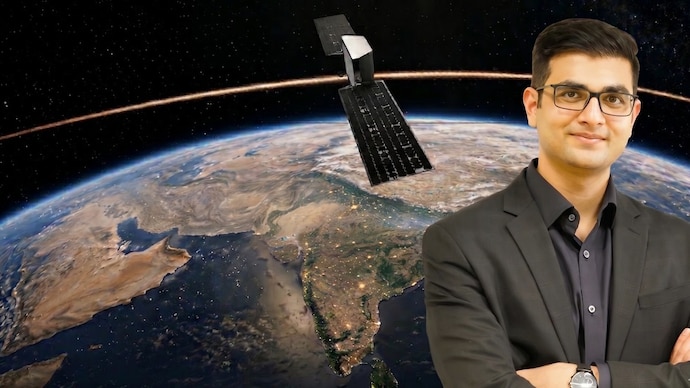

"Shoot for the moon. Even if you miss, you’ll land among the stars." It is a cliche plastered on motivational posters worldwide. But it’s not every day you meet a team that takes these words literally, building a startup dedicated to launching advanced satellites into orbit. This is the story of Pixxel and its CEO and co-founder Awais Ahmed.
This Indian startup recently made buzz when it announced it was working on creating space-based AI data centres in partnership with Sarvam AI. It’s a moonshot but Pixxel is taking it because dreams and moonshots have defined the company’s story so far.
The story begins on Earth, amid the rolling hills of Chikmagalur, a quiet region in Karnataka famous for its lush coffee plantations. Growing up five hours away from India's Silicon Valley, that is Bengaluru, Ahmed’s early world was defined by agriculture, weather patterns, and the steady rhythm of nature.
Years later, that same boy from the coffee hills is leading a revolution that bridges the vastness of low-Earth orbit with cutting-edge artificial intelligence. Pixxel is no longer just a promising startup. It is the architect of India's first-ever private satellite constellation launched outside of the Indian Space Research Organisation (ISRO).
Through a partnership with foundational AI developer Sarvam AI, the company is now building what Ahmed calls a “planetary intelligence layer” – a sovereign, India-based orbital eye capable of monitoring the Earth's vital signs in real time.
From coffee beans to Hyperloop pods
“We started Pixxel seven years ago,” Ahmed tells India Today Tech. “I come from Chikmagalur. I grew up and studied there until the 12th grade, and then went to BITS Pilani for my undergraduate studies.”
It was during his university years that Ahmed’s interests shifted from traditional engineering to frontier technology. He threw himself into highly-demanding extracurriculars, joining the university’s student satellite team and later spearheading the Hyperloop India team as its head of engineering and manufacturing. Under his leadership, the group constructed India’s first-ever Hyperloop pod, earning an invitation to Los Angeles to present their prototype directly to Elon Musk and the SpaceX engineering team.
The experience was a turning point. Standing inside the SpaceX headquarters, surrounded by the physical manifestations of modern aerospace ambition, Ahmed realised his true calling.
“It was actually right there at the SpaceX headquarters that I decided I wanted to build something in space technology, one way or another,” Ahmed says.
After returning to India, Ahmed and his co-founders began looking for unsolved problems within the space ecosystem. It did not take them long to find one. While global giants like Planet Labs had successfully commercialised standard optical imagery, they were only capturing what the human eye could already see. Whereas the most catastrophic environmental and industrial crises – think early-state crop infestations, underground pipeline leaks, and marine oil spills – remained invisible to standard RGB cameras.
“We made a very simple observation: a lot of critical things we need to see from space are currently invisible to regular cameras,” Ahmed explains. Just like when humans break a bone, you can't use a normal camera to see the fracture, you have to go further along the electromagnetic spectrum using X-rays. “Similarly, we needed an instrument for our planet that could see the unseen.”
The solution was hyperspectral imaging. Instead of splitting light into three primary colour bands (red, green, and blue), hyperspectral sensors divide the electromagnetic spectrum into hundreds of narrow, continuous bands. This allows satellites to capture the unique chemical fingerprint of every object on Earth. When Ahmed looked at the global landscape, he noticed that no commercial entity was deploying this technology at scale. The name for their venture became obvious. Hence, they named it Pixxel.
“Pixels are the fundamental building blocks of any image,” Ahmed says. “Since we were imaging the planet through hyperspectral pixels, a pixel was the literal building block of our data. The name just made sense.”
Uncharted territory
Starting a hard-tech space company in India seven years ago was not easy, or so they say. The domestic venture capital landscape was overwhelmingly focused on consumer software, e-commerce, and SaaS (Software as a Service). Deep tech, requiring millions in capital expenditure before a single byte of commercial data could be generated, was viewed with intense skepticism.
“Today, if you start a deep tech company, there are plenty of venture funds willing to back you, ample government grants available, and a public sector more open to procuring services from startups,” Ahmed notes, contrasting the current era with his early struggles. “That wasn't the case seven years ago.”
But fortune favoured the brave in this case. The Pixxel team was accepted into Techstars in Los Angeles, an elite, space-focused accelerator operating in partnership with NASA, the US Air Force, and Lockheed Martin. Selected as one of only ten companies globally, the experience provided the young founders with a blueprint for how global space companies scale. That experience is also probably the reason why Pixxel recently became one of the very few companies based outside the US to get a contract from National Reconnaissance Office, a secretive and technologically-advanced US military division.
Armed with international validation, Pixxel team returned to India and secured a $700,000 pre-seed round, raised primarily from supportive BITS Pilani alumni who viewed the contribution as philanthropy. True to their lean engineering roots, the team poured over 90 percent of that capital directly into physical hardware development, that is building a satellite.
Achieving escape velocity
Between 2021 and 2022, Pixxel launched three pathfinder satellites, successfully proving that commercial-grade hyperspectral imaging could operate reliably in the harsh environment of space. The data streaming back from these early assets allowed Pixxel to cross the most difficult challenge in the space industry: moving from theoretical promises to proven, orbital execution.
“The biggest inflection point for any space company is moving from pre-launch to post-launch,” Ahmed states. “Showing we could deploy three satellites in quick succession, with each iteration outperforming the last, gave investors the confidence to back our $27 million Series A round, led by Radical Ventures.”
With their Series A capital secured, Pixxel scaled. The company deployed six commercial satellites, completing phase one of its orbital network. This feat marked a historic milestone as India's first private satellite constellation operating independently of the state.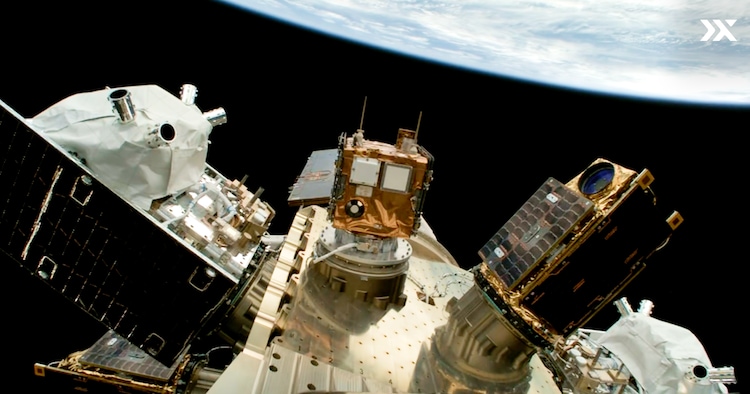
Rather than relying on localised pilots, Pixxel is now supplying commercial datasets to international clients at scale. Crucial to this scaling has been Pixxel's evolving relationship with ISRO. Rather than viewing the state space giant as a competitor, Ahmed views them as an essential partner. ISRO’s decades of frugal innovation and engineering excellence served as an ideological and logistical blueprint for Pixxel.
“ISRO excels deeply at core research and development,” Ahmed says. “However, over the last two decades, they also had to take on commercial execution burdens. As the Indian Space Research Organisation, their primary mandate should be long-term space exploration – sending missions to the Moon, Mars, and Venus, or managing human spaceflight programs like Gaganyaan. Private companies like Pixxel are stepping up to handle the commercial market, allowing ISRO to focus heavily on pure R&D.”
Today, Pixxel designs, builds, and operates its hardware entirely in-house, but utilises ISRO's world-class testing infrastructure and relies on the iconic Polar Satellite Launch Vehicle (PSLV) to ride into orbit. Moreover, Pixxel's advisory board and engineering teams are staffed heavily by ISRO veterans, ensuring that decades of cumulative Indian space heritage flow directly into the startup's DNA.
Space is the next computing frontier
As Pixxel expanded its presence in low-Earth orbit, another technological revolution was brewing on land in parallel. AI arrived. ChatGPT became a household name. The explosive growth of generative AI has triggered an unprecedented global scramble for compute infrastructure.
The modern AI boom is forcing a significant reimagining of where data is processed. Terrestrial data centres are hitting severe bottlenecks, facing intense regulatory delays, localised community pushback, and immense energy constraints. This terrestrial gridlock has caused major global tech firms to look upward, investigating the viability of orbital data centres. From Google to Amazon, everyone wants to build AI data centres that orbit the Earth.
Ahmed views the trend towards space-based data centres not just as a business opportunity, but as a critical geopolitical imperative for India. “Historically, naval dominance defined a nation's geopolitical influence, which later shifted to air power,” Ahmed argues. “Now, that frontier is space. Countries that want to maintain a serious geopolitical stance in the coming decades must own indigenous space infrastructure.”
As India marches toward becoming the world's third-largest economy, Ahmed insists that sovereign space infrastructure – combining advanced imaging, independent navigation, and in-orbit compute – is a strategic necessity. If global powers are developing orbital data centres, India must establish its own footprint to maintain data sovereignty.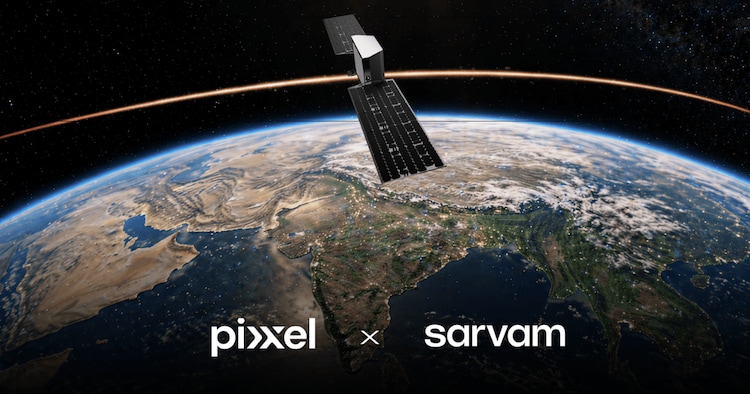
This pursuit of localised, independent technology underpins Pixxel’s recent partnership with Sarvam AI. The collaboration is built on a shared conviction: true national security and technological self-reliance require owning both the data collection hardware and the intellectual software layer processing it.
“We have always relied heavily on deep learning and traditional computer vision models for our geospatial data analytics,” Ahmed says. “Where Sarvam AI comes in is their focus on sovereign foundational models. It is crucial for India to own the stack – building, training, and operating models natively.”
The collaboration between the two companies will begin with a dedicated pathfinder satellite slated for launch later this year. Ahmed views this synergy as a merging of two parallel, world-class trajectories. “We aim to be global leaders in the private satellite imaging sector, and they are on track to be leaders in the foundational AI space. Bringing those two trajectories together feels like a very natural synergy,” Ahmed says.
An eye in the sky, serving India
The convergence of hyperspectral imaging and sovereign edge AI is driving Pixxel toward its ultimate goal: the creation of a comprehensive Planetary Intelligence layer.
Over the next four years, Pixxel’s roadmap involves deploying an additional 18 to 24 satellites, maintaining a continuous launch cadence through 2028 and 2029. This expanded fleet will consist of a mix of Pixxel’s own commercial data-gathering assets and bespoke satellites built under contract for private enterprises and government agencies.
For Ahmed, the idea of “Planetary Intelligence” is a leap in how humanity manages its relationship with Earth. “We view Planetary Intelligence as artificial intelligence applied to the holistic upkeep of the Earth,” Ahmed explains. “Just as a human goes to a doctor for a regular diagnostic checkup or blood panel, we want to provide a real-time health dashboard for the entire planet.”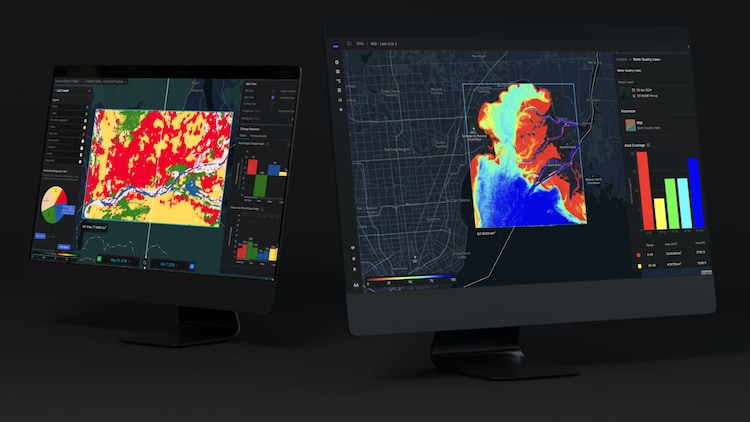
While environmental preservation forms the core of Pixxel’s public-facing mission, the reality of modern geopolitics means that sovereign space infrastructure is inextricably linked to national security. India has somewhat lagged in the deep-tech defence systems relative to the US and China. Pixxel is helping bring about a change.
The company is already integrated into India’s national security apparatus, focusing heavily on defensive monitoring, border surveillance, tracking illegal infrastructure developments, and monitoring maritime activities across critical sea lanes. Pixxel is currently constructing a dedicated, specialised satellite for the Indian Air Force under a formal contract with the Ministry of Defense.
“India absolutely possesses the foundational ingredients to be a leader here,” Ahmed says, assessing the country's strategic position. “We are learning that we must develop sovereign capabilities across the board. We have to collaborate domestically to bridge the gaps.”
The story of Pixxel is just one of many in India’s private space sector. Inspired by what Elon Musk and SpaceX have achieved, there are a number of Indian startups that have made space the final frontier for their business and technological goals.
Change is in the air. The primary barriers to execution of startups like Pixxel are no longer regulatory. The chaotic landscape that Ahmed navigated seven years ago has been replaced by a streamlined, highly supportive policy ecosystem. The introduction of the formal Indian Space Policy and the establishment of IN-SPACe as a single-window regulatory clearinghouse have transformed India into one of the most forward-thinking nations for enabling private space ventures.
With regulatory hurdles largely cleared, at Pixxel, the team’s focus remains squarely on execution. When asked if his relentless drive, focus on vertical integration, and rapid prototyping are modelled after Elon Musk’s style of working, Ahmed answers with characteristic nuance.
“For anyone who went through engineering school around 2014 or 2015, what Musk has accomplished with SpaceX and Tesla from a first-principles engineering perspective is undeniable,” Ahmed says. “(But) my inspiration is less about the individual public persona and far more about emulating the relentless velocity, operational culture, and scale of the organisation they built."
Yet, Ahmed rejects the label of simply trying to build the “SpaceX of India.” His ambitions are distinct, localised, and global all at once.
“We want to build the first Pixxel for the world,” he says. “SpaceX is executing their vision beautifully. We are focused on executing ours. They are a great benchmark for civilisational-scale ambition, but we are taking a fundamentally different technological approach to solve critical planetary data gaps that haven't been addressed yet.”