
AI may kill us all, we don't want to be in Terminator: Elon Musk at OpenAI trial
Elon Musk used his OpenAI trial testimony to warn that AI could become dangerous if left unchecked. He said the world should avoid a "Terminator" future and build AI that benefits humanity.
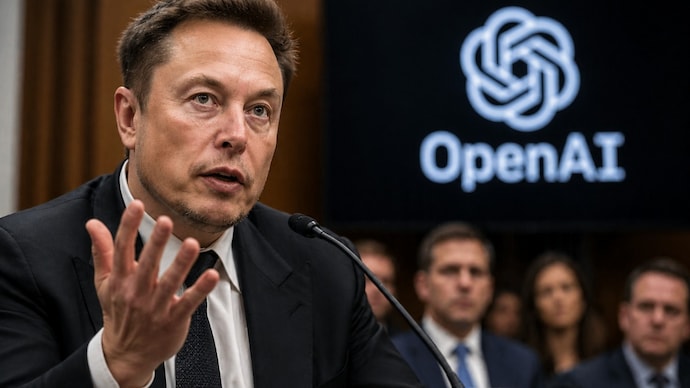

Elon Musk brought dramatic warnings about the future of AI into a packed California courtroom this week, saying AI could either become humanity’s greatest tool or its biggest threat. While testifying in his legal battle against OpenAI, the Tesla and SpaceX chief said the technology is moving quickly, and the world should be careful about where it leads. "It could kill us all," Musk told the court while speaking about advanced AI systems. He added that humanity should avoid a dark future like what we have seen in the Terminator movie and instead aim for a more hopeful vision inspired by Star Trek.
"We don’t want to have a Terminator outcome. We want to be in a Gene Roddenberry outcome, like Star Trek. Not so much a James Cameron movie like Terminator," Musk said. The comments came during a high-stakes trial in which Musk is suing OpenAI, the company he helped co-found in 2015. Musk claims OpenAI moved away from its original non-profit mission of building AI for the benefit of humanity and instead shifted toward commercial success. OpenAI has rejected those claims.
Elon Musk reveals his fears about AI are not new
During his testimony, Musk said his fears about AI are not new. He told the court they go back to a conversation he had in the summer of 2015 with Google co-founder Larry Page. According to Musk, Page believed AI would create a kind of utopia. Musk said that the response worried him because he felt the risks were being ignored.
"The reason OpenAI exists is that Larry Page called me a 'specieist,'" Musk said in court, referring to a term used for someone who favours humans over future digital life forms.
Musk argued that someone needed to provide balance and oversight as powerful companies pushed forward with AI development. He presented OpenAI’s creation as part of that effort. The billionaire also repeated his long-held belief that AI may soon outperform humans in many areas. “That day is approaching fast,” he said, referring to the moment when AI surpasses human capabilities. "I have extreme concerns about AI, I have had concerns about AI for a very long time."
His testimony mixed legal arguments with his bigger vision of the future. Musk also spoke about Neuralink, the brain-chip company he founded, saying one of its goals is AI safety. If humans can connect more directly with intelligent machines, he suggested, it may create a better balance between people and AI.
"If we can achieve an AI-human symbiosis," Musk said, "we can achieve an AI that is better for humanity."
Musk’s lawyer has tried to frame the lawsuit as a matter of principle rather than business rivalry. In opening statements, his legal team argued that OpenAI was founded “for the benefit of all mankind” and later drifted from that purpose.
OpenAI’s lawyers pushed back strongly. They told the jury Musk only began objecting after OpenAI became successful with ChatGPT and sparked the global AI boom. The company’s legal team argued that Musk is upset because OpenAI succeeded without him.
The courtroom exchange has already become one of the biggest tech legal battles in recent years, bringing together two of Silicon Valley’s most recognisable names: Elon Musk and OpenAI chief Sam Altman.