
Meet Gabi, South Korea's first Robot Monk, which is learning ways of spirituality
South Korea has introduced Gabi, its first humanoid robot monk, at a Buddhist ceremony in Seoul. The robot, built on Unitree's humanoid platform, is designed to participate in rituals and help connect Buddhism with younger generations.
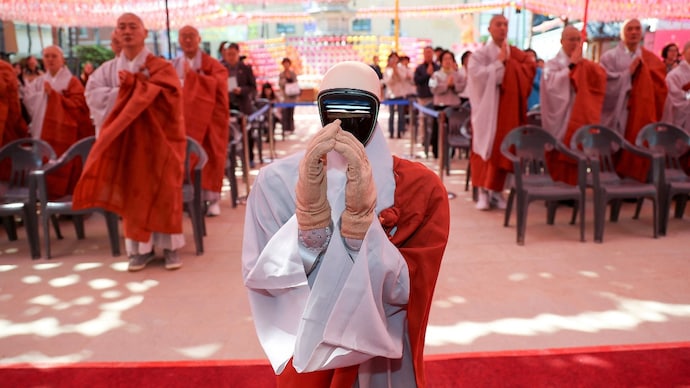

Humanoid robots are supposed to help humans at work, whether in boardrooms, factories or warehouses. But what if they started searching for enlightenment too? It sounds unusual, but something similar is now happening in South Korea. In the capital city of Seoul, a temple has introduced its first humanoid robot monk, named Gabi.
The humanoid was introduced on Wednesday during a Buddhist ceremony held at Jogye Temple in Seoul ahead of Buddha’s Birthday celebrations. Dressed in traditional grey-and-brown monk robes, the four-foot-tall robot joined chanting monks, bowed during rituals and even responded to questions during the ceremony.
But why is a robot walking the path of spirituality? Well, Gabi was introduced as part of an initiative by the Jogye Order, which is South Korea’s largest Buddhist sect, to modernise Buddhism and connect with younger generations in an increasingly digital society.
Robot takes oath to follow spirituality
Built on China’s Unitree G1 humanoid platform, Gabi has a human-like body structure that allows it to walk, gesture and participate in ceremonial activities. And the robot did not just stand alongside the monks, it also took vows linked to Buddhist teachings.
During the ritual, a monk asked whether it would devote itself to Buddha and Buddhist teachings. Gabi replied: “Yes, I will devote myself,” according to The New York Times. The robot also circled a pagoda, held its hands together in prayer and received a 108-bead rosary, much like human participants in the ceremony. A traditional incense-burning ritual, however, was skipped for the robot.
Interestingly, the name “Gabi” itself carries spiritual meaning. According to local reports, it combines references to Siddhartha, the birth name of Gautam Buddha, and the Korean word “jabi”, which means mercy or compassion. Monks involved with the project said the name was intentionally chosen to sound simple and approachable while reflecting Buddhist values.
What will Gabi’s spiritual role be?
The temple has also assigned Gabi a modified set of Buddhist precepts specifically designed for robots. These include respecting life, not harming robots or objects, obeying humans, avoiding deceptive speech and not overcharging its battery. Interestingly, the guidelines were reportedly created with assistance from AI chatbots including Gemini and ChatGPT.
But why do we need a humanoid robot monk?
The debut of Gabi comes at a time when Buddhist institutions in South Korea are trying to stay culturally relevant. Religious leaders believe technologies like AI could help temples attract younger audiences and also fill gaps caused by a shortage of monks. Gabi is expected to appear in upcoming Buddha’s Birthday lantern parades alongside other Buddhist-themed robots including Seokja, Mohee and Nisa.
Gabi is not alone on the path of spirituality
Interestingly, this is not the first time AI and robots have entered spiritual practice. A few weeks ago, researchers at Kyoto University in Japan introduced an AI-powered robot called “Buddharoid”, designed to interact with visitors, learn Buddhist scriptures and respond to spiritual questions.
Unlike traditional sermon-based systems, Buddharoid was created to hold conversations and adapt to human interactions in real time. Researchers said the project was aimed at addressing Japan’s ageing clergy population and exploring how artificial intelligence could help preserve Buddhist teachings in the future.