
YouTube to label AI videos even when creators do not disclose AI use
YouTube will now auto-detect AI-generated videos, and label them on its own, even if the creator does not disclose that it was made by AI. Here are all the details.
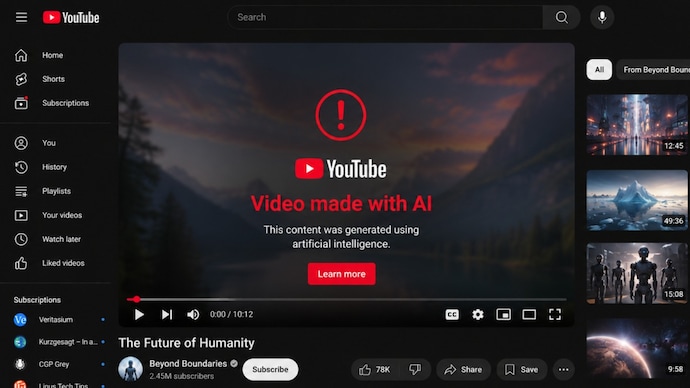

AI-generated videos are being shared increasingly on the internet, particularly on platforms like YouTube. Some AI “slop” channels like Bandar Apna Dost have reportedly earned crores of rupees just from posting AI-generated videos. So far, a creator needed to disclose that they had used AI in a video for YouTube to label it as made with AI. But now, YouTube is changing the way it labels such videos.
YouTube has announced that now it will automatically detect AI in a bid to make AI disclosure clearer for viewers. Though before we begin, keep in mind that the auto-labelling feature is only for videos with “significant photorealistic AI use” – that is videos that look real, but are made using AI. So “slop” videos that show animated characters will not be automatically labelled at least for now.
YouTube to auto-detect AI videos
YouTube said on its website that it is rolling out new internal signals to help identify AI-generated content. If a creator does not specify whether AI was used, but YouTube’s systems detect “significant photorealistic AI use”, it will automatically apply a label.
In case a video you uploaded gets incorrectly identified as AI-generated, you can update the disclosure status in YouTube Studio.
But, YouTube states that disclosures will remain permanent in some cases. These include content created using YouTube’s own AI tools, such as Veo and Dream Screen, and content carrying C2PA metadata indicating that it was fully generative AI.
The platform also states that creators will still be required to manually disclose when realistic AI is used. A disclosure label on its own does not affect how a video is recommended or whether it is eligible to earn money.
More prominent AI labels
YouTube is also changing where the labels appear. For long-form videos, the AI label will now be shown directly below the video player and above the description. For Shorts, it will appear as an overlay on the video.
YouTube said the updated labelling is meant for content that is photorealistic and could mislead viewers. On the other hand, disclosures of content that is unrealistic, animated or only slightly altered will continue to appear in the expanded description.
The update comes as YouTube has expanded other AI-related measures on the platform. Earlier this month, the company widened its likeness-detection programme to all creators aged 18 and above, saying this is meant to help users detect and manage how AI is used to depict them on YouTube.
For creators enrolled in the programme, YouTube’s systems will identify videos that may contain altered or synthetic uses of their facial likeness, after which they can request removal of unauthorised content through YouTube Studio.