
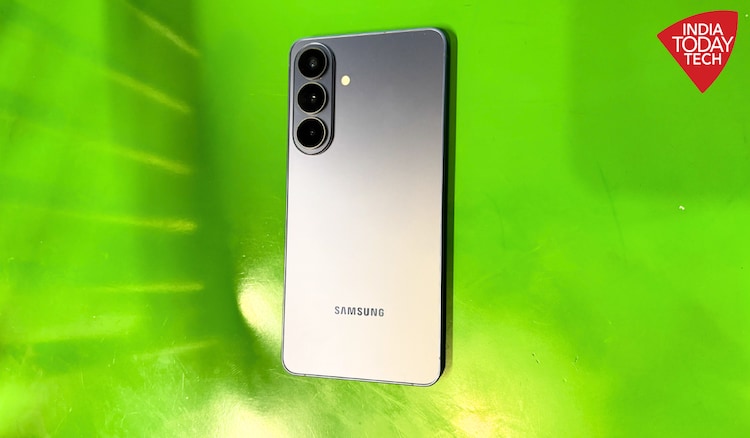
Samsung Galaxy S26 Plus review: This phone will test your limits
In the market where compact has become the key selling feature, Samsung Galaxy S26 Plus still backs the users who don't want their phone to be in a particular "fitting" size. It comes with powerful hardware, dependable software and knows exactly what it is. But at Rs 1,19,999, it is standing just a little too close to the Ultra for its own good.

New Delhi,UPDATED: Apr 27, 2026 18:51 IST
Samsung Galaxy S26 Plus review
Pros
- Big and bright QHD+ display
- Battery that goes all day
- 7-year software support
- Galaxy AI features fully on board
Cons
- Gets warm when pushed
- Charging could be faster
- Sits close to the S26 Ultra
Apple may have stopped making “plus” phones, but for Samsung that day is not today. With the Galaxy S25 Edge in the picture, nobody was expecting Samsung to launch the Galaxy S26 Plus and yet, it did. It is one of three phones launched under the Galaxy S26 series. The other two models are Galaxy S26 and Galaxy S26 Ultra. India Today Tech has reviewed them, so be sure to check that out. Here, we will take the Galaxy S26 Plus through the same grind and tell you how it fares against competing phones.
The S26 Plus comes with upgraded hardware but it also comes with a big asterisk which is that, choosing it over the Galaxy S26 and Galaxy S26 Ultra, narrows down to very subjective choices. You’d really, really want to want this phone to buy it. For most people, the Galaxy S26 would be a smarter choice. Others, those with fat wallets, should go for the Galaxy S26 Ultra. The Galaxy S26 Plus therefore becomes a tricky proposition. So, who is this for? Let’s find out.
Design: Big but not bulky
If you are someone who prefers big phones and are not part of the compact phone hype, then you already know why the Plus feels better than the standard model. It is definitely bigger than the S26, but it does not feel bulky or difficult to manage. It feels light for its size, offers a good grip, slips easily into a bag or pocket without any fuss, and using it one-handed is not as uncomfortable as you might expect from a phone this large.
The buttons are easy to reach even with the larger frame, and the ultrasonic fingerprint scanner under the display is fast, responsive, and works even when your fingers are slightly damp. No complaints there at all.
I have always liked Plus-sized phones, whether it is Samsung or Apple’s Plus variants. For me it was a bit disappointing when Apple discontinued its Plus lineup. That said, I am glad Samsung is continuing to keep it alive— at least for now, and I am all for it. In fact, Apple stepping away from this segment leaves a clear gap in the market. Not everyone wants a compact phone, and not everyone wants a massive Ultra device either. The S26 Plus quietly fills that space, and it does so rather well.
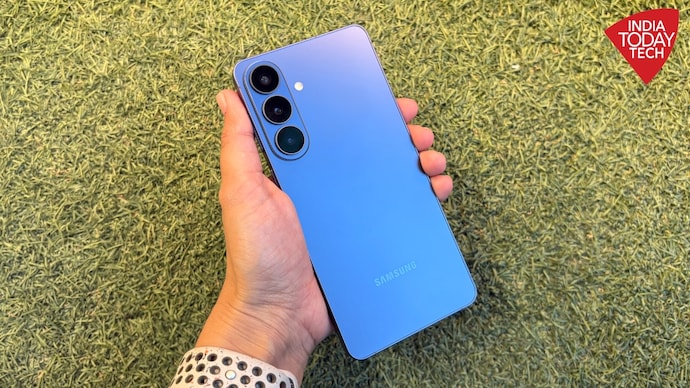
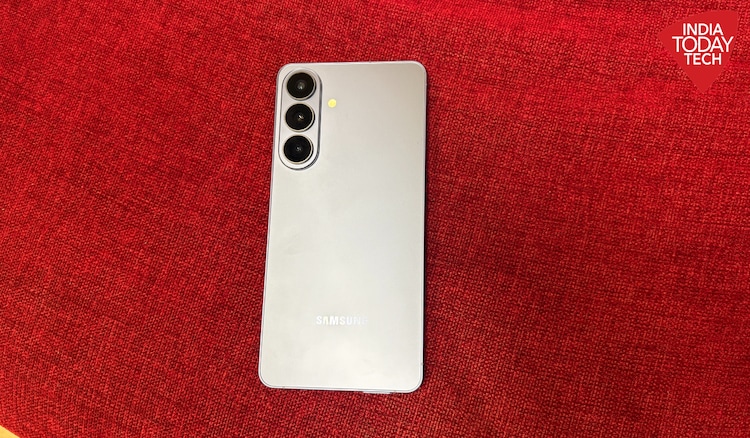
I used the Cobalt Violet variant, it looks premium, feels premium and is my favorite colour apart from the Pink Gold.
The design language is similar to the S26, and that is not a bad thing. You get the same matte finish here, and it works just as well. The velvety matte back does not pick up fingerprints easily, which is a big plus, especially if you prefer using your phone without a case, as I did for most of my time with it. The aluminium frame remains the same, Gorilla Glass Victus 2 protects both the front and back, and the IP68 rating means you do not have to worry about rain or the occasional spill.
The overall build quality is solid. It feels durable, well put together, and exactly what you would expect from a flagship device.
Now, one thing to note, the camera bump wobble is still here. Place the phone flat on a table and try typing, and it will rock slightly because of the raised camera module. It is the same issue we saw on the S26, and while it is not a dealbreaker, it can be mildly annoying.
Display: The real reason to buy this phone
The display is where the Galaxy S26 Plus really starts to make its case. You get a 6.7-inch QHD+ Dynamic AMOLED 2X panel with a resolution of 3120 x 1440, and it feels noticeably bigger and more immersive than the 6.3-inch FHD+ screen on the S26.
Samsung’s display quality is still among the best, and that continues here. The screen is bright, going up to around 2,600 nits, smooth with a 120Hz refresh rate, and visually rich. Colours look vibrant but not overdone, blacks are deep, and contrast is excellent. Everything from watching videos to scrolling through social media simply feels better on this larger screen.
I watched a BTS Arirang live performance on this, and the blacks, reds, and purples filling the concert looked so deep and rich that it felt far more immersive than what smaller screens usually offer. The audio pairs well with the display too, which adds to the overall experience.
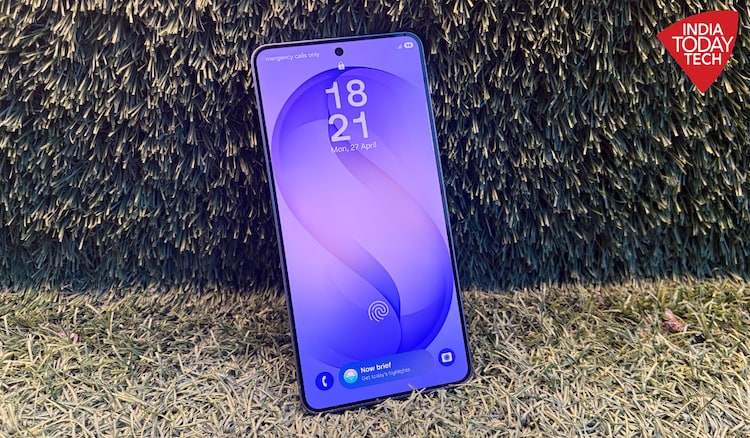
I also spent time watching documentaries like The Hidden Life of Animals and others, and the colours came through vividly without looking oversaturated. The greens of jungles, the blues of oceans, and even the browns of barren deserts all looked natural and well-balanced. The S26 Plus has the kind of colour reproduction that makes long-form content genuinely enjoyable.
Even something like catching up on a recap of Dhurandhar felt more cinematic on this screen. During daily commutes, when I was watching shows on the go, the phone kept me all covered.
The display also goes as dim as 1 nit, which makes a big difference during late-night use. Whether it is scrolling through social media, watching those endless AI slop cat videos, or laughing at random otter reels, it is easy on the eyes and does not feel harsh. The 120Hz refresh rate keeps everything smooth, and it remains consistent throughout the experience.
However, one thing is still missing here is the anti-reflective coating. That feature remains exclusive to the Ultra, and it is something you do notice once you have seen it in action. At this price, it would have been a welcome addition.
Performance: A day in the life with Exynos 2600
In India, the Galaxy S26 Plus comes with the Exynos 2600 chip, the same as the standard S26. There is no Snapdragon here, as Samsung has kept Qualcomm’s best for the Ultra. That said, getting an Exynos chip this time does not feel like a step-down. In everyday use, the phone feels fast and responsive, and overall performance is solid. App switching is snappy, multitasking is smooth, and even casual social media browsing feels effortless.
I played Asphalt Legends and Genshin Impact, and both ran well without any major issues. I also spent a good two to three hours playing Minecraft in a single sitting, and despite the larger display, I did not feel any discomfort. In fact, the bigger screen actually gives a better gaming experience, making it feel more immersive and engaging.
That said, the phone does get warm. During longer gaming sessions, clicking a lot of photos, or charging while using the phone, the load pushes the thermals. It is not uncomfortable to hold, but it is noticeably warmer compared to regular use. The slightly larger chassis does help with heat management when compared to the S26, but do not expect it to stay completely cool under sustained load. Give it a few minutes to breathe, and it settles down fairly quickly.
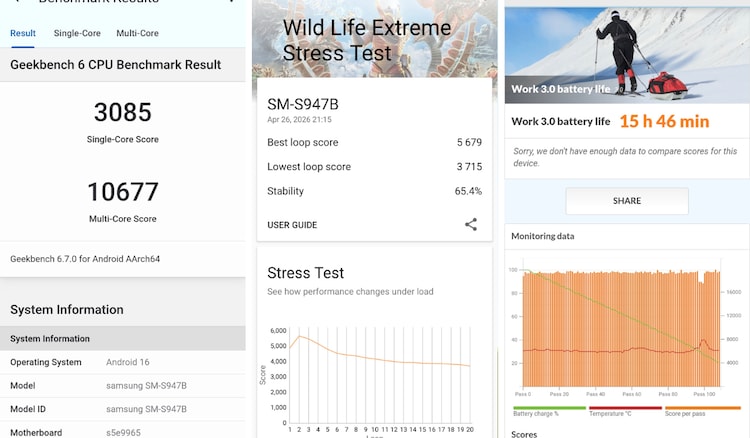
As for putting numbers to the capabilities of the Samsung Galaxy S26 Plus, you can check out the benchmark scores below.
Software: Seven years of support, Galaxy AI, all of It
The S26 Plus runs Samsung's One UI 8.5 based on Android 16, and it gets the same seven years of software support promise as the rest of the S26 lineup. This is one of Samsung’s biggest strengths and adds long-term value to the device. For anyone who keeps their phones for 3-4 years, it means this phone will be well-supported until 2033.
The software experience is clean, smooth, and packed with features.
Galaxy AI is fully onboard here. Photo Assist, Now Nudge, Now Brief, and the AI Eraser in Gallery are all present and working well. I found myself using Photo Assist quite a bit to get those fun, slightly polished portraits for social media.

Bixby has improved and feels more helpful than ever, but you also have the option of Google’s Gemini and even the Perplexity AI assistant, which you can access with “Hey Plex” command. So, you are not really locked into one, you have choices for your AI backed voice assistance and can pick whichever suits your needs best.
Battery: Goes long
Another reason to get the Plus over the standard is the battery. The S26 Plus packs a 4,900mAh battery, which is a step up from the S26's 4,300mAh. That’s not a big difference but noticeable enough in daily use.
The S26 Plus comfortably got me through the day on regular use, calls, WhatsApp, social media, some YouTube, and a bit of navigation. There was always battery left by bedtime. On travel days, with the screen on more and connectivity toggling, it still managed to hold up with standby stretches keeping things stable.
Weekends with binge-watching sessions do push it harder, and by late evening you will want a charger nearby, but that is understandable. Overall, the battery life feels reliable and consistent, which is exactly what most users want.
Just like the other flagships, there is no charger in the box, just the cable, and while the phone supports faster charging on paper, in real-world use, it still feels slow. Using a 25W Samsung adapter, the phone took around 2.5 hours for a full charge from zero to hundred.
Camera: What you see is what you get
The cameras on the S26 Plus are the same as the S26. The same primary sensor, the same aperture, the same telephoto setup, the same ultra-wide.
In daylight, photos are excellent, rich colours, good dynamic range, sharp detail. Portraits look clean with natural background blur and accurate skin tones. Low light photos hold their own with decent noise control and sharp textures.

I clicked a lot of portraits, and I loved all the images it managed to put together. You can see the photos below:

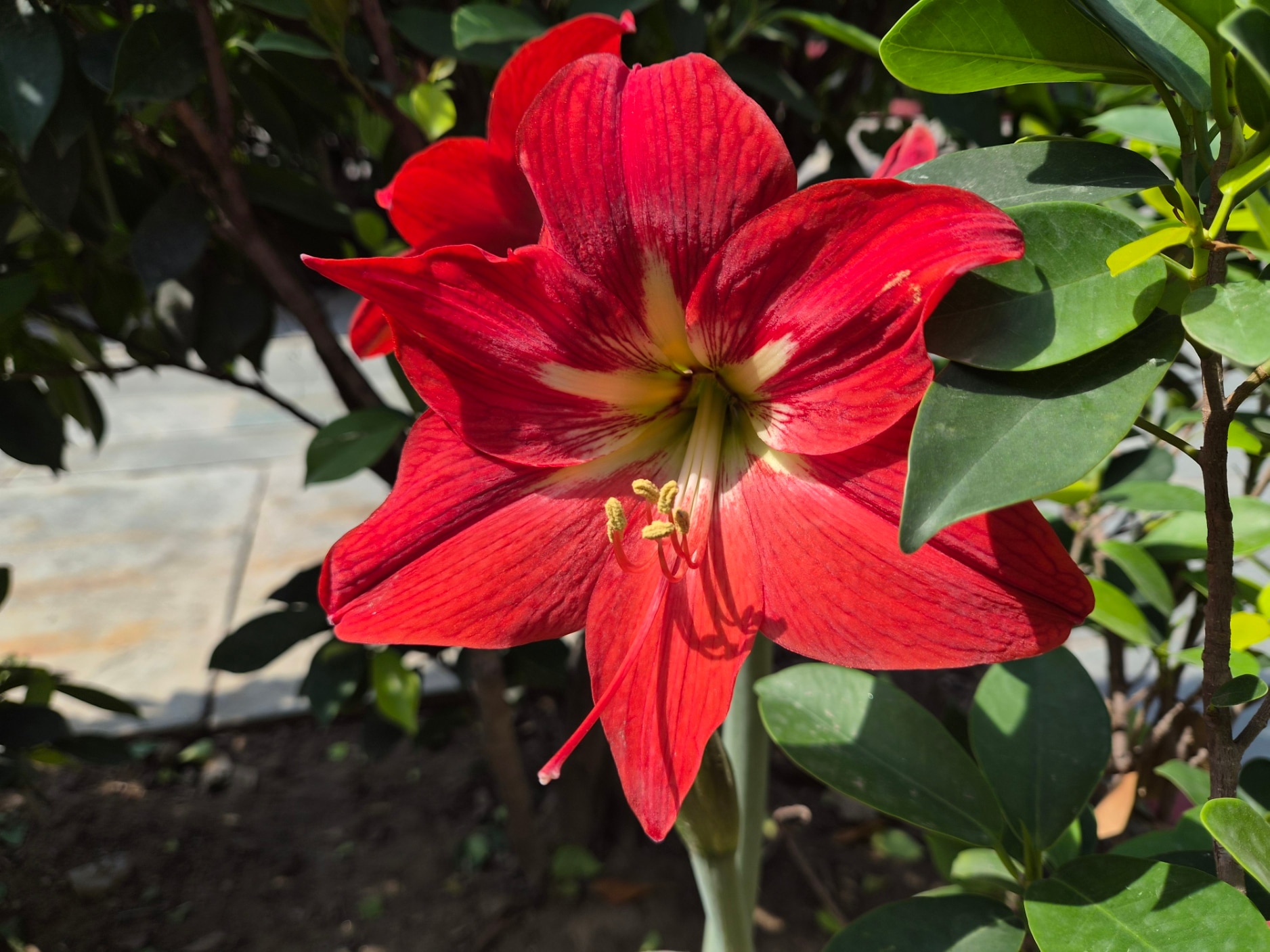
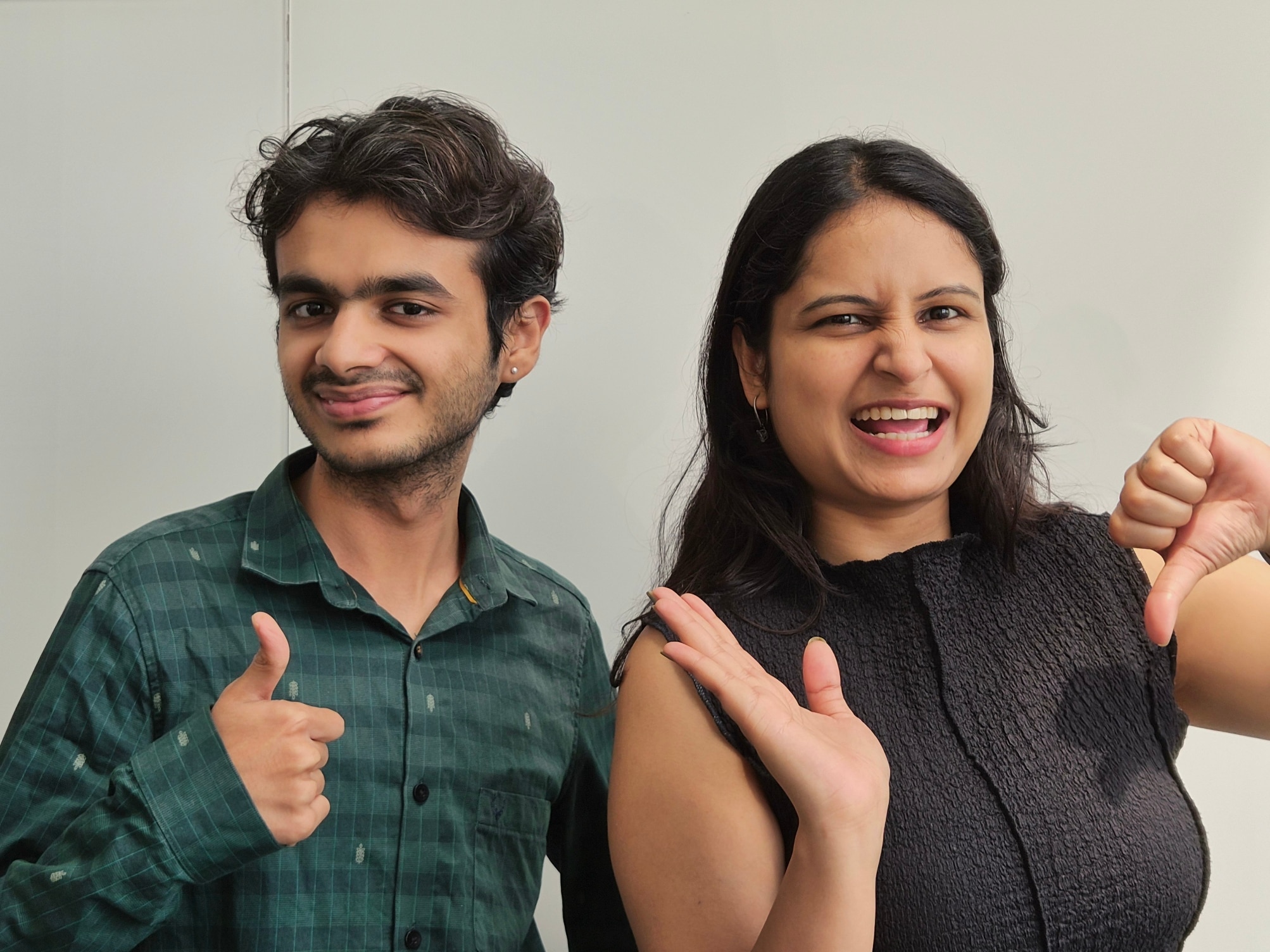




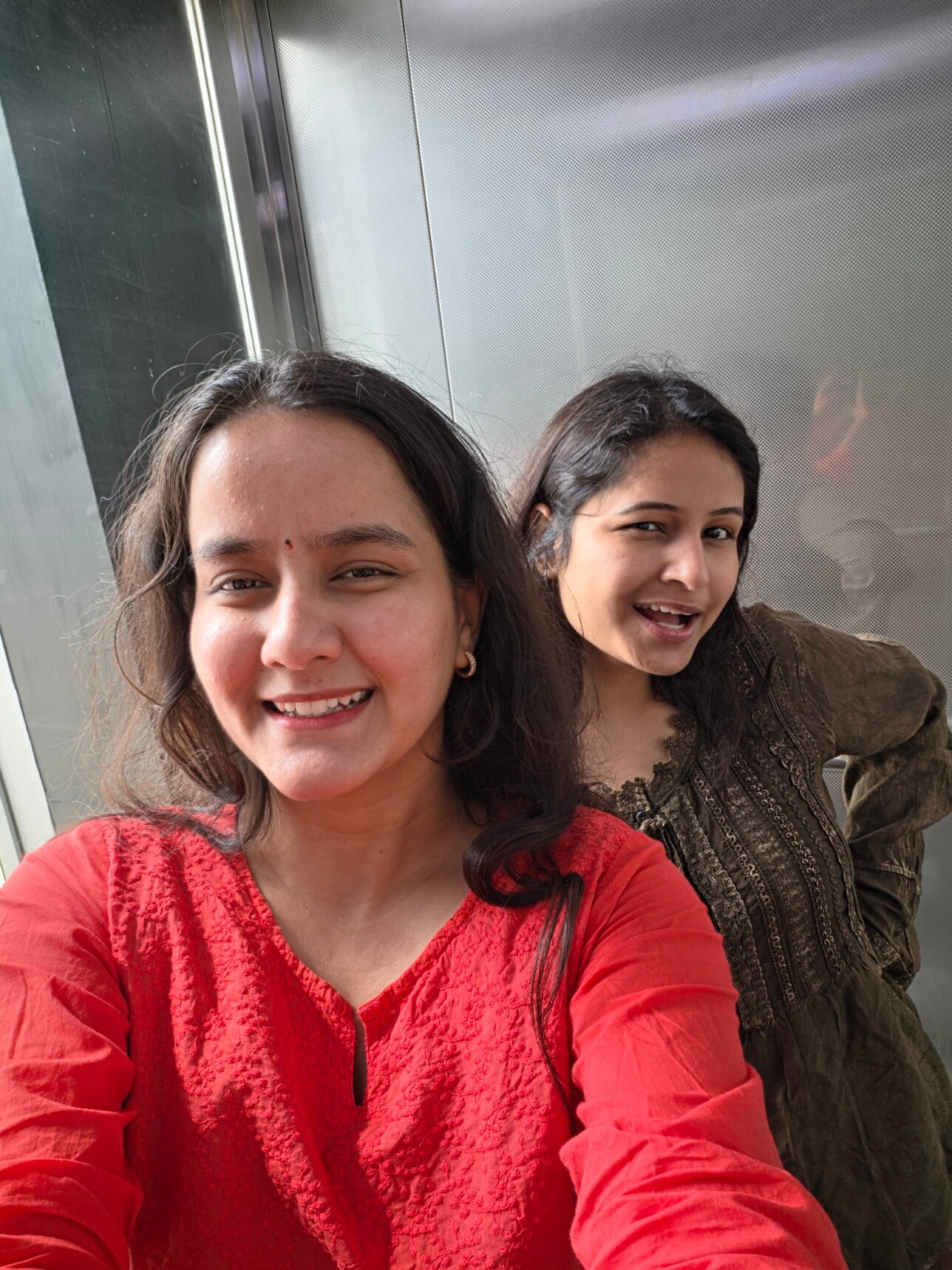

In short, the S26 Plus has a reliable, capable camera system that covers most everyday scenarios well, and those everyday social media-worthy shots look great. The AI edits and filters also make the image game more fun.
Samsung Galaxy S26 Plus review: Should you buy it?
The Galaxy S26 Plus is packed with capable hardware and well-optimised software. It delivers a big, immersive display, reliable performance, and strong battery life. For someone who wants a big phone without stepping all the way into Ultra territory, it does make sense.
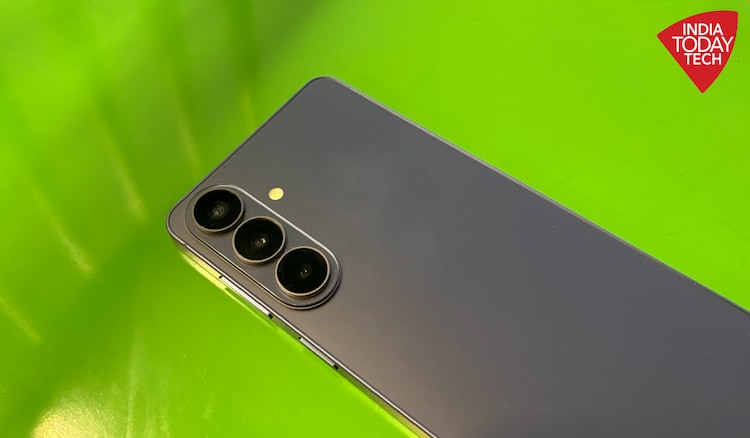
Be that as it may, the S26 Plus starts at Rs 1,19,999 in India. The S25 Plus launched at around Rs 99,999, which means there is a price jump of roughly Rs 20,000. For the extra money, you get a newer chip, larger battery, sharper QHD+ display, and One UI 8.5. But at the same time, this pricing brings it closer to the Ultra, which starts at Rs 1,39,999 — a difference of about Rs 20,000. In fact, with discounts, the gap may become even smaller, making the comparison harder to ignore.
And that gap matters. Because when you look at what the Ultra offers, it starts to feel like the more complete package. You get a more advanced camera system, S Pen support, and exclusive display features that are simply not available on the S26 Plus. In other words, the final decision comes down to how much money you’re happy to shell out.
- Ends