
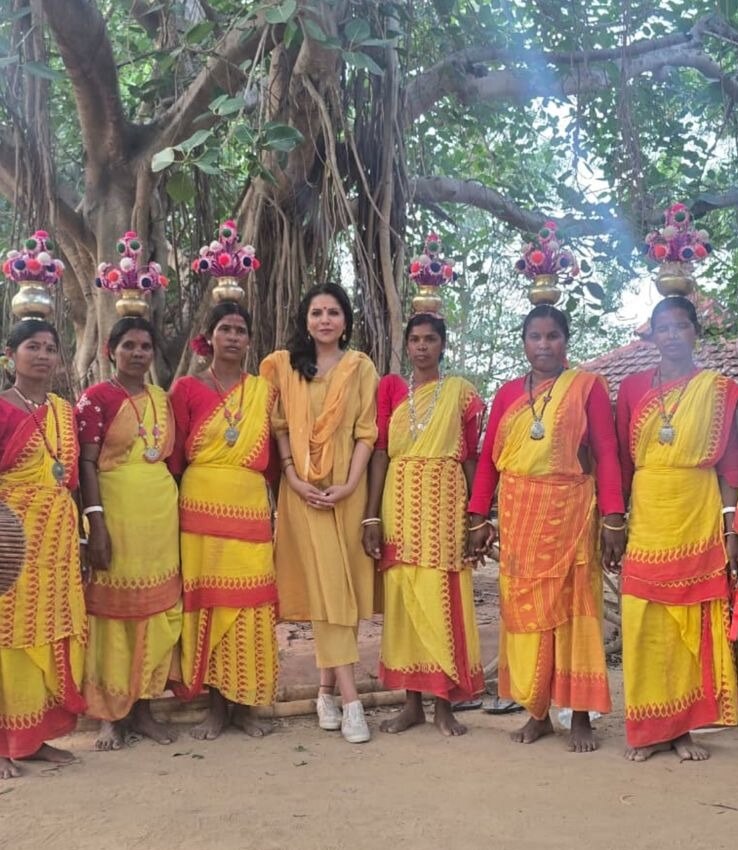
In poll chaos, a quiet determination: As I exit Bengal, women voters hold their ground
Despite several contradictions, there is a certain free-spiritedness among women in West Bengal -- an ease, a presence, a refusal to shrink.

From roadside defiance to polling conversations, these moments captured women asserting choice and voice in Bengal's public life.

It was the summer of 2021, in the middle of the West Bengal election -- an electoral contest defined as much by its political intensity as by the deadly second wave of COVID-19 that shadowed it.
It was around 10 pm. We were driving from the rural stretches of Howrah towards Kolkata after a long, exhausting day on the campaign trail when I suddenly fell ill. High fever. Dehydration. I couldn't keep anything down. Whether it was heat exhaustion or the virus itself, we didn't know.
We stopped at a small roadside tea stall run by a couple. One look at me, and they knew something was wrong.
The husband stiffened almost immediately, understandably so. This was a time when illness carried not just fear, but real danger. I remember him glancing at his wife, a subtle but firm signal: don't engage.
She ignored him.
Stepping forward, she asked what we needed.
"Just some biscuits," we said.
The husband spoke sharply in Bengali, his tone unmistakable even to me, urging caution, telling her to step back. But she brushed it aside, as if the decision had already been made.
She looked directly at me. "Are you okay?" she asked in broken Hindi. Almost matter-of-fact, without waiting for an answer, she offered tea.
There was no grand gesture in it, no dramatic defiance. Just a quiet decision to do what she wanted -- an act of kindness that felt, in that moment, absolute.
Later, back in the car, the video journalist I was travelling with -- he was from Meerut -- said, "If this were Uttar Pradesh, that woman would have been in trouble for not listening to her husband".
I thought about that as we drove through the night.
This was Bengal.
And in that brief moment at a roadside tea stall, Bengal felt... different.
In 2026, in Krishnanagar during the West Bengal elections, I found myself in another, very different setting. A group of women had gathered to appear for a B.Ed. exam. The question, familiar and almost predictable, was where the decisive "women's vote" might lie.
I approached a middle-aged woman sitting beside her husband and asked if she would be willing to speak. Before she could respond, he stepped in with a firm, almost reflexive, "No. No politics".
She cut him off just as quickly. "It's fine," she said. "Let's talk".
They were from Durgapur. For the next twenty minutes, she spoke with clarity and ease -- about her choices, her concerns, her vote. The husband, visibly uncomfortable, slipped out of the frame.
When the conversation ended, I watched them from a distance. He seemed to question her, shaking his head slightly. She responded with a laugh, brushing it off, unbothered.
It was a small moment, easy to miss in the churn of an election. But it stayed with me -- not as a sweeping conclusion about place or culture, but as a glimpse of something immediate and individual: a woman claiming her voice in a space where it might easily have been spoken for.
These aren't isolated incidents.
Time and again, I have seen men step back -- sometimes subtly, sometimes quite deliberately -- ceding space to a wife, a girlfriend, a colleague, a friend. Allowing them to speak, to lead, to take centre stage.
In the theatre of election coverage, where voices constantly compete, these quiet acts of withdrawal can be as telling as the loudest assertions of what is often framed as a state's "inherent culture". The only other state this side of the Vindhyas where I have seen something similar -- though less pronounced and only in pockets -- is Gujarat.
As my election coverage in Bengal draws to a close, it would be a disservice not to say this: I have come to deeply admire the way women inhabit space here. There is a quiet, almost subconscious elevation of women as independent beings -- something that stands in stark contrast to the entrenched misogyny that still finds resonance across much of northern India.
Perhaps it stems from a cultural understanding of shakti -- a form of empowerment that manifests here in ways both subtle and profound, unlike anywhere else in the country, even in the south.
As a political journalist reporting from rallies, sabhas, and roadshows, a standard operating practice has emerged over time. I move ahead while the video journalist follows closely behind, with me holding the tripod as a makeshift barrier. This simple arrangement helps carve out just enough space to move through the crowd, maintain a line of sight, and continue reporting amid the chaos.
Any woman journalist who has covered political rallies across India will recognise the difference immediately.
In many states, a crowd is not just a logistical challenge -- it carries risk. The inevitability of wandering hands, the violation masked by chaos.
Here, the crowds are no less dense, the air no less heavy with sweat and alcohol, but the hands, for the most part, do not grope.
Men step aside to make way. When contact happens, as it inevitably does in a crowd, there is visible embarrassment rather than entitlement.
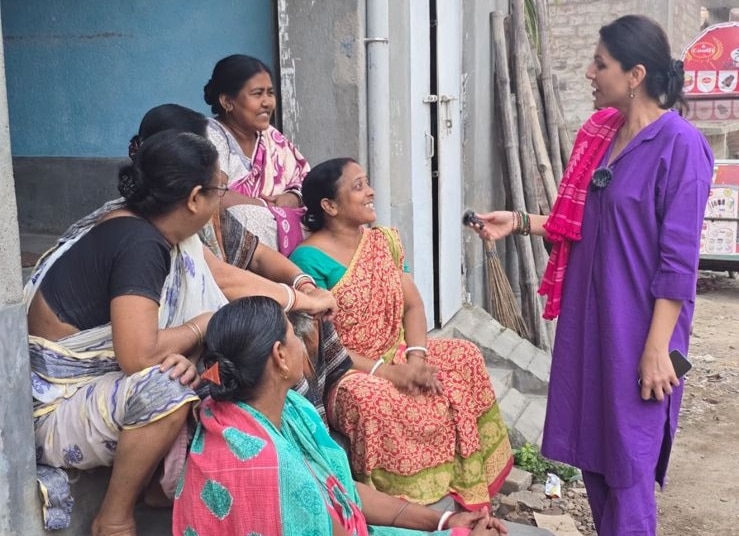
What you encounter is not chivalry, but something far rarer: equality. And equality feels far more meaningful. I was never a fan of chivalry in any case.
There is more!
Women politicians across party lines campaign with striking freedom -- aggressive, sharp, unapologetically irreverent -- often using what would elsewhere be labelled 'masculine' rhetoric. In most states, such behaviour would invite judgment, even censure. Here, it is met with acceptance, even applause.
During the 2024 Lok Sbaha elections, at around 11 pm in Serampore, I witnessed this firsthand. Left candidate Dipsita Dhar was locked in a bitter contest with Trinamool Congress stalwart Kalyan Banerjee. Banerjee, at the time, was using deeply sexist language against the young candidate.
I interviewed Dhar in one of the bylanes. Her car pulled up next to us. She stepped out -- no hangers-on, no entourage. We did the interview. She left.
An elderly couple watched this exchange.
When I struck up a conversation with them, they told me they had long been TMC supporters. But this time, they said, they intended to vote for Dhar. They were repelled by what they described as the misogynistic tenor of Banerjee's campaign.
Dhar ultimately lost the election to Banerjee. But her performance was far from insignificant -- she secured over 2.3 lakh votes.
Issues of dignity, respect, and crimes against women find deeper resonance in this state.
In the ongoing state polls, Smriti Irani, who speaks Bengali, has emerged as a key star campaigner for the BJP. Her vocal support for Ratna Debnath, the mother of the RG Kar rape-murder victim and now a BJP candidate from the Panihati constituency, appears to be striking an emotional chord on the ground.
During my interactions, I met a woman moved to tears as she pledged support for Debnath, despite identifying herself as a staunch supporter of 'Didi'. It was a reminder that questions of justice and women's safety often cut across traditional political loyalties.
There is also a reason many political commentators believe that in 2021, the Prime Minister's "didi o didi" remark -- aimed at Chief Minister Mamata Banerjee -- proved to be a turning point. The comment was widely perceived as triggering a surge of sympathy for Banerjee, particularly among women voters, altering the tone of the election.
What stands out in Bengal is that the understanding of gender is not confined to so-called "women's issues".
Attending campaign rallies of women candidates across party lines is an eye-opener.
I followed the campaign of actor-turned-politician and now MP Sayoni Ghosh. What stood out was how her mannerisms, speech delivery, and body language departed from the norms seen in many other states. Rather than conforming to rigid binaries of how women candidates are expected to behave, she adopts a style that is at once self-assured and combative—at times even deliberately coquettish.
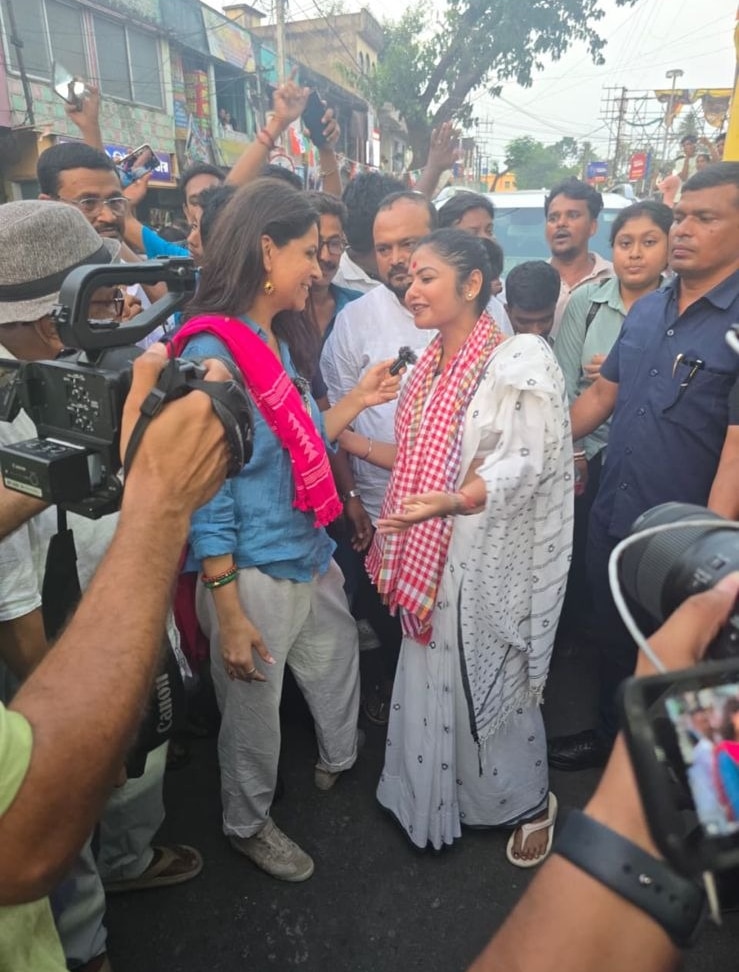
In many places, such shifts would be seen as transgressive. Here, they are accepted and applauded, not judged.
And it is not just her. Styles may differ, but the ethos remains visible across campaign events of TMC, BJP, and Left women leaders, as well as among the women cadre.
In Bengal, women in politics are not confined to narrow, stereotypical expectations. Across the political spectrum, they are redefining what leadership looks like -- expanding the idea of what it means to be a woman in public life.
To be a woman is not just to embody politeness or composure. It is also to express strength, resilience, and authority. It is, in many ways, the celebration of shakti in its fullest sense.
What feels liberating to an outsider is, in Bengal, simply normal. What we frame as empowerment here is a cultural undercurrent.
There is, and should be, a critical reading of this view. It is entirely possible that I am, in parts, romanticising an idea I want to see, even as the ground reality pushes back.
I do not deny that crimes against women persist. That public spaces can still be unsafe. That this may well be the lived reality of many women. Or that political and sexual violence, particularly in rural belts, remains a harsh and undeniable truth.
The bar, in many ways, is still far too low.
And yet, this is what I have seen, felt, and documented as a political journalist.
Despite these contradictions, there is a certain free-spiritedness among women here -- an ease, a presence, a refusal to shrink. That does not emerge in isolation. It suggests something about the social fabric at large, about the interplay between its women, its men, and the state itself.
This is not a conclusion, but an observation -- imperfect, contested, and open to question.
I have covered four elections in this state, and each time I have returned with the same sense of awe.
Bengal, meanwhile, ambles on with a certain bemusement, as if unaware of what sets it apart. But it is a big deal.
And perhaps the most remarkable part is that Bengal does not think so.
Governments will come and go. One can only hope that this constant endures -- not just how Bengal sees its women, but how, in many ways, it doesn't.
Elections 2026 | West Bengal Election | West Bengal Election Constituencies | West Bengal Election Schedule
- Ends