Repolling in Bengal's Falta underway amid high security, TMC candidate pulls out
Polling started at 7 am and will continue till 6 pm across 285 polling stations, including auxiliary booths. Counting of votes has been scheduled for May 24.

India's Electronic Voting Machines (EVMs) have revolutionized the country's electoral process since their introduction in the 1990s. Designed to ensure efficient, transparent, and tamper-proof elections, these machines have significantly reduced the complexities and irregularities associated with traditional paper ballots. Manufactured by Bharat Electronics Limited (BEL) and Electronics Corporation of India Limited (ECIL), EVMs are composed of two main units: the Control Unit and the Balloting Unit, connected by a five-meter cable.
EVMs operate on a simple, user-friendly interface, allowing voters to select their preferred candidate by pressing a button corresponding to the candidate's name and party symbol. Each vote is securely recorded in the machine's memory and can be tallied quickly and accurately at the end of the polling period. The machines are battery-operated, ensuring functionality even in areas without reliable electricity.
To enhance security and address concerns about potential tampering, EVMs have been supplemented with Voter Verifiable Paper Audit Trails (VVPATs), which provide a paper slip confirming the voter's selection. This slip is visible to the voter for a few seconds before being stored in a sealed compartment, enabling audits and recounts if necessary.
India's EVMs have been praised for their robustness, simplicity, and effectiveness, contributing to the integrity of the democratic process in the world's largest democracy. Despite occasional controversies and calls for further scrutiny, EVMs remain a cornerstone of India's electoral system.
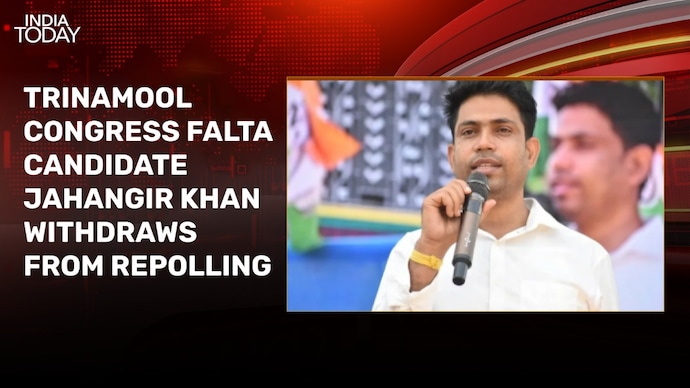
Trinamool Congress candidate Jahangir Khan has withdrawn from the upcoming repolling in the Falta constituency, scheduled for May 21.
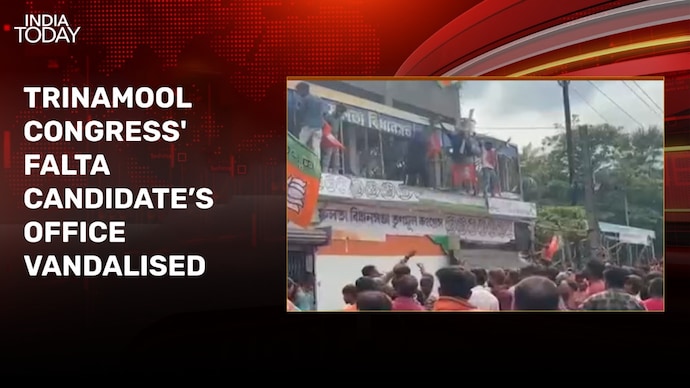
Fresh incidents of post-poll violence have been reported from West Bengal, where angry locals vandalised Trinamool Congress candidate Jahangir Khan''s office in Falta.
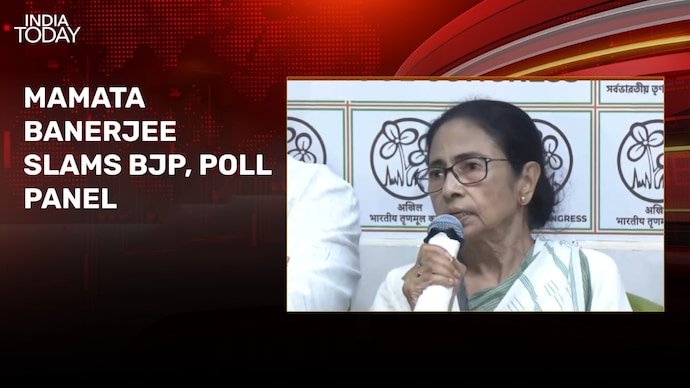
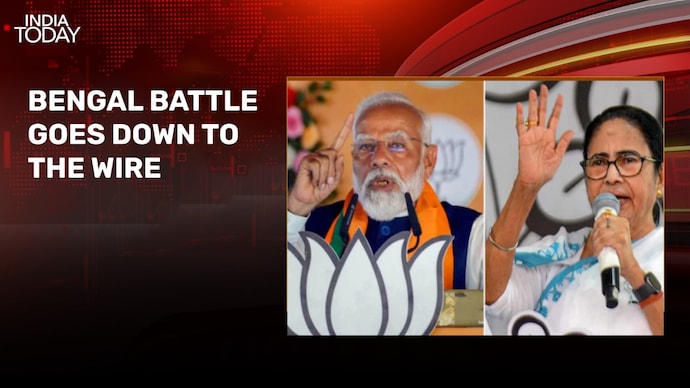
Trinamool Congress chief Mamata Banerjee has refused to accept the West Bengal assembly election results after the Bharatiya Janata Party secured two hundred and seven out of two hundred and ninety-four seats. I
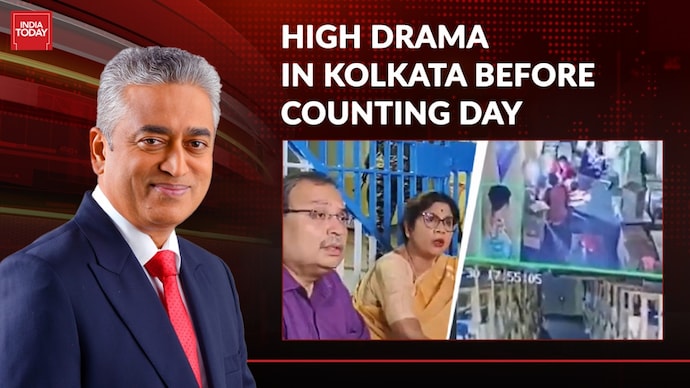
A massive political controversy has erupted in West Bengal over alleged electronic voting machine tampering and unauthorised access to strong rooms ahead of the counting day.
The price of commercial LPG was hiked by the steepest ever Rs 993 per 19-kg cylinder on Friday due to rising global energy prices linked to the West Asia conflict.
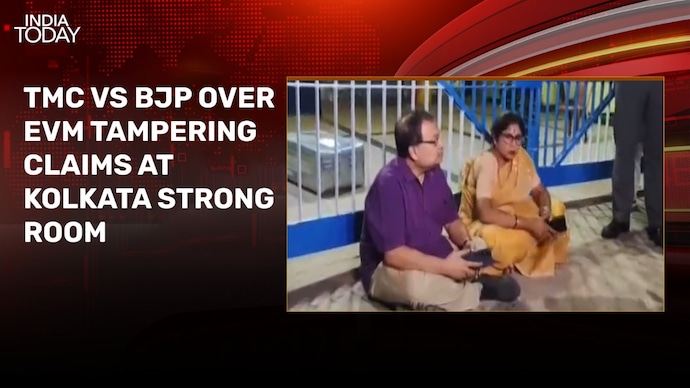
Ahead of the counting day, a massive political war erupted between the TMC and BJP over EVM tampering claims at a strongroom in Kolkata.
The Punjab Assembly faced significant disruption as opposition parties, including Congress, BJP, and Shiromani Akali Dal, accused Chief Minister Bhagwant Mann of attending a special Labour Day session while intoxicated.
A political showdown has erupted in West Bengal ahead of counting day over allegations of electronic voting machine tampering and exit poll predictions.
This broadcast analyses the Tamil Nadu and Kerala assembly election exit polls and decodes what to expect on the Verdict Day on May 4.
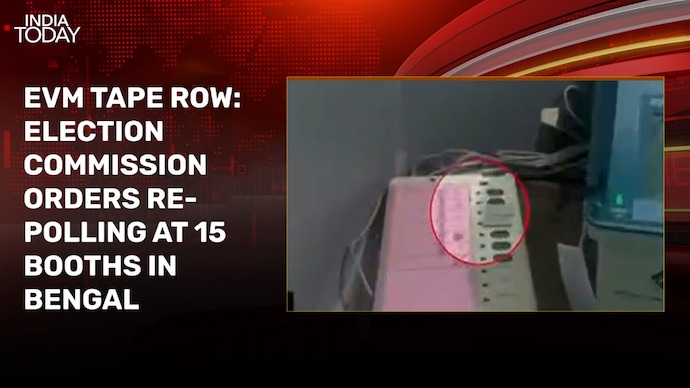
The Election Commission has ordered repolling at fifteen booths in West Bengal following reports of irregularities during the second phase of voting. The repolling, scheduled for the second of May, will take place at eleven booths in Mangalkot and four booths in Diamond Harbour.
A political controversy has emerged in West Bengal as Trinamool Congress leaders staged protests outside a Kolkata strong room, alleging tampering with electronic voting machines and ballot boxes.
Today’s Chanakya exit poll predicted a dramatic change in Bengal this time, projecting a clear lead for the BJP with 192+ seats and 100+ seats for the TMC.
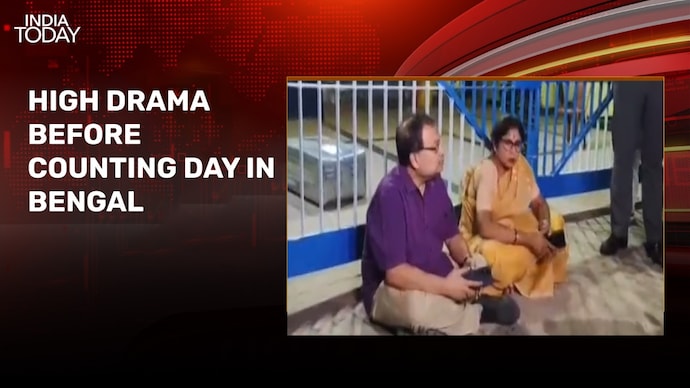
High political drama was witnessed in West Bengal as Trinamool Congress candidates protested outside strongrooms in Kolkata, alleging EVMs manipulation by the BJP and election officials.
Trinamool Congress leaders are currently staging a protest outside the strong room located at the Netaji Indoor Stadium in Kolkata. They alleged attempts were made by the Bharatiya Janata Party and Election Commission officials to open ballot boxes.
Exit polls have predicted a neck-and-neck fight in West Bengal between the Trinamool Congress and the BJP, with an advantage to the BJP.
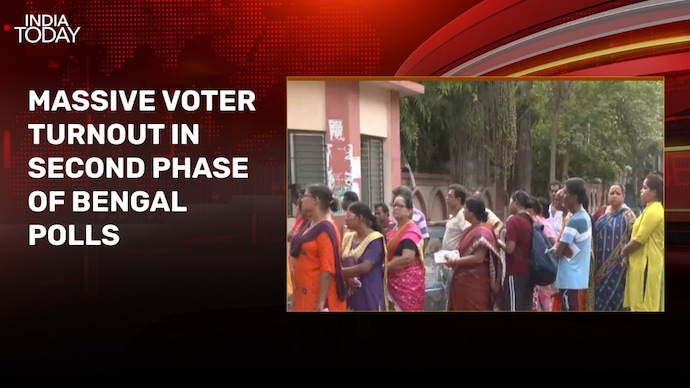
The second phase of the West Bengal assembly elections recorded a high voter turnout, reaching 90 percent by 5 PM. Despite the participation, the polling process faced controversies, including allegations of electronic voting machine tampering and sporadic clashes across various districts.
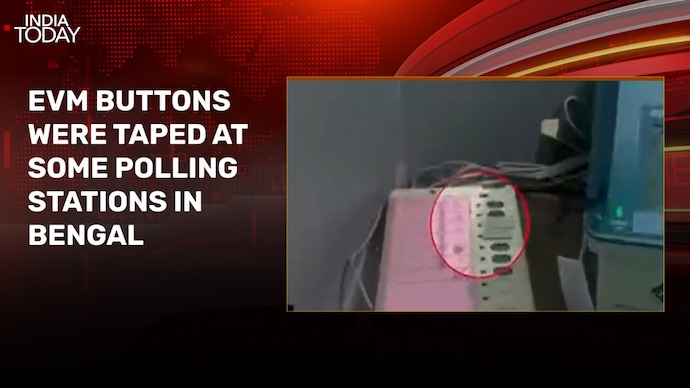
The Election Commission has ordered re-polling in West Bengal at all polling stations where Electronic Voting Machines (EVMs) were found tampered with using black or white tape.
The top focus of this episode of 5 Live is on the fragile ceasefire in West Asia as Iran hardens its stance ahead of crucial talks in Islamabad.
On this Special Report, anchor Preeti Choudhry examines the impact of Rahul Gandhi's 'vote chori' (voter theft) allegations against the Election Commission and the government. Citing recent survey data, Choudhry notes that '54% of our respondents say vote chori is an issue and it matters to the public,' challenging the notion that the narrative is failing to gain traction. The discussion features BJP National Spokesperson Tuhin Sinha, who argues that Gandhi's allegations lack consistency and were rejected by voters in Bihar. Sinha contends that the 40% who find the issue significant likely represent the existing opposition base rather than a shift in public sentiment. The programme analyses whether these allegations reflect a lack of confidence in the Election Commission or if they remain electorally insignificant despite the high visibility of the narrative in the microdata presented during the broadcast.
This episode of India First features a debate regarding Prime Minister Narendra Modi's criticisms of the Congress party in Kerala. Congress representative Dr. Karuna Sagar accuses the Prime Minister of communal polarisation and cites 1,318 alleged hate speeches by BJP leaders in 2025. In response, BJP National Spokesperson Sanju Verma defends the government’s economic record, noting India has overtaken Japan as the world's fourth-largest economy with a growth rate exceeding 7.5%. Verma highlights the success of the Ujjwala Yojana and Pradhan Mantri Awas Yojana, claiming multidimensional poverty has dropped to 1.3%. Panelists Suman C. Raman and Abhijit Iyer-Mitra analyze Kerala's political dynamics, the influence of Jamaat-e-Islami, and the 'Urban Naxal' narrative. The discussion contrasts the BJP's electoral strike rates in Maharashtra and Haryana against the ideological shifts between the Left and Congress. This news segment examines the intersection of economic data, welfare schemes, and communal rhetoric ahead of regional political contests.