Tara Sutaria is a white satin dream in Vivienne Westwood gown in Cannes
Tara Sutaria made her Cannes red carpet debut in a white Vivienne Westwood gown ahead of the Women in Cinema gala.

The Red Sea is a seawater inlet of the Indian Ocean, lying between Africa and Asia. This sea is notable for its elongated shape, stretching approximately 2,250 kilometers (1,398 miles) from the north to the south. Its maximum width is about 355 kilometers (220 miles), and it covers an area of about 438,000 square kilometers (169,100 square miles). The Red Sea is connected to the Indian Ocean through the Bab el Mandeb strait and the Gulf of Aden to the south, and to the Mediterranean Sea via the Suez Canal and the Gulf of Suez to the north. The sea is bordered by Egypt, Sudan, Eritrea, and Djibouti to the west, and Saudi Arabia, Yemen, and Jordan to the east. Israel and the disputed territory of Palestine also have small coastlines along the northern end of the sea.
The Red Sea is one of the world's most saline bodies of water, due to high evaporation and low precipitation rates, as well as a lack of significant rivers or streams draining into it. Its unique geological formation, lying in a rift valley that formed over 25 million years ago, contributes to its great depth of over 2,200 meters (7,200 feet) in the central median trench and an even deeper trench in the southern end.
Ecologically, the Red Sea is known for its spectacular coral reefs, which are among the most diverse in the world. These reefs are home to a wide variety of marine life, including numerous species of fish, sharks, and sea turtles, making the Red Sea a popular destination for divers. The warm, clear waters are ideal for coral growth, and the reefs are relatively pristine.
Economically, the Red Sea is significant for several reasons. It is an important route for oil and cargo shipping, as it provides the shortest sea link between the Indian Ocean and the Mediterranean Sea. The region surrounding the Red Sea is also known for its rich oil reserves, making it strategically important in global energy politics. Additionally, the Red Sea's beautiful beaches and rich marine life support a thriving tourism industry in the surrounding countries.
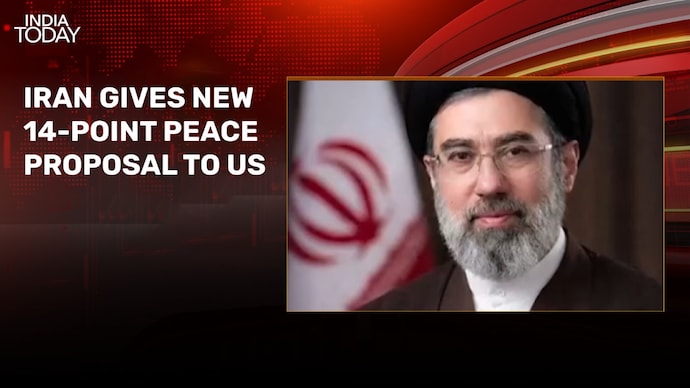
Iran has submitted a fourteen-point peace proposal to the United States via back-channel negotiations, seeking a permanent cessation of hostilities, the lifting of economic sanctions, and the reopening of the Strait of Hormuz.
The latest episode of Statecraft examines the escalating conflict between the United States and Iran as the sixty-day deadline under the War Powers Resolution expires.
One year after the Pahalgam terror attack, India has fundamentally shifted its anti-terror doctrine from reactive measures to preemptive action.
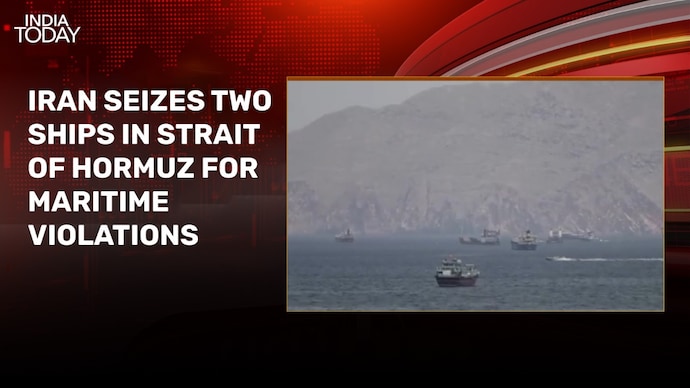
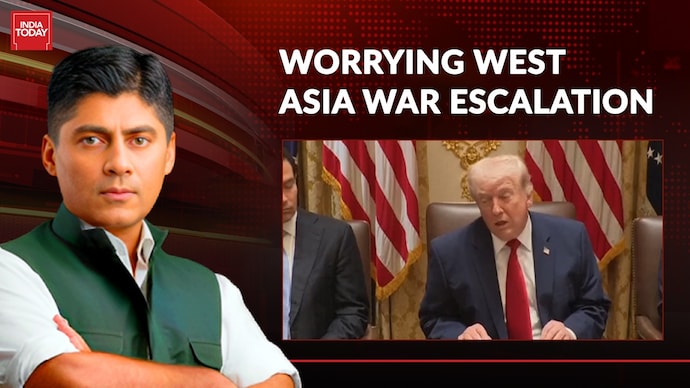
The geopolitical landscape in West Asia faces renewed instability as tensions between the United States and Iran escalate. Following the US naval blockade and an indefinite ceasefire announcement by the US President, Iran has retaliated by seizing two vessels in the Strait of Hormuz, including one bound for India.
As tensions escalate in West Asia, the United States has deployed 10,000 additional troops to enforce a naval blockade in the Gulf of Oman.
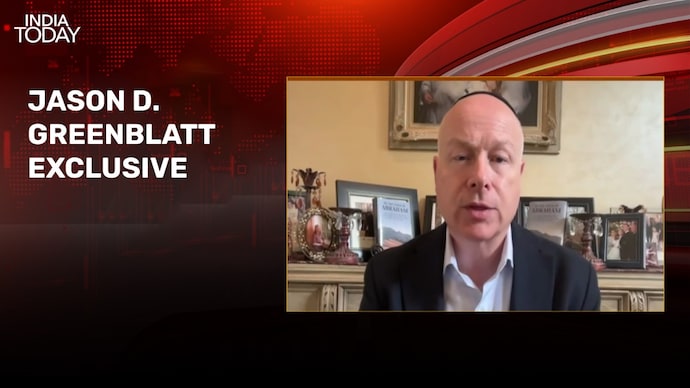
In an exclusive interview, Jason Greenblatt, the former White House Middle East Special Envoy, discusses the escalating tensions between the United States and Iran as a critical deadline approaches.
As the West Asia conflict enters its 31st day, US President Donald Trump has issued a direct ultimatum to Iran, threatening to obliterate energy infrastructure if the Strait of Hormuz is not reopened.
The West Asia conflict has escalated following a threat from US President Donald Trump to Iran, stating that a failure to immediately open the Strait of Hormuz will result in the obliteration of its electric generating plants, oil wells, and Kharg Island.
Iran has threatened to blockade the Bab al-Mandeb Strait, a critical maritime chokepoint for global trade, if the US initiates ground operations on Kharg Island.
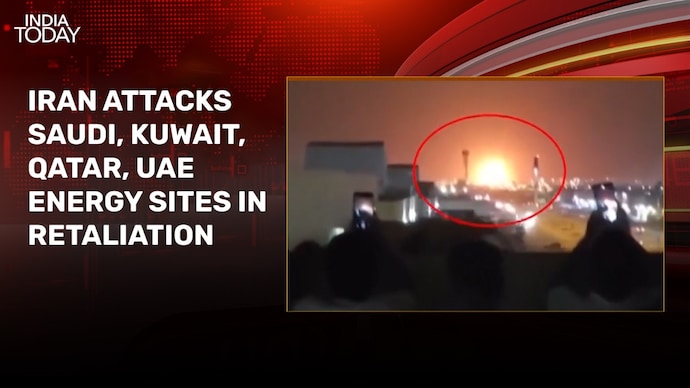
Iran has launched retaliatory drone attacks on multiple energy infrastructure sites across West Asia, targeting oil and gas facilities in Saudi Arabia, Kuwait, Qatar, and the UAE.
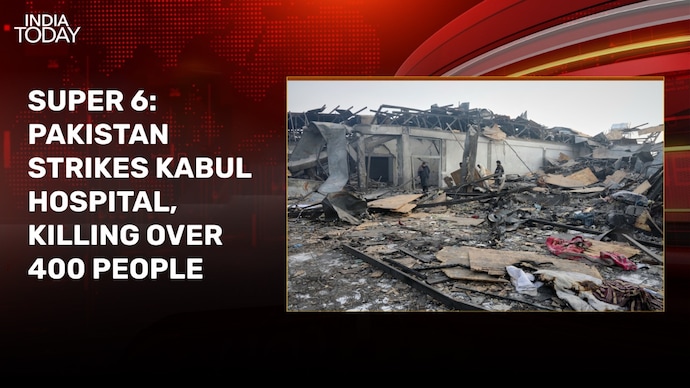
Overnight strikes allegedly carried out by Pakistan targeted a rehabilitation centre in Kabul, the capital of Afghanistan, killing more than 400 people and injuring over 250, according to Afghan officials. Authorities condemned the attack on the Omid Addiction Treatment Hospital, calling it a brutal strike on civilians.
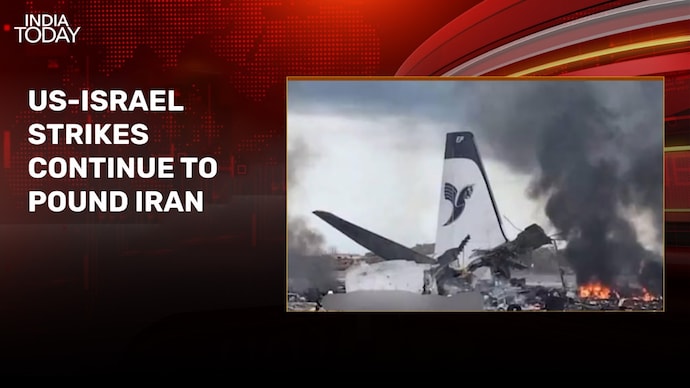
Joint US-Israeli airstrikes have targeted Mehrabad airport in Tehran and Bushehr airport, where Iranian media reported a passenger aircraft was destroyed on the ground.
In this episode of India First, host Gaurav Sawant, Managing Editor at India Today, analyses the strategic significance of Prime Minister Narendra Modi's recent high-level visit to the United Arab Emirates. Joined by Pranay Upadhyay and Sushant Sarin, Senior Fellow at the Observer Research Foundation, Sawant explores the 'substantive' nature of the bilateral agreements signed, ranging from space sector development to nuclear energy and investment. A key highlight of the discussion is the invitation from Donald Trump for India to join a 'Board of Peace' for Gaza. Sawant notes, 'Donald Trump, the Mrs.5 president, has invited several countries, including India, the Indian Prime Minister Narendra Modi, to be a part of the Board of Peace for Gaza.' The panel examines the shifting geopolitics in West Asia, including the UAE-Saudi Arabia dynamics and the impact of Indian expatriates in the region. The debate also touches upon the defense pacts involving Pakistan and Turkey, questioning India's potential role in regional peace initiatives.
This special report highlights the escalating tensions in West Asia as the United States shifts to a clear war posture. According to the report, 'all indications suggest that an attack is imminent' within the next 24 to 48 hours. The transcript details significant military movements, including aerial refueling tankers taking off from Qatar and the deployment of Arleigh Burke-class destroyers armed with Tomahawk missiles. Additionally, an Ohio-class submarine and the USS Abraham Lincoln Carrier Strike Group are reportedly positioning in the region. Iran has responded by raising its military readiness and restricted its airspace. While the report mentions that quiet diplomacy may be occurring, the surge in naval firepower from the Red Sea to the Persian Gulf suggests a high state of alert. The program underscores that the next 48 hours are crucial as the world watches for a potential direct US-Iran confrontation amidst strategic silence from official channels.
The big focus on this episode of India First is on the spiking tensions between Saudi Arabia and the United Arab Emirates.
In this special broadcast of India First, Executive Editor Gaurav Sawant discusses the escalating rivalry between Saudi Arabia and the UAE, marked by Saudi airstrikes in Mukalla and the UAE’s withdrawal from Yemen. The panel, including Lt Gen Syed Atta Hasnain, Ambassador Anil Trigunayat, Dr. James Dorsey, and Dr. Wael Awad, analyses the impact on the region and Pakistan. A major focus is Pakistan’s Chief of Defence Forces, Field Marshal Asim Munir, who claimed ‘divine help’ during Operation Sindoor against India. Gen Hasnain predicts 2026 could be the ‘year of doom’ for Munir amidst internal and external challenges. The discussion also explores the geopolitical shifts in the Red Sea, the UAE's expanding influence in Pakistan's economy through the Fauji Foundation, and the potential for a new Middle East order involving Israel.
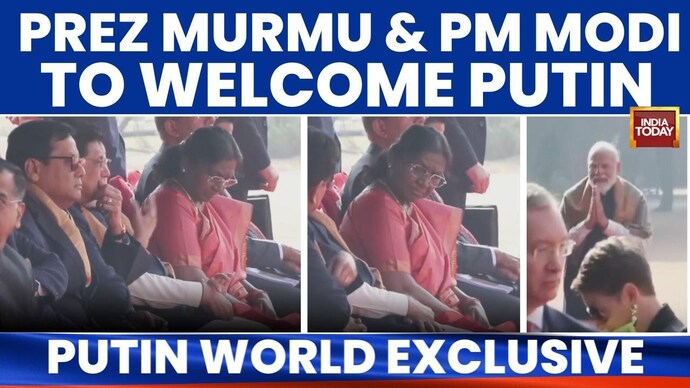
On this Special Report, the focus is on Russian President Vladimir Putin's historic visit to India. Managing Editor Sandeep Unnithan highlights the shift in India-Russia ties beyond 'guns and oil' to sectors like pharma, IT, and shipbuilding, aiming for a verified '$100 billion trade by 2030'. Senior Executive Editor Gaurav Sawant and Deputy Editor Shivani Sharma report from Rashtrapati Bhavan on the ceremonial welcome. The programme explores the strategic diversification of the partnership.
In this exclusive report, India Today's Shivani Sharma analyses the Indian Navy's stern warning to Pakistan following the deadly Delhi Blast. Reporting on Navy Chief Admiral Dinesh Tripathi's annual press conference, Sharma reveals that the Navy is 'waiting for the government's nod' to launch 'Operation Sindoor 2.0'. The Navy Chief clarified that the original 'Operation Sindoor is still going on' and highlighted how the 'aggressive posturing of the Indian Navy in the Northern Arabian Sea' during the May 7-10 strikes kept Pakistan's fleet confined to their bases. The report underscores the military's readiness to retaliate at an 'opportune time'.
US President Donald Trump defended former Brazilian President Bolsonaro, calling him 'a very honest man' and criticising the current Brazilian leadership. Trump also announced 35% tariff on Canadian goods starting August 1st.
Yemen's Houthi militants have declared they will target US ships in the Red Sea as long as US attacks on Yemen continue.