Topic

Advertisement
TOPIC

Venezuela

Venezuela is a South American nation rich in natural resources, especially some of the world’s largest proven oil reserves and other minerals.

Its economy has faced severe contraction, hyperinflation and persistent unemployment, partly due to long-term reliance on oil, domestic policy challenges, and international sanctions that have restricted trade and foreign investment. Agriculture and forestry contribute to the economy alongside oil, although economic output has remained weak in recent years. 

The country has been mired in social and political turmoil for much of the past decade, with widespread protests and international criticism over governance, elections, and human rights. 

In a dramatic escalation, the United States carried out airstrikes and a military operation in Venezuela in early January 2026 that resulted in the capture of President Nicolás Maduro and his wife and their transfer to U.S. custody, according to US officials.

This has sparked widespread global reaction, with Venezuela’s government rejecting the attacks as aggression and demanding proof of life, while the U.S. claims the move is tied to criminal indictments and regional security concerns. 

This incident has created a constitutional and diplomatic crisis, with Vice President Delcy Rodríguez asserting leadership, the UN Security Council expected to meet, and countries around the world expressing divergent views on sovereignty, law, and stability.

...Read More
  • ALL
  • STORIES
  • VIDEOS

STORIES

Trump shifts 51st state dream from Canada, Greenland to Venezuela

Before turning to Venezuela, Trump had repeatedly spoken about Canada as the 51st state of the United States. What began as jibes at former Canadian Prime Minister Justin Trudeau during his 2024 presidential campaign continued after Mark Carney became prime minister a year later.

Is Ali Khamenei alive? What Iranian Foreign Minister said

The first wave of US-Israeli strikes was directed towards damaging the political leadership of Iran, as the President's residence and Ali Khamenei's office were targeted. It has led to questions about whether the US is aiming at regime change in Iran as it did in Venezuela.

Load More

VIDEOS

West Asia war wipes out lakhs of crores in investor wealth; Oil at $119

Indian equity markets have experienced a significant downturn as the West Asia conflict enters its tenth day. The Sensex crashed 1,353 points to 77,566, while the Nifty fell 422 points to the 24,000 level, marking a 4.58 percent decline since the hostilities began. This volatility has resulted in the loss of lakhs of crores in investor wealth. Brent crude prices surged to $119.50 per barrel following a 28 percent rally, driven by disruptions in the Strait of Hormuz. External Affairs Minister S. Jaishankar emphasized the region's importance for India's energy security and the safety of 10 million Indian expatriates. Global energy markets report a 26 percent jump in Russian Ural crude as China increases stockpiles. India maintains 74 days of oil reserves, while Japan utilises its 300-day supply. Market uncertainty is further compounded by shadow market activities involving Russian, Venezuelan, and Iranian crude. Additionally, regional tensions have prompted some Dubai residents to relocate following reported drone strikes near Palm Jumeirah.

Ian Bremmer says Iranians losing, but war not going as Trump thought

In an exclusive interview with India Today TV, geopolitical expert Ian Bremmer said Iran is clearly losing militarily, with its Navy destroyed, air defences non-existent, and leadership decapitated by Israeli strikes. However, he argued the United States is not achieving its objectives the way President Donald Trump expected.

After EU deal, is India-US trade deal a gamechanger? Big focus on India First

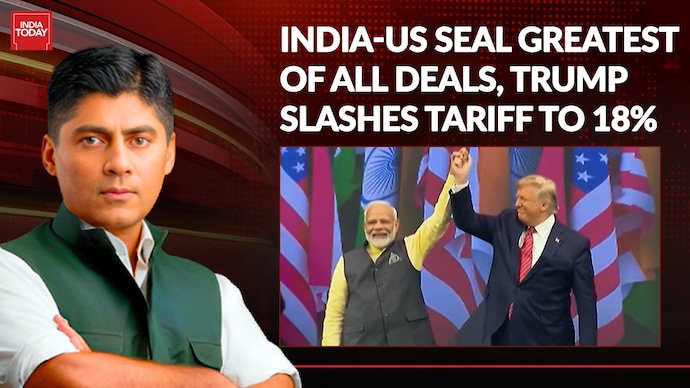
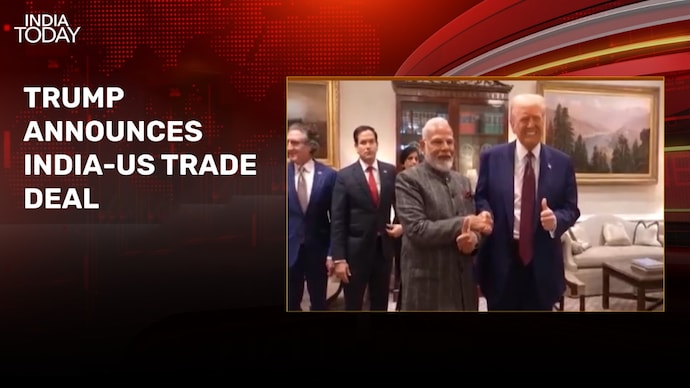
This special report examines the landmark India-US trade agreement following US President Donald Trump's announcement to reduce tariffs on Indian goods from 50% to 18%. Gaurav Sawant and former Ambassador Taranjit Singh Sandhu analyze the strategic implications of this deal, which targets a $500 billion bilateral trade volume. Union Commerce Minister Piyush Goyal confirms that the agreement protects India's agriculture and dairy sectors despite global economic pressures. The report highlights India's role in the global supply chain and its focus on competitive parity for textiles, leather, and gems. Addressing the NDA parliamentary party, Prime Minister Narendra Modi noted the shifting global order in India's favor. Additionally, the program addresses India's continued purchase of Russian oil for national energy security. Experts, including Mark Linscott and Ambassador Arun Kumar Singh, discuss the diplomatic significance of these developments. The broadcast also covers the escalating conflict in Balochistan, where Pakistan's Defense Minister Khwaja Asif admitted military challenges against local fighters.

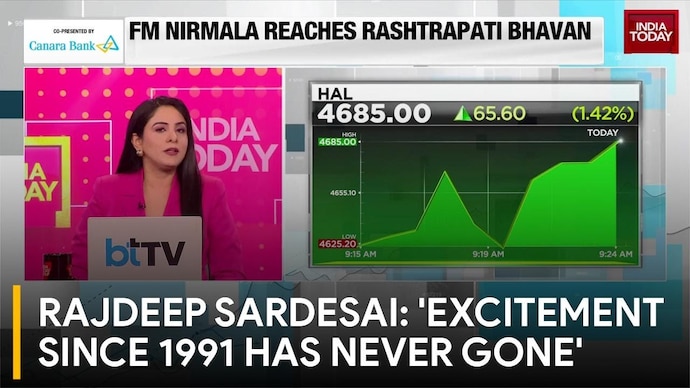
Rajdeep Sardesai Recalls 1994 Budget Coverage: 'Excitement Since 1991 Has Never Really Gone'

On this India Today special, veteran journalist Rajdeep Sardesai reflects on the evolution of the Union Budget in India, tracing his experience back to 1994. Recalling his early days at NDTV, Sardesai notes, 'In 1994, I was at NDTV when we were commissioned to do the post-budget reactions' outside the BSE. He highlights how the post-1991 era brought a unique excitement to budget announcements that persists today, despite the process becoming more 'mundane' following major tax reforms. The discussion covers the shift from high-stakes policy changes to the current market preference for stability and the absence of 'retrospective tax bombshells'. Sardesai also addresses the impact of global geopolitics on the Indian economy, questioning the influence of external leaders on India's sovereign energy decisions, specifically regarding oil imports from Venezuela and Iran. The panel further examines the feasibility of the government's disinvestment targets and the long-term roadmap for defense allocations in the upcoming budget by Nirmala Sitharaman.