
Gulf turns to a country 4,000 km away to defeat Iran's Shahed drones
Since the war began, the US and its Gulf allies have relied on expensive air defence systems to shoot down cheap Iranian drones. It has saddled them with a bill in tens of billions of dollars. Now, a country that has learnt how to stop these drones in a cheaper, smarter way has come to the rescue.
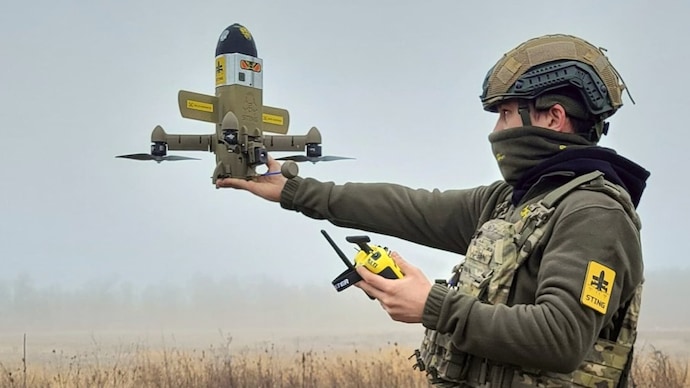

Over the past month, the buzzing sound of Iran's Shahed drones has become the most feared noise in the Gulf. These low-cost drones have emerged as Iran's trump card in its war with the US, which has relied on missiles worth millions of dollars to shoot them down to protect its military bases in the Gulf. But help has come from an unlikely country, situated 4,500 km away. Ukraine, which has a four-year battle experience with Shahed drones due to its own conflict with Russia, and has mass-produced cheap "Sting" and "Bullet" interceptors, has now come to the rescue of the Gulf.
The tide has turned pretty quickly. Just weeks ago, during the initial phase of the war, US President Donald Trump told reporters that Ukrainian President Volodymyr Zelenskyy was the last person he would ever ask for help. A month on, with a resilient Iran wreaking havoc on US bases and energy facilities in the Middle East, and Trump's war bill in tens of billions of dollars, Gulf countries have lined up for Ukraine's guidance on how to counter the Shaheds.
And thus, over the last weekend, Zelenskyy, despite not wearing a suit (if you know, you know), received a red carpet welcome in Qatar, the UAE, and Saudi Arabia. A deal was signed with the countries where Ukraine would provide its Sting interceptors, and its hard-earned battlefield lessons, in exchange for high-end air-defence missiles to counter Russia.
In fact, Ukraine has already deployed over 200 anti-drone experts to the Middle East to help Jordan and Kuwait in tackling the Shaheds, also known as "flying mopeds" due to their whirring sound similar to that of a motorcycle.
WHY GULF NATIONS ARE RUSHING TO UKRAINE?
It begs one question. Why has Ukraine suddenly become the apple of the Gulf's eye? It's all about economics and the financial cost of the war. The turmoil in the Middle East has shown that attacking has grown cheap, while the relative cost of defending has surged.
Factor this: The Shahed 136, Iran's crown jewel, which has been used by Tehran in thousands to strike US assets, costs around $20,000-$30,000 (Rs 18 lakh-Rs 28 lakh) per unit. Thousands of them can be produced in a month.
These cheap drones and missiles were enough to render 13 US military bases "uninhabitable", with losses estimated up to $2.9 billion (Rs 2.41 lakh crore) in the first three weeks, according to The Wall Street Journal report.
To counter these drones, the US and its Gulf allies have deployed Patriot missiles costing about $4 million (Rs 3.3 crore) and costly Terminal High-Altitude Area Defence (THAAD) batteries. Crucially, supplies of these interceptor missiles are now running low.
Besides these missiles, the Gulf states have also deployed advanced fighter jets such as the F-16s. As per reports, just keeping an F-16 jet in the air costs over $25,000 an hour. The missiles fired by it to take down the drones only jack up the bill.
Ukraine faced a similar situation around four years ago. Iran, being a key ally of Russia, supplied these Shahed drones to Moscow as it invaded Ukraine. As these pounded key assets in Ukraine, Kyiv ran pillar to post to seek help from Europe and the US.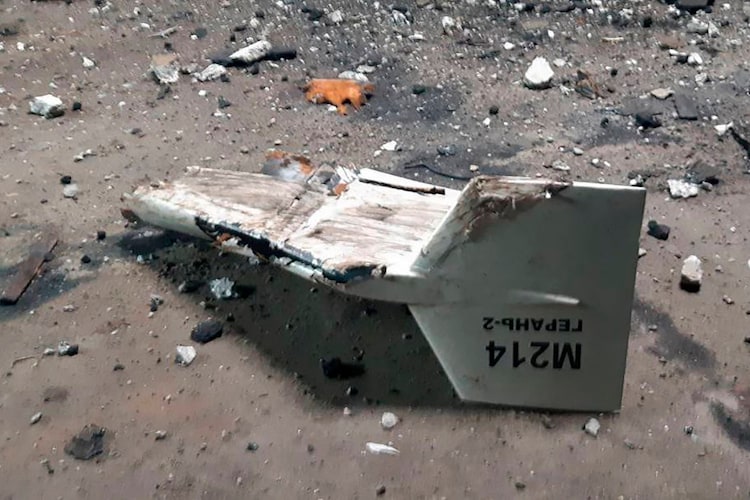
UKRAINE'S STING AND BULLET VS SHAHED DRONES
However, Ukraine failed to receive enough high-end weaponry from the West. It decided to take matters into its own hands. After two years of efforts, out came the "Shahed killers". The funda was simple: fight cheap drones with even cheaper, smarter ones.
The Sting and Bullet interceptors, assembled from off-the-shelf components at a fraction of the price, have taken down thousands of Russian Shahed drones since mid-2025. They have a success rate of 70-90%. In fact, an analysis by the NYT found that Ukraine managed to down 87% of the 5,000 drones sent by Russia in February earlier this year.
These interceptors are controlled by operators who track them on a monitor via FPV (first-person view) goggles. The human operator stays in control to avoid jamming or errors.
The Sting is the most lethal and the fastest of the interceptors. It can reach speeds of 315-340 km, and can cruise at an altitude of 10,000 feet. It relies on thermal imaging cameras to hit targets. Crucially, it can return to base if unable to detect a target.
The Bullet, powered by a jet engine and four rotors, can be 3D-printed and uses AI to locate targets. It can travel at speeds of 130-309 km. There are other models as well, including P1-Sun, Octopus 100, and ODIN WinHit, that have been used to counter the Iranian Shaheds.
Zelenskyy had imagined such a scenario well before the US and Israel.
"Ukrainians have been fighting against 'Shahed' drones for years now, and everyone recognises that no other country in the world has this kind of experience. We are ready to help," Zelenskyy tweeted just days after the conflict began.
HOW ARE THEY DIFFERENT FROM SHAHEDS?
What makes Ukraine's 'Sting' and 'Bullet' cheaper as compared to the Iranian Shaheds?
It's all about the technology. The Shaheds are GPS-guided kamikaze or suicide drones. These are loitering, one-way munitions that are automated to detonate upon hitting programmed targets.
These do not return to base following an attack like Ukraine's Sting interceptor.
With these drones, which Iran deployed in thousands, it managed to overwhelm the defences of the US and Gulf states and exploit their weaknesses.
While the Gulf states have managed to intercept most of these drones, it has come at a high cost.
Ukrainian defence personnel spent three years finding ways to shoot down these Shahed drones. It helped them produce "Shahed killers" that no defence laboratory or NATO exercise could replicate.
It has now emerged as the Gulf's primary anti-drone technology supplier. Besides, it is also reshaping Ukraine's role on the global stage -- bringing new partnerships, funding opportunities, and geopolitical heft.