El Nino to hit India during monsoon, last until September, says IMD chief
For India, the developments are particularly significant because El Nino has historically been associated with weaker monsoon rainfall, frequent heatwaves and increased stress on agriculture and water resources.
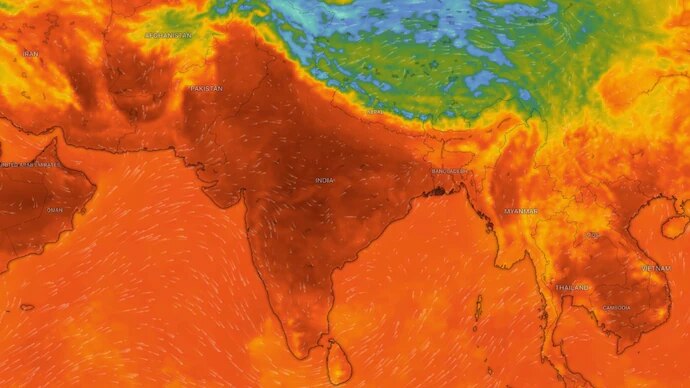
El Nino is confirmed to hit India during the monsoon season, bringing the rainfall levels to the lowest the country has seen in the last 3 years, Dr Mrutyunjay Mohapatra, DGM, IMD, told India Today Group in an exclusive interview.
Mohapatra provided the grim update just hours after IMD retained its monsoon forecast, noting that India will see below-average levels of rain in the incoming monsoon season.
El Nino is the periodic warming of the Pacific Ocean that disrupts weather patterns across Asia, and is forecast to arrive as early as June 2026.
Mohapatra also laid out how the incoming El Nino will strengthen in the coming months.
WHEN WILL EL NINO HIT INDIA?
El Nino will likely emerge in June, but in a weak state, said Mohapatra, adding that it will gain moderate strength by mid-July and August. In September, however, El Nino will attain full strength, sending cascading ripple effects across India and the world.
The concerns are being amplified by a growing consensus among international weather agencies.
Australia's Bureau of Meteorology (BOM) recently projected that El Nino conditions could emerge as early as June, while China's National Climate Centre has also reported that warming in the Pacific Ocean has entered an El Nino phase and is expected to strengthen in the coming months.
Adding to the concern, satellite observations analysed by Nasa have detected a large pool of warm water building beneath the Pacific Ocean's surface. Scientists describe this subsurface heat reservoir as a key signal for the formation of El Nino, as the trapped warmth gradually rises and spreads across the eastern Pacific.
For India, the developments are particularly significant because El Nino has historically been associated with weaker monsoon rainfall, more frequent heatwaves and increased stress on agriculture and water resources.
With multiple global forecasting centres now pointing toward its arrival, concerns are growing over the impact the phenomenon could have on the country's upcoming monsoon season.
El Nino is confirmed to hit India during the monsoon season, bringing the rainfall levels to the lowest the country has seen in the last 3 years, Dr Mrutyunjay Mohapatra, DGM, IMD, told India Today Group in an exclusive interview.
Mohapatra provided the grim update just hours after IMD retained its monsoon forecast, noting that India will see below-average levels of rain in the incoming monsoon season.
El Nino is the periodic warming of the Pacific Ocean that disrupts weather patterns across Asia, and is forecast to arrive as early as June 2026.
Mohapatra also laid out how the incoming El Nino will strengthen in the coming months.
WHEN WILL EL NINO HIT INDIA?
El Nino will likely emerge in June, but in a weak state, said Mohapatra, adding that it will gain moderate strength by mid-July and August. In September, however, El Nino will attain full strength, sending cascading ripple effects across India and the world.
The concerns are being amplified by a growing consensus among international weather agencies.
Australia's Bureau of Meteorology (BOM) recently projected that El Nino conditions could emerge as early as June, while China's National Climate Centre has also reported that warming in the Pacific Ocean has entered an El Nino phase and is expected to strengthen in the coming months.
Adding to the concern, satellite observations analysed by Nasa have detected a large pool of warm water building beneath the Pacific Ocean's surface. Scientists describe this subsurface heat reservoir as a key signal for the formation of El Nino, as the trapped warmth gradually rises and spreads across the eastern Pacific.
For India, the developments are particularly significant because El Nino has historically been associated with weaker monsoon rainfall, more frequent heatwaves and increased stress on agriculture and water resources.
With multiple global forecasting centres now pointing toward its arrival, concerns are growing over the impact the phenomenon could have on the country's upcoming monsoon season.

