Super El Niño | A warming warning
Forecasters warn of a Super El Niño that could have major consequences for India

El Nino, a periodic warming of surface waters in the central and eastern Pacific Ocean, is among the most influential climate phenomena affecting weather patterns across the globe. Occurring every two to seven years, the event weakens trade winds and alters atmospheric circulation, often disrupting rainfall patterns in Asia, the Americas and Australia.
The term El Nino, Spanish for Little Boy or Christ Child, was coined by South American fishermen in the 1600s because the warming typically peaks around Christmas. Scientists say the phenomenon develops when winds that normally push warm Pacific waters toward Asia weaken or reverse, allowing warm water to drift back toward the Americas.
For India, El Nino carries major implications because it tends to weaken the southwest monsoon, the lifeline of the country’s agriculture-dependent economy. Reduced rainfall during El Nino years can trigger droughts, lower crop output and increase pressure on food prices. Historically, India has experienced below-average rainfall in many El Niño years, including 2009, when rainfall dropped to just 78.2 per cent of the long-period average, the lowest in 37 years.
The India Meteorological Department has already forecast below-normal monsoon rainfall at 92 per cent of the long-period average for 2026, while several global climate models suggest a strong El Niño may emerge by mid-year. Experts warn that the event could disrupt rainfall distribution across India, although some southern coastal regions such as Tamil Nadu may receive heavier showers.
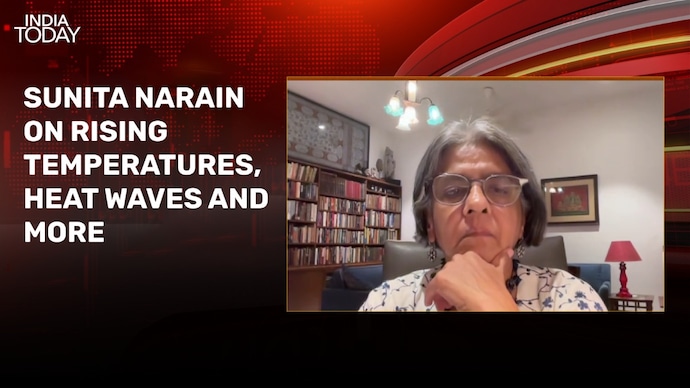
In an interview with India Today, Sunita Narain, Director General of the Centre for Science and Environment, discussed the heatwaves impacting India and the need for better urban planning.
In an exclusive interview with India Today, Nilesh Shah, Managing Director at Kotak Mahindra Asset Management Company and a member of the Prime Minister's Economic Advisory Council, addressed the recent market downturn and the Prime Minister's call for austerity.
US President Donald Trump's address on the escalating West Asia conflict offered no clarity on an exit strategy, instead repeating familiar rhetoric and threats. Trump claimed US forces are close to completing their mission in Tehran and insisted America does not depend on the Strait of Hormuz.
On this Special Report, the focus is on the diverse weather patterns across India and the globe as the world counts down to 2026. The reporter highlights the sharp contrasts, stating, 'Delhi NCR... it's been zero visibility conditions for the past few days now.' The programme details the hazardous air quality in the national capital, snowfall in Jammu and Kashmir, and humidity in Mumbai and Chennai. Globally, the report covers the harsh winter in New York, heavy rains in Europe, and summer warmth in Sydney. The broadcast also notes that while Tokyo expects clear skies, London and Madrid are facing wet spells. The reporter concludes with a look at Australia's summer Christmas, marking a warm end to the global weather snapshot.
Schmidt predicts that 2024 is likely to be even hotter due to the anticipated El Nino event.
With El Nino ready to strike the Pacific Ocean this year, we spoke to the India Meteorological Department to dive deep into what India must brace for ahead of this atmospheric phenomenon’s arrival. Watch this video to find out how El-Nino might impact you.
Will India have a below average monsoon? There’s a 90% likelihood of an El Nino developing during June-September. El Nino has resulted in below-average rainfall in the past resulting in severe drought that destroyed crops. How does El Nino affect India's monsoon? Watch to know more.
One day it's raining, another day you witness scorching heat. Are you also confused about weather changes? Well, it's El Nino. It has the potential to disrupt weather patterns around the world. Watch to find out more about it.
El Nino has been known to bring long droughts to countries around the Pacific Ocean - from Peru to Indonesia and Australia.