
No grid failure, no blackout: How India met record power demand surge in April
India's grid faces a "double-peak" pattern, when daytime demand is partly cushioned by solar power, but evening peaks, driven by air conditioners and fans, continue to rely heavily on coal-fired power.
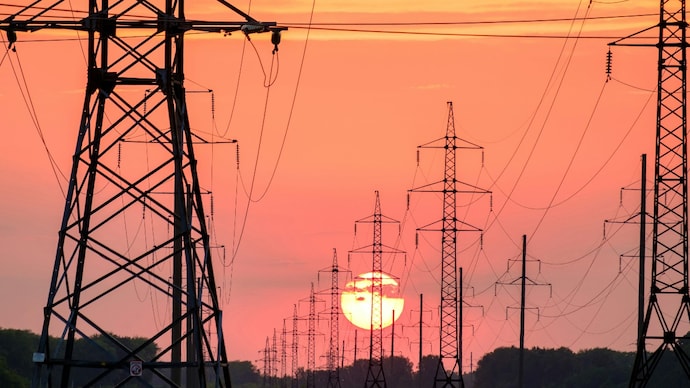

India's electricity grid has never worked this hard.
As fierce and unusually early heatwave conditions have swept across the world's most populous country in recent weeks, the power demand has shattered records as and keeping the lights and ACs on required every source the country has, from coal to its increasingly robust renewable energy capacity.
INDIA'S GRID UNDER STRESS
On April 25, India's peak power demand hit a historic 256.1 GW at 3:38 pm, surpassing the previous day's record of 252.07 GW and comfortably overtaking the previous all-time high of 250 GW set in May 2024.
India has already been dealing with a fuel crisis in light of the war in Iran, but managed to weather the lofty energy demands.
What makes the achievement particularly significant is that the entire requirement was supplied without any national shortage, no grid stress event, and no major transmission bottlenecks.
To meet the surge, the grid was pushed hard across all sources.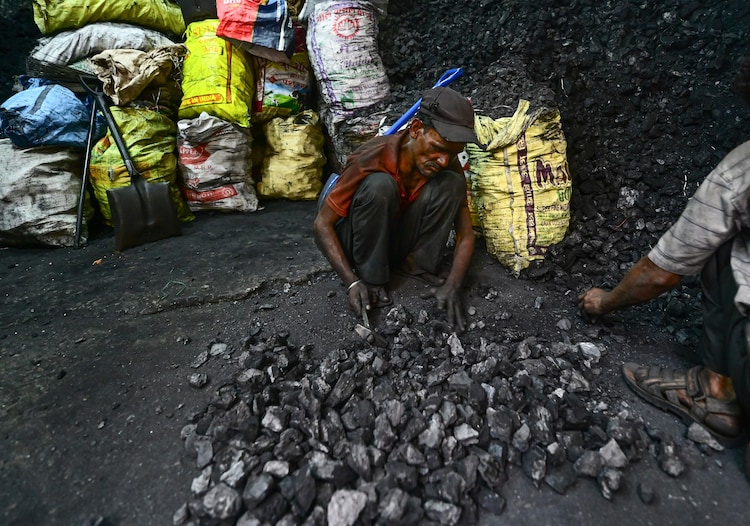
Coal-fired power output rose to around 187 GW, while about 9.6 GW of gas-based capacity was also brought online.
NTPC Ltd., an Indian power generation firm, procured gas through the Indian Gas Exchange and operated its plants in line with Grid-India's directions.
But fossil fuels did not carry the load alone.
Solar energy contributed nearly 57 GW at the peak, which was about 22% of total supply. Earlier in the day, solar output had surged to nearly 81 GW, accounting for roughly one-third of total generation at that moment.
INDIA FACING EXTREME HEAT
The broader heat crisis driving the power demand has been severe.
Delhi recorded 42.8°C on April 26, which was 5.1°C above normal. It was also the highest reading of the year, with the IMD warning of continuing heatwave conditions across northwest and central India.
Temperatures across much of the country ranged between 40°C and 46°C.
With the season still intensifying, forecasts for the strongest El Nino event in a decade point to hotter, drier weather across Asia through the second half of 2026, with India also expecting below-average monsoon rains for the first time in three years.
The government says it is prepared, having deferred maintenance of nearly 10,000 MW of coal-fired capacity to July, and remains confident of meeting a projected seasonal peak of around 270 GW.
CLEAN ENERGY, DIRTY ENERGY
The coal surge sits awkwardly against India's recent clean energy story.
In 2025, India added nearly 44.51 GW of renewable energy capacity, almost double the additions of the previous year, with total renewable installed capacity reaching 253.96 GW by November.
Furthermore, India's non-fossil fuel sources crossed 51% of total installed capacity for the first time.
Renewable power generation rose a record 24% in 2025 and fossil fuel generation actually fell by 3.3% that year, marking a landmark moment for the country's energy transition.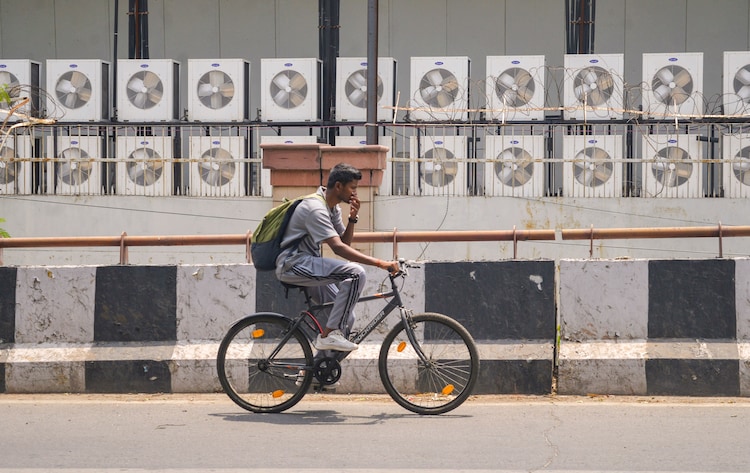
But the heatwave this year has exposed a structural gap in India's push towards a renewable future.
India's grid increasingly faces a "double-peak" pattern. The pattern when daytime demand is partly cushioned by strong solar generation, but evening peaks, driven by air conditioners and fans, continue to rely heavily on coal-fired power, because renewable output drops precisely when residential consumption surges.
For now, with the sudden rain and winds cooling down regions across north India on April 29, the grids have found the room to breathe.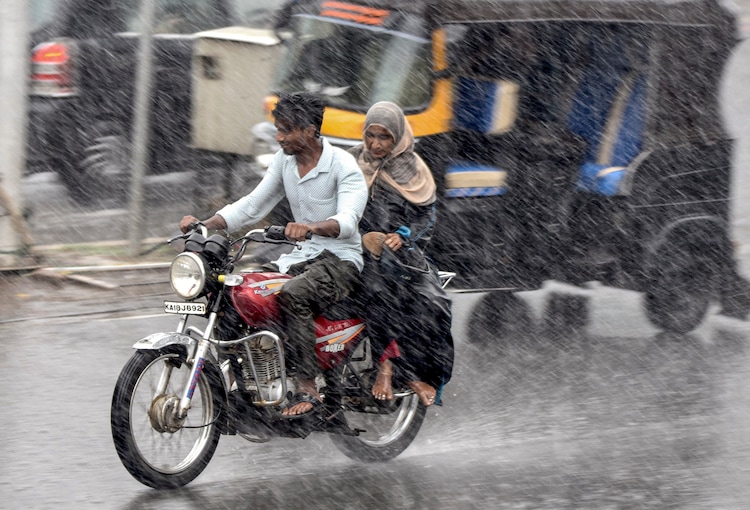
But as weather forecasts suggest, the temperatures are expected to climb again in the coming days, and this time with no respite in between.
In such a scenario, coal remains the indispensable backup, and that dependence will only face greater strain in the summers ahead.
HOW IS MAY LOOKING?
The brief respite from rain and winds witnessed in the final days of April is unlikely to last.
IMD's seasonal outlook for April to June 2026 projects above-normal heatwave days across most parts of east, central, and northwest India, as well as the southeast peninsula.
In other words, May could be significantly more punishing than April has already been.
The Indian Ministry of Power has projected peak power demand to reach around 270 GW this summer, a target that seemed ambitious when set but now looks well within reach given that 256 GW was hit in April itself, a month earlier than the traditional June peak.
India also expects below-average monsoon rains for the first time in three years, offering little prospect of early relief.
If the grid held firm this April, May will test whether that composure can hold under even greater strain.