
2026 is the most happening year for mass-market sedans in a long time
After years of decline amid the SUV boom, 2026 marks a rare resurgence for mass-market sedans in India, with every key player updating their offerings and injecting fresh momentum into the segment.
Honda City

For a segment that has spent the better part of a decade being pushed to the margins, 2026 is shaping up to be an unexpectedly strong year for mass-market sedans in India.
The broader narrative hasn’t changed. SUVs continue to dominate mindshare and showroom space, steadily squeezing out traditional three-box cars. The discontinuation of long-standing nameplates like the Maruti Suzuki Ciaz only reinforced the idea that the mid-size sedan was nearing the end of its road. But beneath that surface, the segment is showing signs of resilience.
At the compact end, the numbers tell a compelling story. The Maruti Suzuki Dzire has emerged as India’s bestselling car in FY26, with around 2.3 lakh units sold. In a market tilted heavily towards SUVs, that kind of volume underlines a simple truth: practicality, efficiency and value still resonate strongly with Indian buyers. Sedans, it seems, haven’t lost relevance, they’ve just become more focused.
The real shift, however, is unfolding in the mid-size sedan space.
After a relatively quiet 2025, all four remaining contenders, the Honda City, Hyundai Verna, Volkswagen Virtus and Skoda Slavia are set to receive meaningful updates through 2026. While none of these are all-new models, the timing and concentration of facelifts mark the most coordinated product push the segment has seen in years.
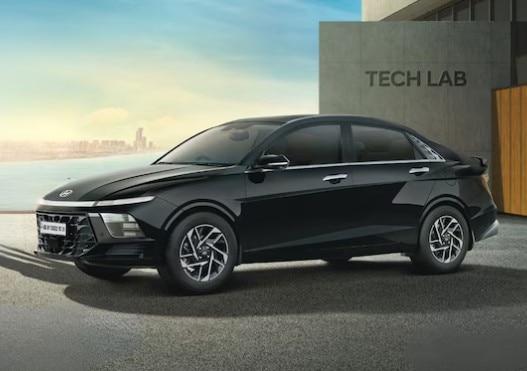
Hyundai Verna
Hyundai has already set the ball rolling. The updated Verna, launched in March, brings over 25 enhancements spanning design, features, safety and comfort. It builds on its strengths with a wide stance, long wheelbase and a feature-rich cabin, while continuing to offer two petrol engines. The standout remains the 1.5-litre turbo GDi unit, producing 160bhp and 253Nm, making it one of the most powerful offerings in the segment. Alongside it, the 1.5-litre naturally aspirated engine caters to buyers prioritising efficiency and ease of use.
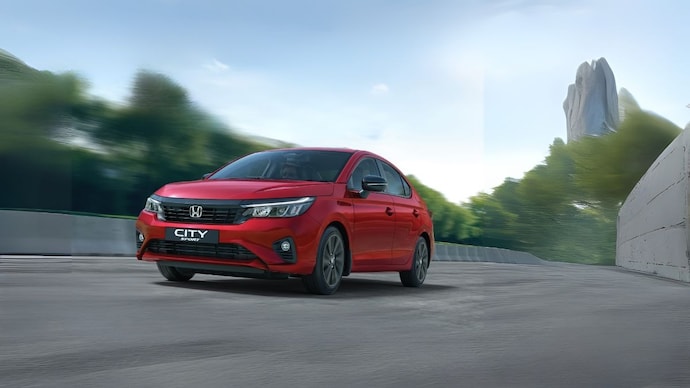
Honda City
Honda is next in line, with the City facelift slated for a May 22 debut. This will be the second mid-cycle update for the fifth-generation model, and while the design changes are expected to be subtle, the focus will likely be on strengthening its feature list and technology suite.
Mechanically, the City is expected to remain unchanged, retaining its 1.5-litre petrol engine alongside the strong hybrid e:HEV variant. In a segment where electrification is still finding its footing, the hybrid continues to offer a unique proposition.
Skoda Slavia and Volkswagen Virtus
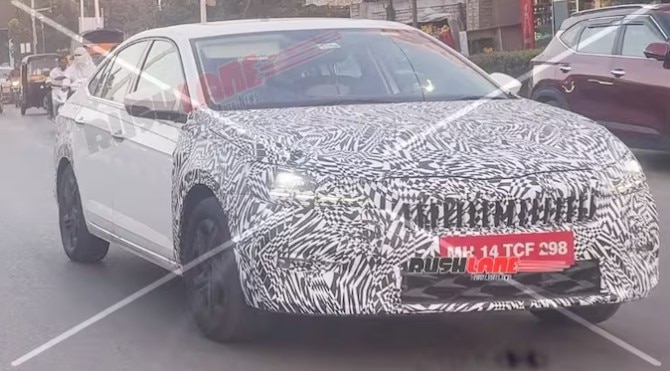
Further down the line, both the Skoda Slavia and Volkswagen Virtus are preparing for their own updates. Skoda has already begun testing the Slavia facelift, with early sightings pointing to subtle yet effective design tweaks, particularly at the front, where revisions to the grille, headlamps and bumper aim to sharpen its appearance. Interior and feature updates are likely, though the core mechanical package is expected to remain intact.
Volkswagen is expected to follow a similar approach with the Virtus, mirroring the Slavia’s updates given their shared platform. One notable change could be the introduction of an 8-speed automatic gearbox for the 1.0-litre TSI engine, aligning it with recent updates seen in Taigun and Kushaq.
What makes 2026 significant isn’t just the individual updates, but the collective momentum. For the first time in years, every player in the midsize sedan space is actively investing in keeping their product relevant. The upgrades may be evolutionary, but they signal intent, an acknowledgment that the segment still matters.
There is, however, an underlying reality that tempers this optimism. Despite the renewed activity, there are no all-new mass-market sedans on the horizon. Carmakers remain firmly focused on SUVs, crossovers and electrified high-riding vehicles. In that context, 2026 could represent both a peak and a pause, a year where existing sedans receive their most comprehensive refresh before the industry’s priorities shift even further away. It may not be a full-blown comeback. But for sedans in India, 2026 is as close as it gets.
Subscribe to Auto Today Magazine
- Ends