
Tata eyes first flex-fuel car launch by 2026-end
Tata Motors is gearing up to launch its first flex-fuel passenger vehicle by late 2026 or early 2027, as India accelerates plans to adopt higher ethanol-blended fuels and reduce crude oil dependence.
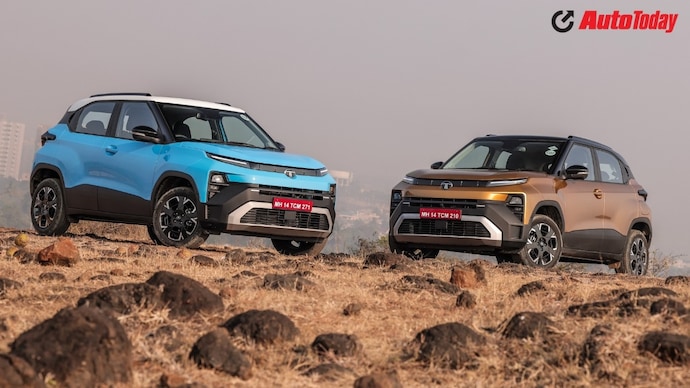

Tata Motors is preparing to enter India’s emerging flex-fuel passenger vehicle space, with the company confirming that its first such model could arrive by the end of 2026 or in early 2027. The announcement comes as the Indian government moves closer to formalising regulations for vehicles capable of running on higher ethanol blends such as E85 and E100.
By the end of this year or early next year, Tata will likely be ready with their flex-fuel product.
The development aligns with India’s broader strategy to reduce dependence on imported crude oil by promoting alternative and domestically sourced fuels. Rising geopolitical tensions in West Asia and volatility in global oil markets have further accelerated discussions around fuel diversification and energy security.
Tata already prepared for higher ethanol blends
Tata Motors noted that all its petrol-powered passenger vehicles have been E20-compliant since 2023. The company is currently engaged in discussions with the government through the Society of Indian Automobile Manufacturers regarding future regulations for higher ethanol-blended fuels.
The Ministry of Road Transport and Highways recently proposed amendments to the Central Motor Vehicles Rules to officially define and regulate flex-fuel vehicles capable of operating on blends such as E85 and E100. The draft notification is presently open for stakeholder feedback.
Punch flex-fuel showcased earlier
At the Bharat Mobility Global Expo 2025 earlier this year, Tata Motors had showcased a flex-fuel version of the Tata Punch as a technology demonstrator. The model was displayed alongside petrol, CNG and electric variants of the Punch, highlighting the company’s multi-powertrain approach.
The showcased Punch flex-fuel prototype used Tata’s familiar 1.2-litre naturally aspirated three-cylinder petrol engine but featured several upgrades to support higher ethanol content. These included revisions to the engine control unit, fuel injection system and exhaust after-treatment components, enabling the vehicle to detect and adapt to varying ethanol blends.
The prototype was compatible with fuels ranging from E20 up to E85, while Tata Motors also indicated that its flex-fuel technology is being developed with compatibility for E100 fuel in mind.
Why flex-fuel vehicles need special engineering
Unlike conventional petrol, ethanol absorbs moisture more easily, which can lead to corrosion in fuel lines, injectors and pumps if the vehicle is not specifically engineered for such fuels. Flex-fuel vehicles therefore require dedicated materials, recalibrated engine management systems and modified fueling hardware to ensure durability and reliable operation across different ethanol concentrations.
Despite the engineering changes, the refuelling process remains similar to a regular petrol vehicle, with no additional charging or waiting time involved.
Multi-powertrain strategy continues
A flex-fuel model would further strengthen Tata Motors’ strategy of offering multiple powertrain choices across its portfolio. If the technology debuts on the Punch, the compact SUV would become available in petrol, CNG, electric and flex-fuel forms. Should Tata choose the Tata Nexon instead, it could become one of the few vehicles in India to offer petrol, diesel, CNG, electric and flex-fuel options under a single nameplate.
Subscribe to Auto Today Magazine