
Fashion first, cinema later: How Cannes became India's favourite runway
From couture chaos to celebrity frenzy, Cannes 2026 has reignited an old debate in India. Is the world's most prestigious film festival still about cinema, or has the red carpet stolen the spotlight completely?
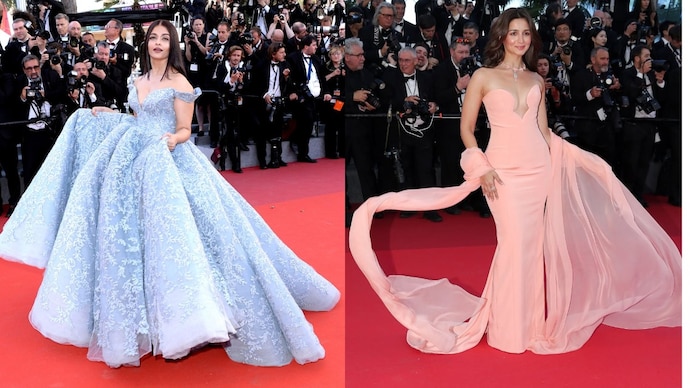

Once upon a time, Cannes represented artistic ambition. It was where filmmakers arrived hoping to spark conversations around cinema, politics, storytelling and culture. Today, for many Indian audiences, Cannes coverage often feels less about Palme d'Or contenders and more about whether someone’s dress “ate” or “flopped."
And while we discuss this, the French Riviera continues to glow under the May sun and the real heat for India continues to come from sequins, swarovski crystals and social media meltdowns over who wore what on the red carpet. Because the top headlines so far from the 79th Cannes International Film Festival have only been about what Alia Bhatt wore at the event or who's going to walk the red carpet next.
That is exactly why it's safe to say that somewhere between the Palais des Festivals and Instagram reels captioned “Serving Cannes realness”, the world’s most prestigious film festival seems to have acquired a curious new identity in India: A luxury fashion showcase with occasional films in the background.
The shift, for better or worse, has not happened overnight.
The red carpet has become the story. The film stories themselves? Somewhere in paragraph nine, quietly fighting for oxygen.
When brands enter before the celebrities do
The transformation is impossible to ignore. These days, before an Indian celebrity even steps onto the Cannes carpet, carefully crafted press notes flood social media feeds detailing every luxury label involved: the couture house, the diamonds, the beauty partner, the stylist, the nail artist. All fine until that starts taking the attention away from the real thing: the movies.
Cinema has increasingly started feeling like a supporting act to these brand collaborations at Cannes - the very primary job of the festival has been pushed way down on the list of things to do.
Meanwhile, several Indian regional films and creators continue making meaningful appearances at Cannes market sections and screenings. Malayalam, Marathi and Punjabi cinema have all carved out space this year. But their stories rarely generate the same frenzy as a dramatic train gown or a viral red-carpet pose.
Actor Deepti Sadhwani, who has attended Cannes herself, believes the balance has noticeably changed.
“Earlier, Cannes was primarily spoken about as a celebration of world cinema, storytelling, filmmakers, and artistic exchange. Today, especially in India, a large part of the conversation revolves around fashion moments, red carpet appearances, and luxury collaborations,” she says.
“While fashion is definitely an important and glamorous aspect of Cannes, sometimes it tends to overshadow the actual essence of the festival - which is cinema," she admitted.
But why? Is the world more interested in fashion than cinema? Can there be any comparison even? One of the reasons could be how easily fashion can be consumed as compared to cinema. Sidhwani emphasised the same when she said, "Having attended Cannes, I’ve seen that there is so much happening beyond the red carpet: film screenings, creative discussions, networking between artists from across the world, and conversations that genuinely shape the entertainment industry. Unfortunately, those aspects don't always get equal attention because fashion tends to be more instantly consumable and viral."
And there it is, the real villain of the story: Virality.
A nuanced discussion about independent cinema rarely competes with a slow-motion gown reveal set to dramatic music. Why? Because cinema demands attention. It demands sitting through something for hours and trying to make sense of it - to make yourself emotionally work. Looking at a dress, zooming in on a photo doesn't require you to be more nuanced. It just needs you to have a phone with a working internet.
That is why the recent outrage over Aishwarya Rai Bachchan's absence from L'Oreal's posters at Cannes became such a big deal.
The Aishwarya Rai effect
Nothing exposed India's fashion-first relationship with Cannes more sharply this year than the conversation surrounding Aishwarya. For more than two decades, the actor has been synonymous with India’s Cannes identity. So when she was missing from early promotional material this year, social media reacted like the festival itself had collapsed into the sea.
What was fascinating was not merely the concern, it was why people were concerned. The panic wasn’t about losing an Indian cinematic voice at Cannes. It was about losing a fashion spectacle. Memes mourned the absence of her "iconic looks." Fan pages dissected old gowns like sacred artefacts. Suddenly, Cannes without Aishwarya seemed incomplete.
Sidhwani believes this says a lot about how India now consumes Cannes. “In India, Cannes has increasingly become associated with celebrity appearances, fashion statements, and viral red carpet moments rather than its core identity as one of the world’s most prestigious film festivals,” she explained.
"So when someone like Aishwarya Rai Bachchan is absent, it naturally creates a huge conversation because audiences have emotionally connected Cannes with iconic celebrity representation over the years," she added.
But is this celebrity fashion culture entirely harmful? Sidhwani thinks it is not. "Celebrity presence has helped bring wider Indian attention to Cannes and has made global platforms feel more accessible and aspirational for audiences back home,” she said.
The idea is to find the right balance between fashion and cinema - where both can thrive together rather than dominate the landscape. "The ideal shift now would be to use that attention as a bridge, where people come for the glamour but also engage with the films, talent, and cinematic achievements being showcased there," Sidhwani said.
Fair point. The glamour opened the door, you entered, now all you need to do is sit, pay attention and absorb the magic of cinema - give cinema the same amount of importance you give fashion. Because beneath the diamonds, drone shots and dramatic capes, Cannes is still supposed to be about stories.