
Should 75% rule be lowered to 70% for IIT, NIT admissions amid CBSE answer sheet row?
The CBSE Class 12 answer sheet controversy has reopened the debate over the 75% Class 12 rule for IIT, NIT and IIIT admissions. It has shifted the focus from marks alone to fairness, as students and counsellors question evaluation reliability.
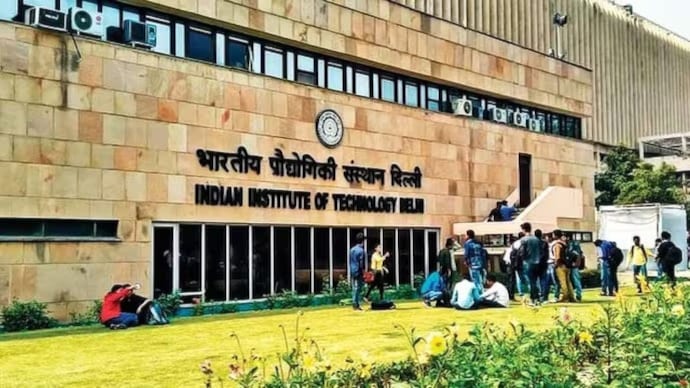

The CBSE Class 12 answer sheet controversy has revived a long-standing debate that resurfaces every admission season: Should the 75% Class 12 eligibility criterion for admissions to IITs, NITs and IIITs be reconsidered?
This time, however, the conversation was not just about academic pressure. It is about trust in evaluation systems.
After the viral CBSE answer sheet mismatch row, a student alleged that the Physics answer sheet uploaded under his roll number was not his. Several students also flagged issues related to scanned copies, marking discrepancies and portal glitches.
Following the controversy, career counsellors, parents and JEE aspirants are questioning whether a rigid 75% eligibility threshold remains fair when evaluation processes themselves are under scrutiny.
Many are now demanding that the eligibility benchmark be lowered from 75% to 70%, arguing that deserving engineering aspirants should not lose admission opportunities due to board-level inconsistencies.
SHOULD THE 75% RULE FOR IIT, NIT ADMISSIONS BE LOWERED TO 70%?
The current rule requires general-category students seeking admission to NITs, IIITs and other centrally funded institutes through JEE Main counselling to secure 75% in Class 12 or be in the top 20 percentile of their board. The requirement remains active for 2026 admissions as well.
But the latest CBSE row has added a new dimension.
Education experts say the issue is no longer merely about marks; it is about whether a fixed eligibility cutoff should decide futures when answer sheet accuracy itself is being questioned.
WHY ARE EXPERTS QUESTIONING THE RULE NOW?
Career counsellors argue that the CBSE answer sheet mismatch episode has shaken student confidence.
The controversy emerged after a Class 12 student alleged that the Physics answer sheet uploaded during the re-evaluation process was not his, citing differences in handwriting and responses. The issue quickly snowballed online and triggered broader concerns around transparency in the evaluation process.
At the same time, students also reported portal crashes, payment glitches, blurred scans and re-evaluation issues during the post-result process.
Counsellors now argue that students missing the eligibility mark by two or three percentage points could face disproportionate consequences despite strong JEE scores.
DON’T LOWER THE RULE, FIX THE PROCESS: EXPERTS SEEK TARGETED RELIEF
Dr Saurabh Kumar, Founder & CEO, Shiksha Nation, believes the debate should focus on fixing evaluation lapses rather than reducing the eligibility benchmark.
“The 75% rule should not be lowered, but the students hurt by CBSE’s answer sheet mismatch cannot be made to pay the price for an administrative failure,” he said.
According to Kumar, a blanket relaxation would be unfair to lakhs of students who met the benchmark legitimately and could dilute the seriousness attached to board examinations.
At the same time, he argued that students who have cleared JEE but miss the eligibility cut-off because of evaluation discrepancies should not lose admission opportunities.
“But a child who has cracked JEE and is missing the cut-off because of someone else’s answer sheet, that is not a performance issue, that is a system failure,” he said.
He suggested that CBSE should fast-track re-verification before JoSAA counselling closes and allow provisional counselling participation for students with pending grievances, with admissions confirmed after corrected marks are issued.
“Don’t lower the rule. Fix the process. Our students are asking for fairness, not a discount,” he added.
COULD LOWERING THE THRESHOLD CREATE NEW PROBLEMS?
Critics disagree. Some academics maintain that the 75% rule ensures students remain academically balanced and do not focus exclusively on entrance coaching. They argue the criterion preserves the importance of school education and foundational learning.
Others warn that lowering the threshold may trigger fresh demands for further relaxation in future years.
There is also the existing alternative route: students who do not secure 75% can still qualify through the top 20 percentile criterion of their respective boards.
IS THE CBSE ANSWER SHEET ROW LIKELY TO IMPACT ADMISSION POLICY?
As of now, there is no official proposal to revise the eligibility rule.
However, the CBSE answer sheet row has amplified calls for broader reforms , from evaluation transparency to eligibility flexibility. The timing is significant because thousands of aspirants are heading into counselling season while concerns around answer-sheet accuracy continue to dominate discussions.
Admission eligibility through JoSAA counselling remains unchanged for now. Candidates must hold a valid JEE Main rank for admissions to NITs, IIITs and GFTIs, while IIT admissions require a valid JEE Advanced rank.
JoSAA Counselling 2026 registration and choice filling are expected to begin in the first week of June, shortly after the JEE Advanced results are announced. The counselling process, comprising six rounds of seat allotment, is likely to continue till mid-July 2026.
Under current eligibility norms, General, EWS and OBC-NCL candidates must secure at least 75% aggregate marks in Class 12, while SC, ST and PwD candidates require 65%. Alternatively, candidates qualifying within the category-wise top 20 percentile of successful students in their respective boards are also eligible.
Students must have passed Class 12 with Physics, Chemistry and Mathematics (PCM) as compulsory subjects.
The demand to lower the IIT-NIT eligibility rule from 75% to 70% is no longer being framed solely as an academic relaxation. For many students and career counsellors, it has become a question of fairness amid concerns over evaluation reliability.
Whether policymakers act on the demand remains uncertain. But the CBSE answer sheet controversy has undeniably reopened a debate that goes beyond marks: Should a student’s engineering future depend on a rigid board percentage when the evaluation process itself is under public scrutiny?