
Mumbra to Mumbradevi? How BJP minister sparked another renaming row in Maharashtra
Mumbra is witnessing muscle-flexing by some Hindutva groups after the AIMIM's success in the area in recent elections to the Thane Municipal Corporation
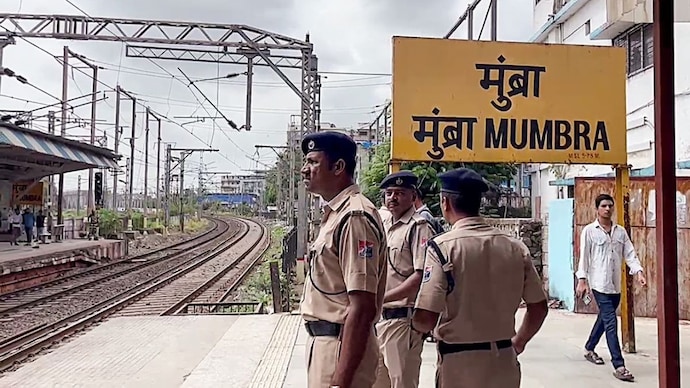

 Yet another renaming controversy is brewing in Maharashtra, where minister Nitesh Rane of the BJP has promised to ensure that Mumbra, the Muslim-dominated suburb of Thane, is recoined as Mumbradevi.
Mumbradevi is the goddess worshipped by the local Aagri and Koli communities in the region. Her shrine is located on the Parsik hill in Thane district.
Addressing a ‘Sakal Hindu Samaj’ rally at Mumbra recently, Rane, who is the son of former Union minister Narayan Rane and the minister for ports and fisheries in the state government, purportedly made several sensational statements, including one in which he allegedly referred to the locality as “Mumbradevi from our Hindu Rashtra”.
At the same function, Jain monk Nileshchandra Vijay, who is known for making incendiary statements, likened Rane to the warrior king Chhatrapati Shivaji Maharaj, in what has stirred another controversy.
“The atmosphere has been made saffron. This is the beginning. Till the time each house in Mumbradevi flies the saffron flag, we will not rest Do not worry; we renamed Islampur as Ishwarpur, and we will ensure that Mumbra becomes Mumbradevi. This is my word. No one can stop us,” declared Rane.
Rane was referring to the BJP-led Mahayuti government’s decision in 2025 to change the names of Islampur in Sangli district and Chhatri Nizampur in Raigad district. The government renamed Islampur as Ishwarpur and Chhatri Nizampur as Raigadwadi.
The renaming of Islampur had been a demand of Hindu right-wing groups since the 1980s. The Shiv Pratishtan Hindustan, an outfit led by the controversial demagogue Sambhajirao Bhide ‘Guruji’, who has a base in the region, has been vociferous about this.
The muscle-flexing by Hindutva groups in Mumbra came after the success of the All India Majlis-e-Ittehadul Muslimeen (AIMIM) in the area in recent elections to the Thane Municipal Corporation (TMC). In her victory speech, AIMIM corporator Sahar Shaikh had allegedly called for the suburb to be “painted green”.
Located around 40 km from Mumbai, Mumbra underwent an exponential population growth in the 1990s, when Muslims from Mumbai and nearby areas settled there in the aftermath of the 1992-93 communal riots in Mumbai. Right-wing groups allege that the area is a haven for illegal Bangladeshi immigrants.
Mumbra hit the headlines back in 1994 when alleged Lashkar-e-Taiba (LeT) operative Ishrat Jahan, a resident of the area, was gunned down by the Gujarat police. Accused of planning a hit on Prime Minister Narendra Modi, who was at the time chief minister of Gujarat, 19-year-old Ishrat was killed in an encounter in Ahmedabad with three others.
The Mumbra constituency remains a stronghold of Nationalist Congress Party (Sharadchandra Pawar) MLA Jitendra Awhad. He has represented the area in the legislative assembly since 2009. However, the recent inroads made by AIMIM and resentment over Awhad’s alleged high-handedness has led to consternation in the NCP (SCP) camp.
In the past, the state government has changed the Islamic-sounding names of cities and districts in what is being alleged as an attempt to blur Muslim identity. In 2023, the Maharashtra government had announced that Ahmednagar district will be renamed as Ahilyanagar, after the 18th century warrior queen Ahilyadevi Holkar of Indore.
This was aimed at placating the numerically-significant Dhangar community, which forms a part of the Other Backward Classes (OBC) category. The Dhangars form significant numbers in western Maharashtra and Marathwada and are seen as second in numerical terms after the Maratha-Kunbis.
Ahmednagar was named after the Nizamshahi king Malik Ahmed Nizamshah-I, the founder of the Nizamshahi dynasty. Ahilyadevi hailed from the Shinde family in Choundi village located in the district.
That year, the Union government also approved the change in the names of Aurangabad and Osmanabad as Chhatrapati Sambhajinagar and Dharashiv, respectively. Aurangabad and Osmanabad are named after Mughal emperor Aurangzeb and Nizam Mir Osman Ali Khan.
The renaming of Aurangabad to Sambhajinagar is meant to mark the memory of Chhatrapati Sambhaji Maharaj, who was tortured and killed after being captured by Aurangzeb’s forces in 1689. In May 1988, then Shiv Sena supremo Bal Thackeray, who was reinventing himself as a Hindutva mascot from being a nativist politician, had made the demand at a public meeting in Aurangabad. Since then, Aurangabad was always referred to as ‘Sambhajinagar’ by Shiv Sena leaders and workers.
However, these renamings have opened the proverbial Pandora’s Box, with most such demands coming forth from caste-based and identity-based groups. Already, there are demands for the names of cities and even railway stations being changed. This includes Mumbai, Pune, Kolhapur and Nagpur; Ahmednagar district; and the Churchgate, Dadar and Mumbai Central railway stations in Mumbai.
Some of these demands are competing in nature. For instance, the Maharashtra assembly in 2020 approved a resolution recommending to the Union government that the Mumbai Central station be named after philanthropist Jagannath ‘Nana’ Shankarsheth Murkute, who played a seminal role in the growth and development of Mumbai in the colonial era. But Dalit groups want it to be renamed after Dr Babasaheb Ambedkar.
Maharashtra takes its cultural markers and political totems seriously. In 1978, the Sharad Pawar-led Progressive Democratic Front coalition decided to name the Marathwada University in Aurangabad after Ambedkar. This was resented by members of the dominant Maratha community.
The move led to targeted violence against Dalits, especially Buddhist Dalits, in the region. The university was eventually renamed in January 1994 as Dr Babasaheb Ambedkar Marathwada University, with a new varsity named after Swami Ramanand Tirtha, the hero of Marathwada liberation movement, being created at Nanded as a consolation to those opposing the renaming.
The ‘Namantar’ movement that called for the renaming produced Dalit leaders such as Union minister Ramdas Athavale and former MP Jogendra Kawade. It also led to caste counter-mobilisation, resulting in the Shiv Sena gaining political space in Marathwada, which was its first opening outside the Mumbai-Thane region. However, the social cleavages that were accentuated during the decade-and-a-half-long movement persist in the Marathwada region even today.
Subscribe to India Today Magazine