

LPG crisis makes India go for InducSun cooktops
India is planning to push for induction cooktops, linking electric cooking to rooftop solar under the PM Surya Ghar Muft Bijli Yojana. As LPG supply risks rise due to the war in the Middle East, the move aims to shift households towards cleaner and solar-powered kitchens.
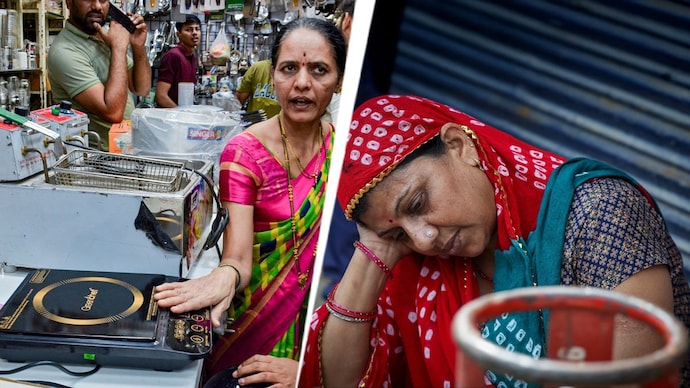


Liquefied Petroleum Gas (LPG) cylinders have been the backbone of Indian kitchens for decades. But the war in the Middle East, which broke out after the US and Israel attacked Iran, has prompted the Indian government to look beyond traditional fuel. Induction cooktops are emerging as a serious alternative, especially as India is expanding its renewable energy footprint. At the centre of this shift is the PM Surya Ghar Muft Bijli Yojana, under which the government is planning to encourage households to install rooftop solar panels, potentially enabling them to cook using free or low-cost electricity instead of LPG.
Since induction stoves run entirely on electricity, households installing rooftop solar panels under the scheme can use the power generated during the day for cooking, reducing or even replacing their dependence on LPG cylinders.
With the scheme also offering free monthly power and net-metering benefits, induction cooking becomes a more affordable long-term option for lakhs of families.
The PM Surya Ghar Muft Bijili Yojana was inaugurated by Prime Minister Narendra Modi in February 2024. The objective of the scheme is to install rooftop solar (RTS) systems in 10 million (1 crore) households and provide up to 300 units of free electricity per month per household. It also allows households to sell surplus power to the grid and earn additional income. According to the last available government data, nearly 2.4 million (24 lakh) households have adopted RTS as of December 2025.
It must be noted that India successfully met its highest-ever peak electricity demand of 25.61 gigawatt on April 25, and solar power played a significant role in meeting the demand, contributing more than 21% of the total.
Preliminary discussions are underway at the highest levels of the government to promote the use of induction cooktops under the solar scheme, amid ongoing volatility in energy, according to a report by The Economic Times.
One government official quoted by The Economic Times said that electric cooking can reduce dependence on conventional fuels, with the current situation offering a timely opportunity to accelerate its adoption.
Currently, there are more than 330 million (33 crore) LPG customers across India, which also includes around 100 million (10 crore) Pradhan Mantri Ujjwala Yojana connections.
HOW MANY HOUSEHOLDS IN INDIA USE INDUCTION COOKTOPS?
According to the Council on Energy, Environment and Water's (CEEW) 2020 survey, around 5% of Indian households use eCooking (electric cooking) devices.
Of this, 10.3% are urban users, while 2.7% fall in the rural areas.
Induction cooktops are one of the two most popular eCooking devices, along with rice cookers, and are used by nearly 40% of eCooking users. So, roughly, just 2% of all Indian households use induction cooktops.
The CEEW survey indicated that there is a very low adoption of induction cooktops in India, and the major reason behind this is the cost. An induction cooktop anywhere costs between Rs 2,000 and Rs 4,000. But there are also costlier cooktops available that cost up to Rs 35,000.
However, the Iran war in 2026 has spiked the sales of Induction cooktops in India, meaning the number of users might have shot up recently.
The government is planning a two-pronged strategy focussing on boosting domestic manufacturing while driving wider adoption through targeted support measures. According to The Economic Times, the government is also considering tax cuts on induction cooktops and reducing customs duties on key components to lower production costs and make electric cooking more affordable.
The Ministry of Commerce and Industry had also proposed reducing the goods and services tax (GST) on appliances to 5% from the current 18% in 2025. The Ministry also recently held consultations with the Ministry of Power to tackle demand-supply challenges in the induction cooktop segment and explore immediate steps to stabilise supply and prices, reported ET.
Amid the growing LPG uncertainties, India's push towards cooking through induction cooktops by solar energy reflects a shift from imported fuels to domestically powered energy solutions. If backed by policy support and wider solar adoption under PM Surya Ghar Muft Bijli Yojana, induction cooking could move from the margins to the mainstream.