

 Handcrafted ByOur Editors
 From house help to midnight Maggi: India's convenience vs abroad
While India may be falling short on several fronts, one thing it gets undeniably right is convenience. From instant house help to late-night food delivery, the ease and affordability of these services are hard to match abroad where they exist, but come at a steep price.
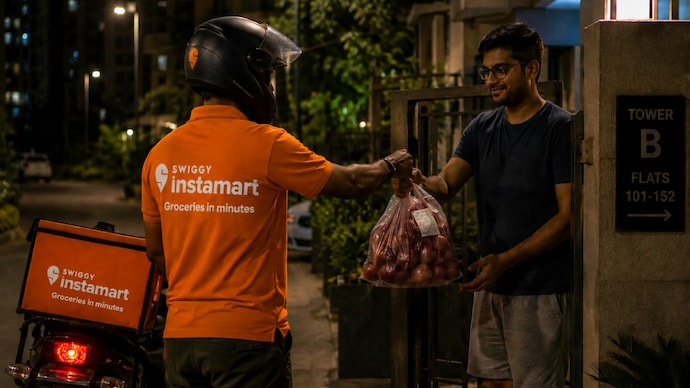
Instamart delivering groceries late at night. (Photo: Generative AI)

New Delhi,UPDATED: May 17, 2026 09:44 IST
It started with an X post. A post that made me think about how casually we throw around the statement, “Life in India is tough, we should move abroad.”
A picture that featured a bag of onions, a packet of chips, a cold drink, biscuits shared with a caption that read, “This is what $1 dollar gives you in India with home delivery.”
No planning, no effort, no stepping out. Just a few taps on an app.
In urban India today, that’s not exceptional. That has become a routine (atleast in Tier 1 and 2 cities).
Which is why the idea that life abroad is automatically “easier” begins to wobble the moment you step out of this ecosystem of instant convenience — of Blinkit runs at midnight, Swiggy at 3 am, and on-demand house help that shows up in under an hour.
Speak to Indians living across Canada, the US, the UK, Hong Kong and South Africa, and you will quickly realise: life abroad may offer independence, but it demands effort — and often, a lot more money.
Convenience comes at a cost
In Halifax, Canada, student Gavin Sharma points out that delivery exists, but it is far from casual.
Apps like Uber Eats and Instacart are common, but tipping is non-negotiable. Orders may not even get picked up without a decent tip. Add to that a minimum wage of about CAD $16.75 (Rs 1,115 approx) per hour and a living wage closer to $29 (Rs 2,021 approx), and suddenly, convenience becomes a considered expense.
Hiring house help? Even more so.
“A friend paid around CAD $100 to $150 (Rs 6,972-Rs 10,458) just to get one room cleaned while moving out,” he says.
In Johannesburg, researcher Tamogni Das sees a similar pattern. Grocery delivery through apps like Checkers Sixty60 works well — but costs add up.
“Delivery itself is around R35–R36 (Rs 210 approx) per order, apart from tips,” he says. Frequent small orders quickly become expensive.
In Hong Kong, the barrier is upfront.
“Minimum delivery orders are around $500–$600 (Rs 6,125–Rs 7,350),” says IT professional Harshita Mathur. “If you just need a couple of items, it doesn’t make sense.”
In comparison, India’s Rs 100-Rs 200 minimum order suddenly feels like a different economic universe.
The hidden price of “easy living”
In the US, the math becomes even starker.
For Michigan-based homemaker Rima Moitra, the cost of labour changes everything.
Hiring a cleaner can cost $15–$20 (Rs 1,439-Rs 1919) per hour, often with a minimum of several hours. “It’s almost like paying someone your own salary,” she says.
Even food delivery is not as simple as it looks.
“A $10 Domino's pizza ends up costing $17 or $18 (Rs 1,727 approx) after delivery charges and tips,” she explains. “So most of the time, you just go pick it up yourself.”
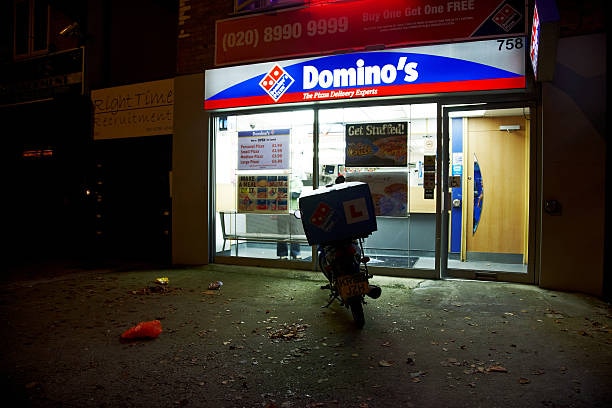
That “yourself” is doing a lot of work here.
Because abroad, almost everything — cooking, cleaning, laundry, groceries, childcare — is exactly that: done by yourself.
The death of the 10-minute mindset
What Indians experience as inconvenience abroad is often just normal life there.
In London, grocery delivery exists but runs on schedules, not urgency. Weekly supermarket runs are the norm, not last-minute top-ups.
“You buy for the entire week, carry it yourself, and store it,” say consultants Shreyashi Sarkar and Rana Saha. “Shops also close earlier than in India.”
In Hong Kong, things are hyper-accessible — but not hyper-instant.
“There’s a grocery store within a 2–5 minute walk everywhere,” says Mathur. “But doorstep delivery like India? Not really.”
India, in contrast, has quietly built a culture where even urgency is outsourced.
Even returns need effort
One of the simplest yet sharpest contrasts lies in something as basic as returns.
In India, a return often means someone shows up at your door. Abroad, it usually means you step out.
In Canada and the US, Amazon returns are commonly done via drop-off points — UPS stores, post offices, or designated counters inside supermarkets. While the system is efficient, it requires time, travel and planning.
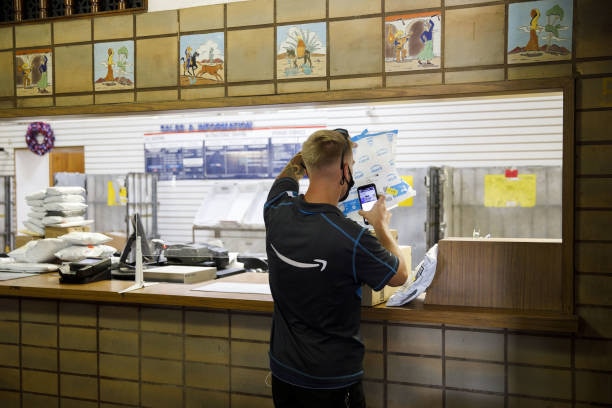
In Hong Kong, doorstep returns are “a big no”.
“You have to go yourself to the nearest post office or pickup point,” says Mathur.
It’s not difficult — but it’s not effortless either.
Independence, but less cushion
Across geographies, one sentiment repeats itself in different ways.
Life abroad is more independent — but far less convenient.
“You structure your life your way,” says Sharma. “But everything becomes your responsibility.”
That includes things most urban Indians rarely think twice about — from waste segregation rules to assembling furniture, from vacuuming your car in sub-zero temperatures to driving miles just to pick up groceries.
Even social dynamics shift.
“In India, guests don’t clean up,” says Moitra. “Here, everyone pitches in because they know you’re doing everything yourself.”
The cost of convenience in India
This isn’t a simplistic India-versus-abroad argument. It frankly, it can’t be.
The wage rate is different, the demography is different in different countries and let us not even get started on the work-life balance, strict work-hour rules etc.
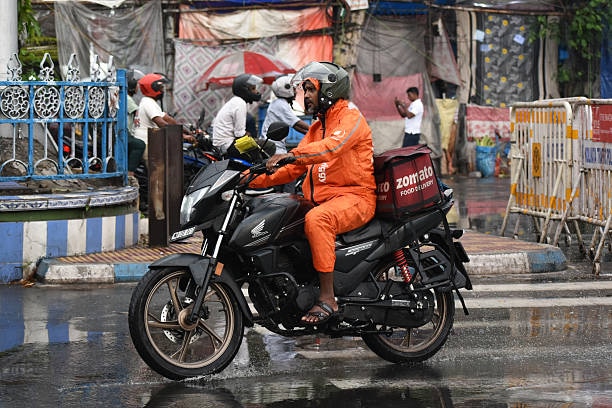
Cities like London offer efficient public transport, Hong Kong offers walkability, and Western systems often prioritise dignity of labour in ways India is still grappling with.
But when it comes to everyday convenience, India may have quietly pulled ahead. With what at stake is a discussion best kept for another piece.
But cheap data, dense cities, a vast service economy, and competitive apps have created something unique: a lifestyle where time, effort and even small discomforts can be outsourced affordably.
So much so that a Rs 100 delivery isn’t just about price.
It’s about how little you have to do for it.
The real culture shock
For many Indians, the biggest adjustment abroad isn’t cultural.
It’s logistical. Ask your relatives in Canada or UK.
It’s realising that late-night hunger means stepping out. That groceries need planning. That help is expensive. That convenience has a cost.
And sometimes, it’s as simple as missing the option to order a samosa at 3 am.
- Ends