

What it takes for this Kerala company to weave the Met Gala carpet year after year
From Kerala to the Met steps, this team of weavers is crafting the gala's iconic carpet for the fourth time. The founder, breaks down what's different this year.
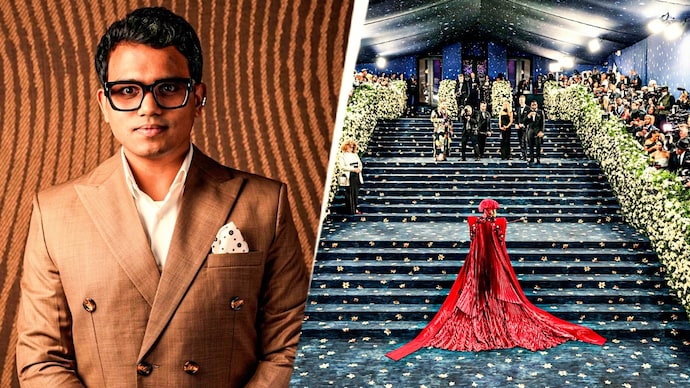
Sivan Santhosh's (R) company weaves the Met Gala carpet for the fourth time (L: Met Gala carpet 2025/Getty)

New Delhi,UPDATED: Apr 30, 2026 12:17 IST
Met Gala Monday is right around the corner, and the fashion world is buzzing with anticipation. Beyond the designers and celebrities gearing up for fashion’s biggest night, there’s one man and his team in India quietly shaping the very stage it all unfolds on.
If you’re someone who tracks every detail of the Met ball, you have probably heard of Sivan Santhosh. He is the founder and CEO of Neytt Homes by Extraweave, a Kerala-based company that manufactures natural fibre floor coverings. They’re the ones behind the Met Gala’s iconic but not so red carpet.
Having crafted it in 2022, 2023 and 2025, this year marks their fourth turn on fashion’s grandest stage. Well, by the fourth time, it’s practically a legacy.
Far from all the hullabaloo of the Page 3 world, here's a team of artisans in India who spent months crafting the very foundation of fashion’s biggest night that is scheduled to happen all the way in New York City.
A Kerala story
Santhosh comes from a rich heritage of carpeting that was started a century ago by his grandfather. As early as 1917, his grandfather, who started their parent company, was supplying niche rugs and carpets across the world. Later, his father went on to establish Extraweave.
Fun fact: They once even worked with The White House, USA, back in 2012.
Then, the Met came calling.
The company first manufactured the base carpet for the Met Gala in 2022.
“Initially, they got in touch with us through a customer in the US called Fibre Works, based out of Louisville, Kentucky. We had been working with them on several projects in the US, so this also came in as an enquiry,” Santhosh recalls while speaking with India Today Digital.
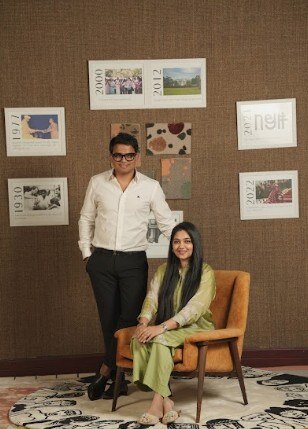
“We started developing samples, but we didn’t know it was for the Met Gala. Only after a few prototypes and final approval did they reveal it.”
From the second year onwards, there wasn’t an anonymous query any more, and the team understood the grandeur too. Since then, what began as an incognito project has turned into a recurring collaboration, one that has steadily placed Kerala’s craftsmanship on a global map.
And honestly, when it’s the Met Gala, the pressure is just as real for makers of the carpet as it is for the ones who walk on it.
90 days, 500 artisans, one seamless surface
It took 90 days and the hands of nearly 500 artisans to turn fibres into a full-fledged carpet. For this year’s regalia, Extraweave produced 57 rolls of carpet, each measuring 4 by 30 metres, covering an impressive 6,840 square metres in total.
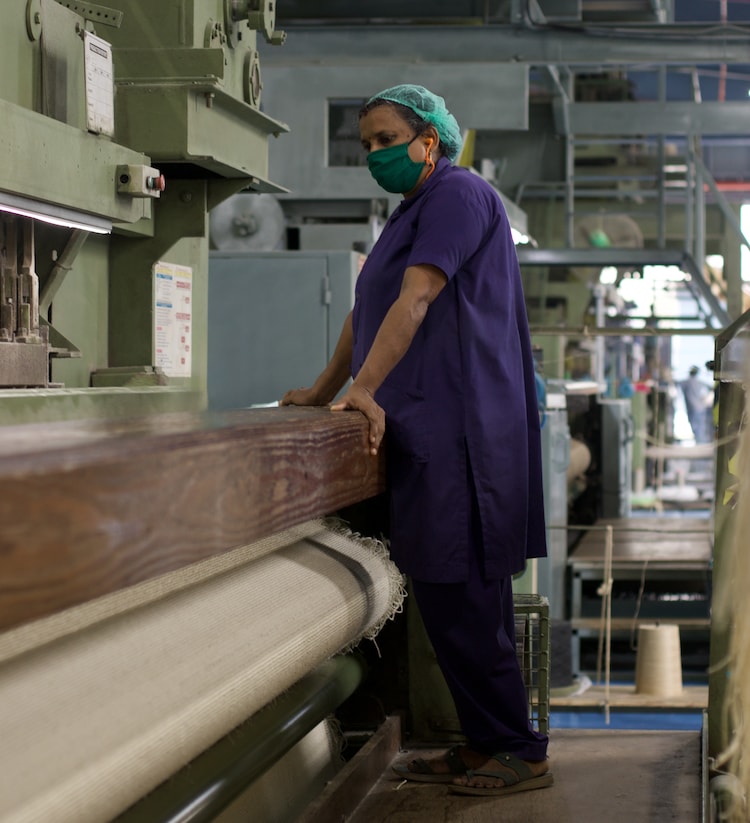
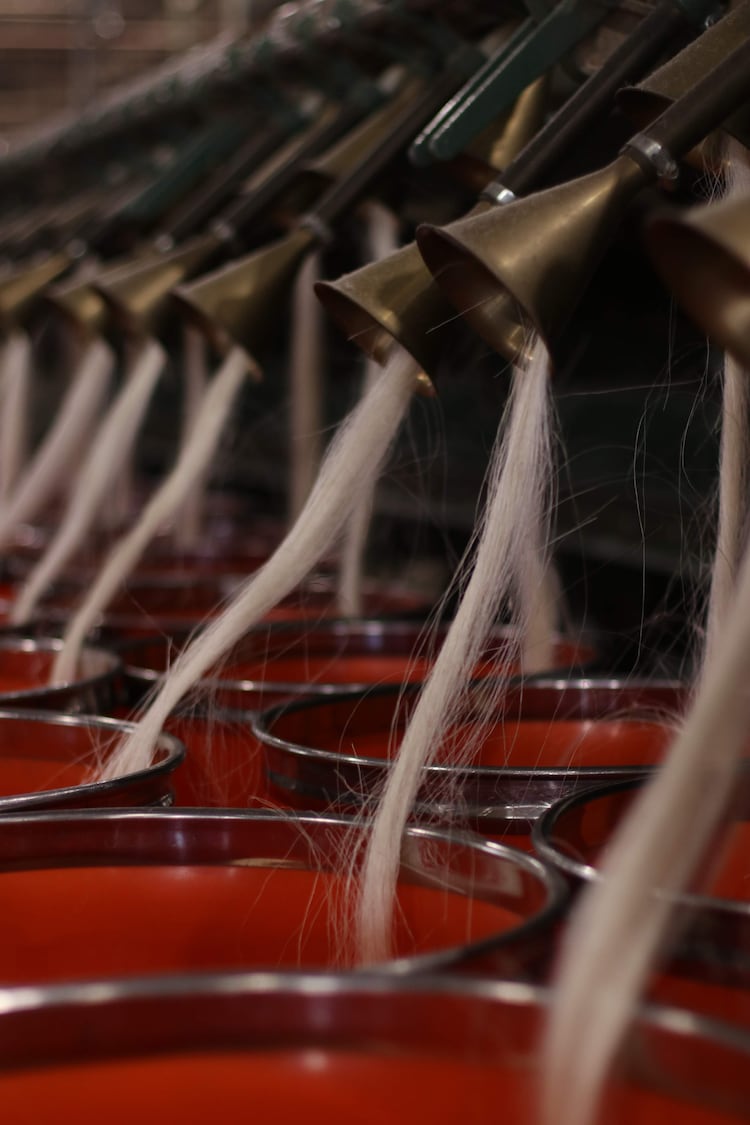
The journey begins with sisal fibre, derived from the bark of Agave tree sourced from Madagascar—“the finest quality,” as Santhosh puts it. Echoing the brand's ethos, the fibre is known for its strength, texture, and sustainability.
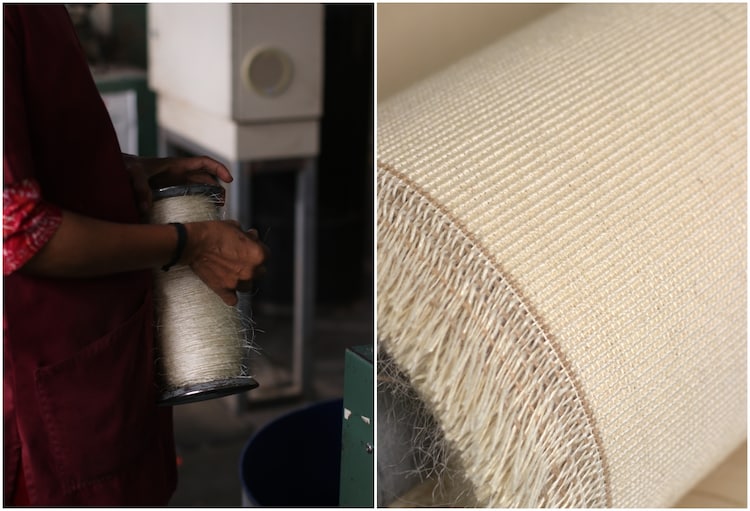
From there, it undergoes a meticulous chain of transformation. The fibre is sourced in its raw form, hand-sorted, and then put through multiple processes—first converted into yarn, then twisted into a double ply, and finally sheared to remove any protruding fibres.
Thousands of uniform bobbins are then prepared and loaded onto looms, where the carpet is finally woven. The result? A seamless, wall-to-wall base that must withstand not just weight, but scrutiny.
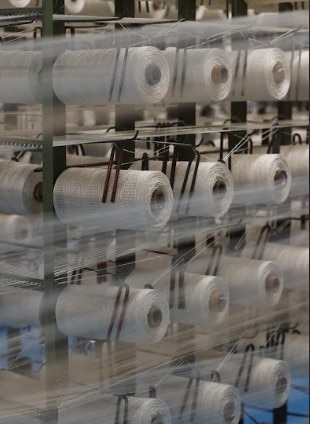
“At every stage, we have strict quality checks to ensure even the smallest impurity doesn’t enter the system, because in a wall-to-wall carpet, even a tiny flaw is visible. A lot of care goes into every step,” he says.
After being sourced from Madagascar and crafted in India, the base carpet for Met Gala 2026 made its way to New York in November last year.
And by the time you’re reading this, it’s probably already in place, ready to welcome some of the biggest names in the world.
What’s different this year?
“The brief was to create a seamless white base carpet for the artists in New York to paint over it as per the theme, which is Fashion is Art,” Santhosh shares. The theme doesn’t directly affect the base carpet much.
When asked what’s different this year, he says, “This year, the fibre is more refined and finer compared to last year. The weave structure is mostly similar, but the yarn used is finer.” It also underwent two to three additional processes to ensure there is no abrasion.
And that’s not all.
During our conversation with Santhosh, we understood one more thing. When someone stumbles on a carpet, with cameras flashing left, right and centre, the carpet makers skip a beat too, at the oops moment. Was it just an off step? Or did the heel get stuck in the carpet?
“We have worked over the years on getting the right tightness of weave and using the right materials to make sure it is tightly woven. Nobody should fall down,” he says.
The nuances are, quite literally, nuanced. They even need to get the softness right.
“We tried to add a softening agent this time to make sure celebrities’ clothes wouldn’t get stuck on the carpet.”
Can you imagine getting side-eyed by Anna Wintour? It's intense.
Speaking about the challenges, Santhosh says, “Yes, it’s more challenging than regular production because all processes need to be fine-tuned for this level of precision.”
However, he adds that the first two years were the toughest. “The first two years had the biggest challenges in terms of manufacturing. The last couple of years have been more seamless.”
What happens to the carpet after?
It’s sustainability at the core.
“Part of it is auctioned, and part of it is reused in certain areas.” Not all the rolls are used at once, he tells us.
And that’s one reason why they don’t take direct credit for the 2024 carpet. “2024 was done using a lot of leftover carpets. We didn’t send it at that particular time. They just did it by themselves,” reveals Santhosh.

The Met step
It’s iconic for everyone who has been there, even the people who are in-charge of the carpet fabric.
Ever since they rolled out their weaves on the steps of The Metropolitan Museum of Art, the brand’s presence has grown multifold. “It has given us a lot of visibility. We’ve had opportunities for several interesting collaborations and won multiple awards. People started noticing our work, especially in material innovation. It also inspired many people in Kerala to aim for a global stage and experiment with craft,” Santhosh says, pride evident in his voice.
As the red carpet rolls out thousands of miles away, they’ll be sitting with fingers crossed, hoping the evening passes without a single hiccup.
And, as far as the final carpet is concerned, even Santhosh hasn’t seen it yet. They will, much like the rest of the world, see it on Met Monday.
- Ends