
Artemis-II Moon launch tonight: Why Nasa is closely monitoring the weather
Space launches and storms have a troubled history. Find out why the weather matters and whether the sky will be in favour of the historic flight scheduled tonight.
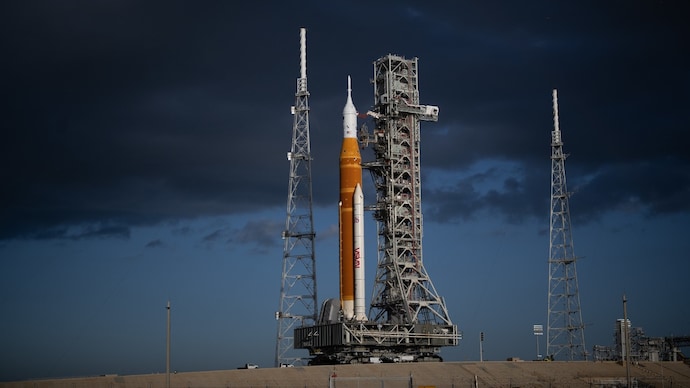

Humanity is hours away from its first crewed journey to the Moon in over 50 years, and a patch of clouds over Florida could still stop it.
Nasa has confirmed the countdown is underway for a scheduled liftoff on April 2, 2026, at 3:54 AM IST from Kennedy Space Center.
The weather forecast shows an 80% chance of favourable conditions, with cloud coverage and potential for high winds on the ground as primary concerns.
After months of delays and technical setbacks, mission managers have given the green light to proceed.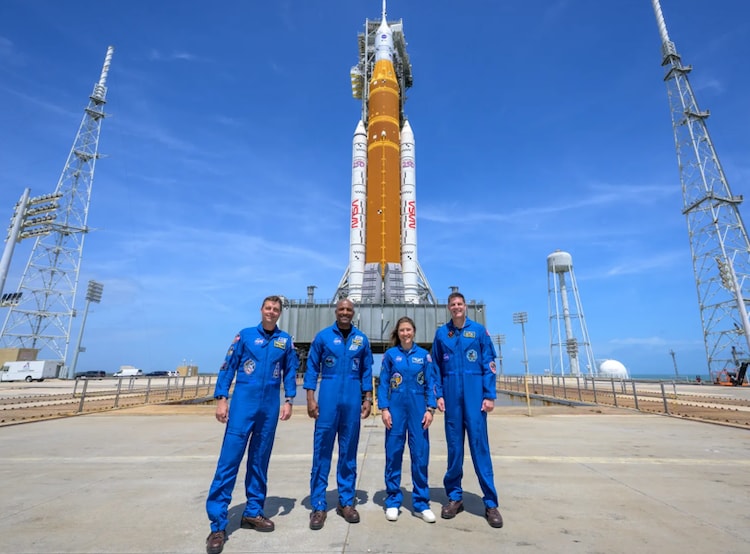
WHY DOES THE WEATHER MATTER FOR SPACE MISSION?
Space launches and storms have a troubled history.
When Apollo 12 lifted off in 1969, the rocket was struck by lightning twice, because it flew through highly electrified clouds.
Nasa has enforced strict lightning rules ever since.
On Artemis-II launch day, the 45th Weather Squadron will monitor cloud cover, track winds at multiple altitudes, and enforce lightning rules, with even a last-minute shift in clouds, winds, or storm activity capable of delaying liftoff despite an 80% favourable forecast.
Solar weather is also being watched.
Nasa officials have said that solar conditions are expected to settle well before liftoff and pose no threat to the crew or the rocket’s electronics.
WHAT IS ARTEMIS-II?
Artemis-II is the first crewed mission beyond low Earth orbit since Apollo 17 in 1972, and will be the first crewed mission of the Orion spacecraft.
A crew of four astronauts, including commander Reid Wiseman, pilot Victor Glover, astronaut Christina Koch, and Canadian astronaut Jeremy Hansen, will fly around the Moon on a free-return trajectory before splashing down in the Pacific on April 11.
They will not land on the surface. This is a dress rehearsal, not a moonwalk.
The mission carries a string of historic firsts.
Glover will become the first person of colour, Koch the first woman, and Hansen the first non-US citizen to travel beyond low Earth orbit.
On day six, Orion will reach its farthest point of about 8,000 kilometres beyond the Moon, surpassing Apollo 13’s distance record and making these four the most remote travellers in human history.
The Moon mission was originally planned to launch in early February, but the flight was delayed due to technical issues with the rocket's components. The delays raised the stakes considerably as a failed or further-postponed Artemis-II would likely mean that the US fall behind in the global space race.