
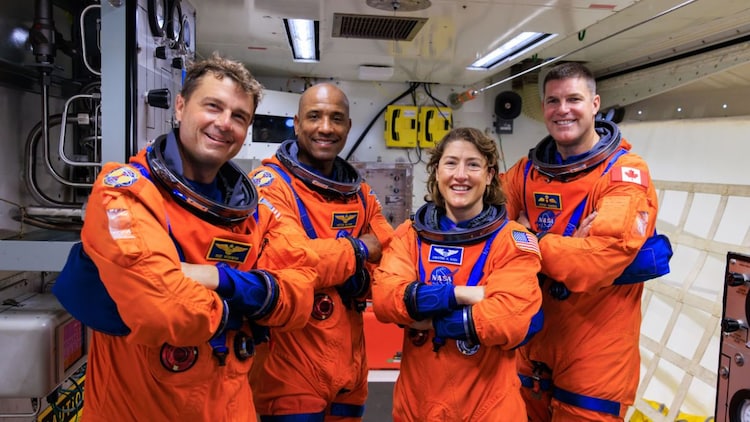
Artemis 2 reaches the Moon, set to break record for farthest human spaceflight
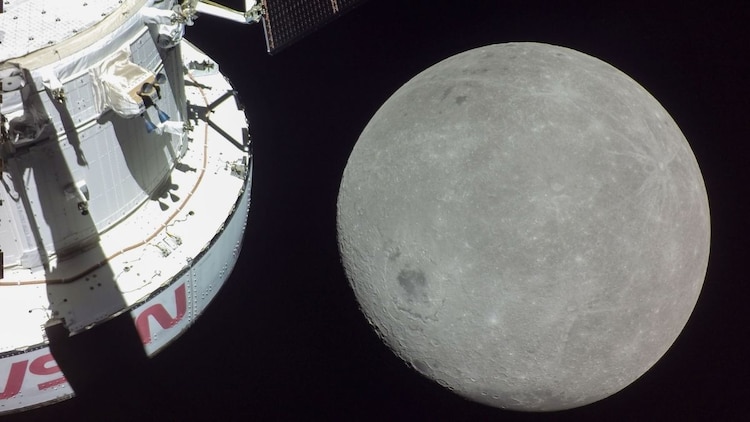
The Artemis-II crew has reached the Moon's gravitational sphere of influence. This mission is set to break the record for farthest human spaceflight, reaching a distance of 4,06,773 kilometres from Earth.
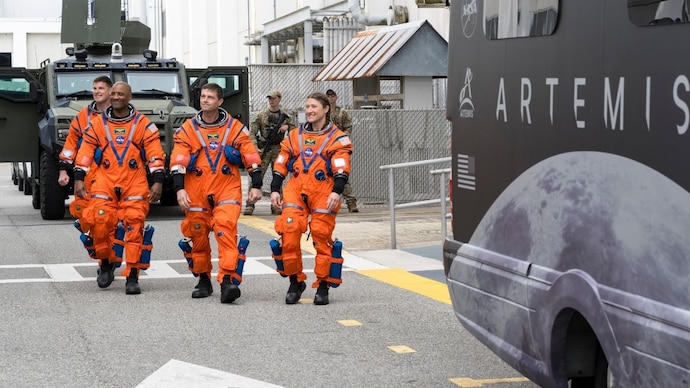
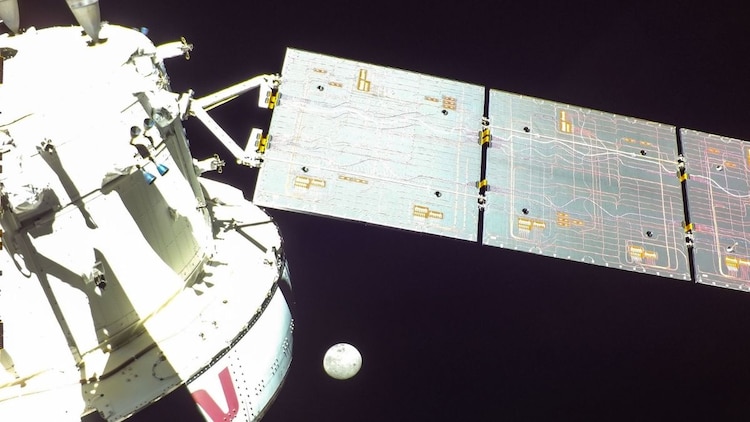
Artemis-II will travel farther in space than the previous human distance record set by Apollo 13 in 1970. (Photo: Nasa)

For 53 years, every human being who has ventured into space has done so within a narrow band of sky that barely scratches the surface of the cosmos.
That changed on April 6, when four Artemis-II astronauts reached the Moon's gravitational sphere of influence.
The four astronauts are set to break the record for farthest human spaceflight, reaching a distance of 4,06,773 kilometres from Earth.
This is around 2,500 kilometres more than the record set by Apollo 13 in 1970.
WHEN WILL ARTEMIS II CONDUCT LUNAR FLYBY?
The Artemis-II crew is set to begin the lunar flyby on April 7, 2026, at 12:15 am IST.
The crew will swing around the far side of the Moon before heading home.
To put that in perspective, the International Space Station (ISS) orbits at 400 kilometres above Earth. The Moon itself sits roughly 3,84,633 kilometres away.
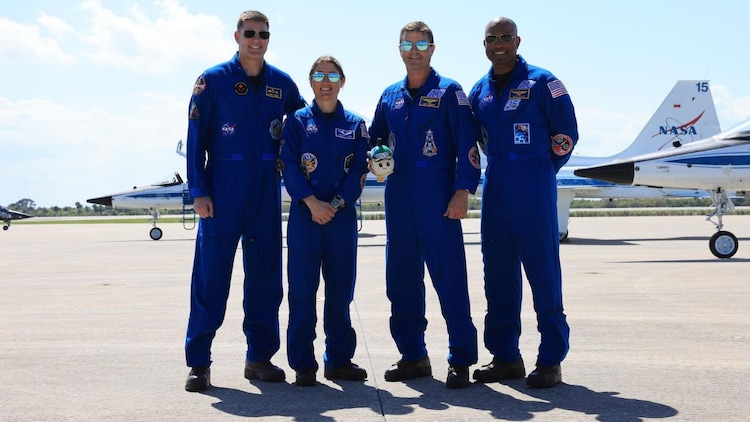
Artemis-II will go past the Moon and beyond, into territory no human has visited since the Apollo era.
The Apollo 13 record stands at 4,00,171 kilometres.
Artemis II will surpass that by roughly 2,500 kilometres, with full preparation and purpose.
WHAT IS A FREE-RETURN TRAJECTORY, AND WHY DOES IT MATTER?
Artemis-II will travel on what is called a free-return trajectory.
This means the spacecraft uses the Moon's own gravitational pull to slingshot itself naturally back toward Earth, without needing a separate engine burn to come home.
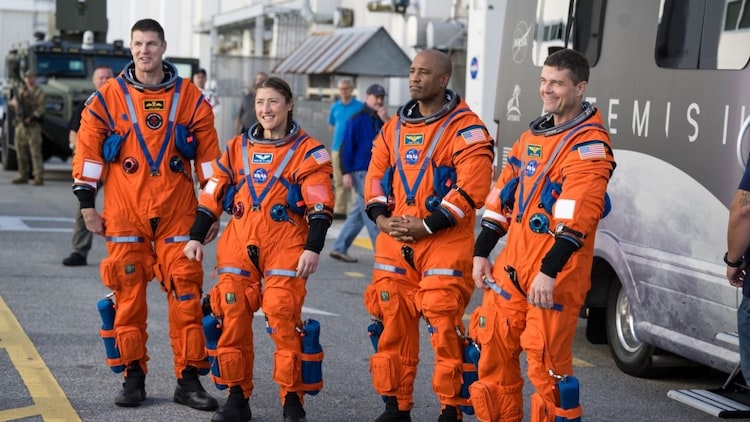
The Moon does the steering. It is an elegant application of orbital mechanics, the science of calculating how objects move through space under the influence of gravity, and it doubles as a crucial safety net.
Even if Orion's main propulsion system failed completely mid-mission, the crew would still return to Earth safely.
WHAT MAKES DEEP SPACE SO DIFFERENT FROM THE SPACE STATION?
Beyond low-Earth orbit, the region up to about 2,000 kilometres above the planet, spacecraft and astronauts lose the protection of Earth's magnetic field.
This field acts as an invisible shield, deflecting harmful radiation from the Sun and from deep space.
Astronauts on Artemis-II will be exposed to levels of cosmic radiation, high-energy particles travelling at nearly the speed of light that no human has experienced since the Apollo era.
Monitoring how the crew's bodies respond to this environment is one of the most scientifically significant aspects of the entire mission.
WILL ARTEMIS-II ALSO SET A SPEED RECORD?
Yes. When Orion re-enters Earth's atmosphere at the end of the mission, it will be travelling at approximately 40,200 kilometres per hour, faster than any crewed spacecraft has ever returned to Earth.
Re-entry is the phase when a spacecraft plunges back through the atmosphere at extreme velocity, generating ferocious heat through air compression.
Orion's heat shield will face temperatures of around 2,760 degrees Celsius, nearly half the surface temperature of the Sun, and it must hold without fail.
WHY DOES ALL OF THIS MATTER BEYOND THE MOON?
Every piece of data gathered during Artemis-II, on radiation exposure, spacecraft performance and human physiology in deep space, feeds directly into Nasa's plan to eventually send humans to Mars.
The Moon is not the destination. It is a rehearsal.
And Artemis-II is the most important rehearsal humanity has attempted in more than five decades.
- Ends