
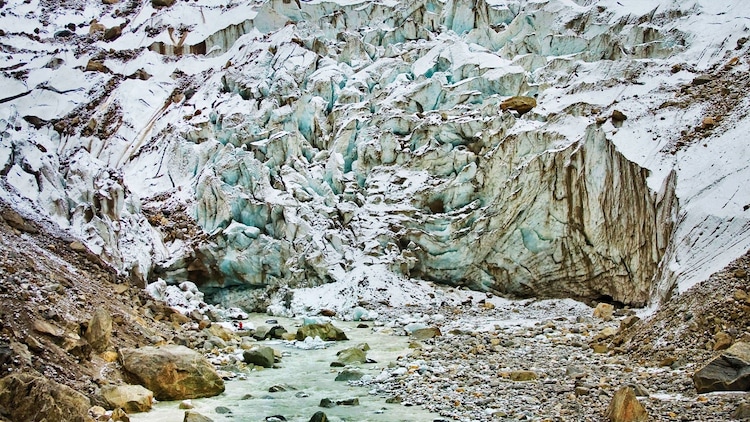
Are Himalayan glaciers unstable? Kanchan Ganga glacier collapse sparks fresh fears
A glacier collapse near the Kanchan Ganga area close to Badrinath Dham has renewed concern over glacier instability in Uttarakhand. Experts say climate change, retreating ice and risky mountain development are increasing the danger from future collapses and floods.
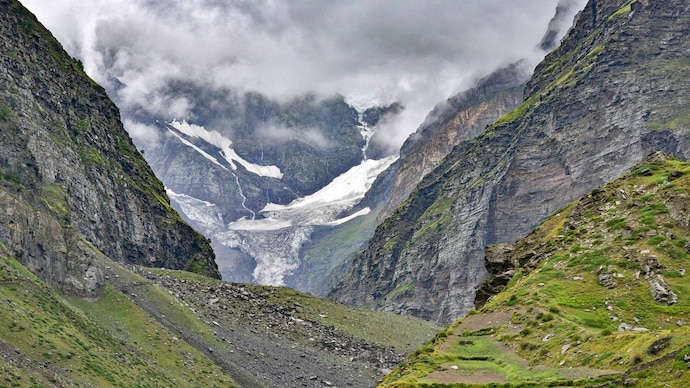
The instability is being driven by a combination of rising temperatures and the topography of the Himalayas. (Photo: Getty)

New Delhi,UPDATED: May 26, 2026 13:45 IST
A recent glacier collapse near the Kanchan Ganga area close to Badrinath Dham has once again drawn attention to the growing instability of glaciers across Uttarakhand.
Officials said no casualties or damage were reported, but experts warn that such incidents are becoming increasingly common in the fragile Himalayan region.
Scientists say glaciers in the Himalayas are naturally unstable because of the steep terrain and constantly shifting mountain landscape. However, climate change and rapid glacier retreat are now making many of them far more dangerous than before.
According to experts, the instability is being driven by a combination of rising temperatures and the topography of the Himalayas.
While climate change is accelerating glacier melting, the region’s steep slopes, loose rock and sharp elevation changes are making glaciers structurally weaker.
“As glaciers retreat, they become more unstable,” researchers say. “The terrain itself plays a major role in determining how vulnerable these glaciers become.”
One of the biggest concerns in Uttarakhand is the rise of “hanging glaciers,” glaciers perched high on steep mountain walls.
Unlike larger valley glaciers, hanging glaciers are suspended above valleys and can collapse suddenly. When they break apart, they can trigger avalanches, debris flows and flash floods downstream.
A recent study by researchers from the Indian Institute of Science, Defence Research and Development Organisation (DRDO), and Indian Institute of Technology Bhubaneswar identified hundreds of potentially unstable hanging glaciers across the Central Himalayas.
The study, published in the journal npj Natural Hazards, focused on the Alaknanda river basin, a region that has already witnessed several devastating disasters in recent years. Using satellite imagery, terrain analysis and hazard modelling, the researchers mapped vulnerable glaciers and warned that the risks are increasing.
The concern is not theoretical. In 2021, the Chamoli disaster in Uttarakhand was linked to a massive rock and ice avalanche that triggered destructive debris flows through mountain valleys. Experts say similar events can happen again as glaciers continue to weaken.
Another growing danger comes from glacial lakes that form as glaciers melt and retreat. These lakes can suddenly burst, releasing enormous volumes of water, rocks and debris into downstream areas. Such floods can travel 20 to 40 kilometres or even farther, depending on terrain and rainfall conditions.
Scientists warn that expanding roads, hydropower projects and construction activity in high-risk mountain zones could worsen the impact of future disasters. They say infrastructure development should be carefully planned and avoided in glacier-fed valleys, avalanche-prone slopes and runoff zones.
Experts stress that glacier collapses themselves are natural events, but climate change and human activity are increasing both their frequency and their destructive potential.
For Uttarakhand, the challenge now is not just monitoring glaciers, but learning how to live safely in one of the world’s most fragile mountain ecosystems.
- Ends