
Silicon Valley startup wants AI data centres in the ocean, Peter Thiel thinks it is a great idea
Venture capitalist and PayPal co-founder Peter Thiel is backing a startup called Panthalassa with $140 million. The company plans to build floating, wave-powered AI data centres in the ocean, using energy from ocean waves and seawater cooling to tackle AI's growing power and heat challenges.
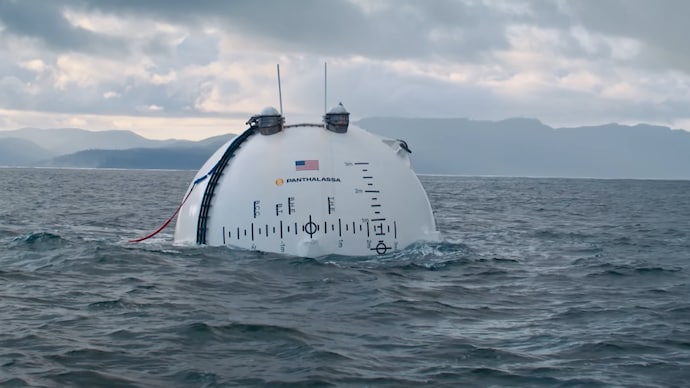

As AI becomes ubiquitous to daily life, the demand for data centres is growing by leaps and bounds. Without data centres, there will be no AI. But setting them up is easier said than done. Increasingly, we are getting the impression that building data centres on land amounts to both technological and environmental problems, a big reason why Big Tech is rushing to put them in space. A new startup called Panthalassa believes Earth could still be a safe harbour for data centres though it is taking a route that defies conventional wisdom. Panthalassa wants to put AI data centres in the ocean, and it may be onto something because the idea has been embraced by none other than Peter Thiel, the billionaire investor who co-founded PayPal and Palantir Technologies.
According to a report by the Financial Times, Peter Thiel is backing Panthalassa with a $140 million investment. This fresh funding reportedly values the startup at close to $1 billion, highlighting growing investor interest in alternative energy solutions for AI. With the investment, Panthalassa – which is based out of the US – plans to build floating, ocean wave-powered data centres designed to run AI workloads far away from land. The startup wants to tap directly into turning ocean energy into electricity while using seawater for cooling.
How will ocean energy power AI?
So how exactly does Panthalassa plan to build AI data centres on the ocean? The startup is developing large floating structures, called “nodes”, that sit mostly underwater and carry AI servers inside them.
These nodes won’t be small machines. According to the report, each unit can be around 85 metres long, about the size of a large building. Inside, the servers are kept in a sealed space, so they stay safe from seawater, while the surrounding ocean helps keep them cool. This tackles one of the biggest problems data centres face today—overheating.
Once deployed, instead of plugging into a power grid, these floating centres generate their own electricity using ocean waves. As waves move, the structure gently rises and falls. This movement pushes water through pipes inside the system. The flowing water spins turbines, and those turbines generate electricity.
This electricity is then used immediately to run the AI servers inside the unit.
In simple terms, Panthalassa’s system turns the natural movement of waves into power. Since waves are created by wind and are almost always in motion, they can provide a steady, round-the-clock energy source. Unlike solar power, which only works during the day, or wind power, which depends on airflow, ocean waves can offer a more consistent supply of energy.
Building AI data centres on the ocean
While the idea of turning wave energy into electricity is impressive, the startup is not planning to bring that power back to land. Instead, Panthalassa aims to use the electricity exactly where it is generated, that is within the floating data centre itself.
This will help the company avoid the need for expensive infrastructure to transmit power over long distances and allows the system to operate independently in remote parts of the ocean, while also easing pressure on land-based resources.
In addition, these nodes are also said to be designed to move on their own, using ocean currents instead of traditional engines. The company plans to deploy multiple units that can operate independently, handle cloud computing tasks, and send data back through satellite connections.
To build this ambitious project, Panthalassa’s team includes engineers with experience from companies like SpaceX, Tesla, and NASA.
Of course, building AI infrastructure in the ocean will come with its own set of challenges. Operating in the open sea raises questions around durability, maintenance, and environmental impact. Regulatory hurdles and deployment logistics could also make scaling such systems more complex.
However, land has its limits, and companies will eventually need to explore alternatives like the ocean and space, to meet growing demand. And building on the ocean feels more feasible than sending the data centers out of the orbit.