People power: India’s young talent meets Japan’s ageing workforce
The India Today Indo-Japan Conclave discussed how India’s skilling ecosystem must evolve to meet international standards and not just domestic job requirements

Japan, an island nation in East Asia, is located in the Pacific Ocean. It lies to the east of China, North Korea, South Korea, and Russia, stretching from the Sea of Okhotsk in the north to the East China Sea and Taiwan in the south. The country comprises an archipelago of 6,852 islands, with the four largest being Honshu, Hokkaido, Kyushu, and Shikoku, which together make up about ninety-seven percent of Japan's land area.
Japan's population is over 126 million, making it the world's eleventh most populous country. Tokyo, the capital, is a bustling metropolis and one of the world's most populous cities. Japanese society is linguistically and culturally homogeneous, with small populations of foreign workers. The national language is Japanese, and the currency is the Japanese yen.
Historically, Japan has been inhabited since the Upper Paleolithic period (30,000 BC), though first written mention of the nation dates back to the 1st century AD. Influences from other regions, particularly China and Korea, have been integral in Japanese culture's development. From the 12th century until 1868, Japan was ruled by successive feudal military shoguns. The country underwent rapid industrialization and militarization in the late 19th and early 20th centuries, leading to its emergence as a world power and the establishment of an empire.
Japan is a constitutional monarchy with an emperor and an elected parliament, known as the National Diet. Its economy is the third-largest in the world by nominal GDP and the fourth-largest by purchasing power parity. It is a member of numerous international organizations, including the United Nations, the OECD, and the G7.
Known for its rich cultural heritage, Japan has made significant contributions to the arts, technology, and science. Traditional arts include tea ceremonies, calligraphy, and flower arranging, while its popular culture is known worldwide through anime, manga, and video games. Japan is renowned for its historical and extensive cinema, rich cuisine, and major contributions to science and technology.
The Ministry of Railways has released the first official look of India's upcoming bullet train. The flagship project will operate on the 508-kilometre Mumbai-Ahmedabad corridor, utilising Japan's Shinkansen technology.
The big focus of this episode of News Today is on the escalating conflict between the United States and Iran as a forty-eight-hour ceasefire deadline approaches.
The political landscape in Tamil Nadu is witnessing a contest for the minority vote bank ahead of the assembly elections.
A powerful 7.5 magnitude earthquake has struck off the northern coast of Japan near Sanriku, prompting the Japan Meteorological Agency to issue a tsunami alert.
China has slammed the United States over the Strait of Hormuz blockade and called their action irresponsible and dangerous.
India vs Japan: The cleanliness divide is impossible to ignore
In an exclusive interview, Martin Wolf, Chief Economic Commentator of the Financial Times, analyses the escalating US-Iran conflict and its catastrophic potential for the global economy.
US President Donald Trump announced the military campaign against Iran is nearing completion, projecting a timeline of two to three more weeks while threatening to hit Iran's electric plants if negotiations are refused.
The West Asia conflict is triggering a global energy shock with Americans paying over $4 per gallon for gas, the highest since 2022, and oil prices hovering above $100 per barrel.
As tensions escalate in West Asia, India Today's Pranay Upadhyaya reports on increased United States military deployment in the Middle East.
As the US-Iran conflict enters 25th day, politics has erupted over India's foreign policy and the shifting diplomatic landscape in West Asia.
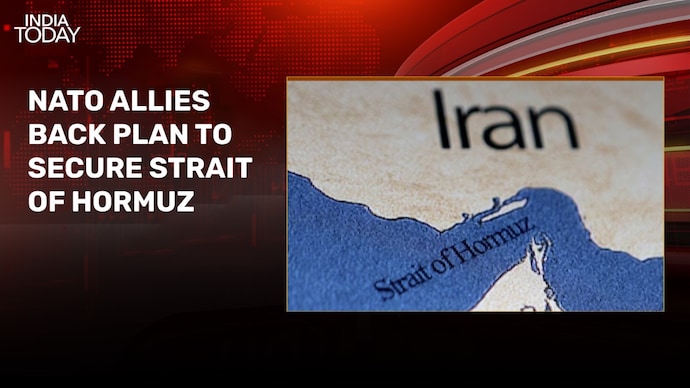
Several countries, including the UK, Germany, France, Italy, Japan and the Netherlands, have issued a joint statement expressing readiness to contribute to efforts ensuring safe passage through the Strait of Hormuz.
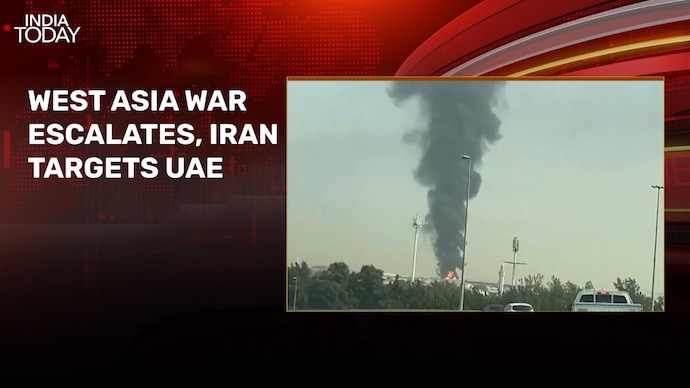
The West Asia conflict has intensified as Iran launched missile and drone attacks on Israel, Qatar, the UAE, Kuwait, Lebanon, and Iraq.
Indian equity markets have experienced a significant downturn as the West Asia conflict enters its tenth day. The Sensex crashed 1,353 points to 77,566, while the Nifty fell 422 points to the 24,000 level, marking a 4.58 percent decline since the hostilities began. This volatility has resulted in the loss of lakhs of crores in investor wealth. Brent crude prices surged to $119.50 per barrel following a 28 percent rally, driven by disruptions in the Strait of Hormuz. External Affairs Minister S. Jaishankar emphasized the region's importance for India's energy security and the safety of 10 million Indian expatriates. Global energy markets report a 26 percent jump in Russian Ural crude as China increases stockpiles. India maintains 74 days of oil reserves, while Japan utilises its 300-day supply. Market uncertainty is further compounded by shadow market activities involving Russian, Venezuelan, and Iranian crude. Additionally, regional tensions have prompted some Dubai residents to relocate following reported drone strikes near Palm Jumeirah.
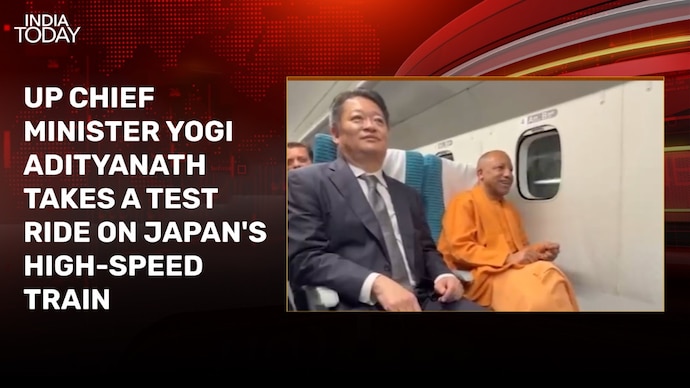
Uttar Pradesh Chief Minister Yogi Adityanath rode Japan's high-speed linear Maglev train in Yamanashi on the last day of his Japan visit. The Maglev train operates at 500 kilometres per hour and can reach speeds of up to 600 kilometres per hour, powered by a hydrogen energy plant.
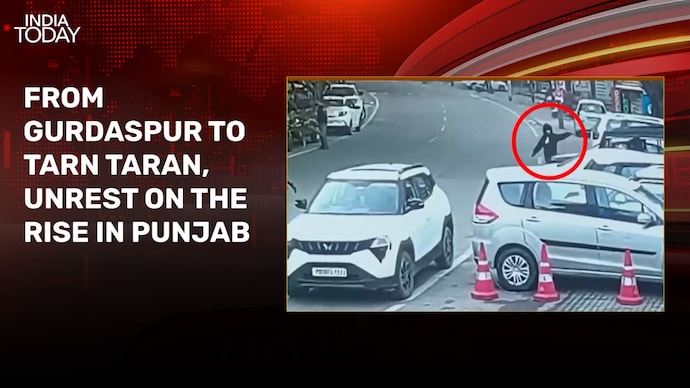
In this episode of 5 Live, the focus is on the law and order situation in Punjab following the killing of two police personnel in Gurdaspur near the Pakistan border.
Speaking to India Today Global, EU Vice President and High Representative for Foreign Affairs Kaja Kallas stressed the need to “build partnerships with those countries who believe in free trade,” underscoring the strategic message behind the newly concluded India–EU Free Trade Agreement.
This report examines the complexities surrounding the India-European Union Free Trade Agreement (FTA) negotiations. The speaker highlights that while European wines and spirits may become more affordable in India, the deal faces significant hurdles, including 'legal scrubbing' over the next six months and potential dissent within the European Parliament. The discussion emphasizes that India remains an independent power with a domestically oriented economy, relying on internal consumption rather than exports for growth. Reference is made to Commerce Minister Piyush Goyal’s previous concerns regarding unfair agreements with other nations, contrasting them with the current push for new trade pacts. The programme also touches upon Europe's military and economic reliance on the US and NATO, questioning whether the FTA is a purely economic move or a strategic reengineering of the global power balance. The segment concludes by reflecting on the global stability linked to India's success, as noted by Ursula von der Leyen.
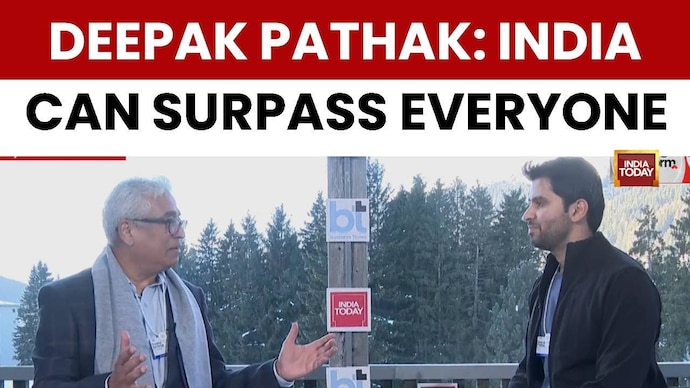
Deepak Pathak, CEO and co-founder of Skild AI, discusses the future of robotics and artificial intelligence at the World Economic Forum. Pathak explains that his company is focused on building the 'brain' for robots, a critical component that has been missing for decades, preventing machines from performing complex real-world tasks like opening doors. Addressing fears of job displacement, Pathak notes that while India currently has a labour surplus, many parts of the world like Japan and Korea face a shrinking workforce and desperately need automation. He highlights that Skild AI has already established an office in Bengaluru to tap into Indian talent. Pathak suggests that India has a unique opportunity to surpass other nations in robotics by leveraging its existing automotive and electronics manufacturing supply chains. He emphasizes that the goal is not to replace humans but to fill the growing gap of millions of unfilled jobs globally.
This episode of India First features a debate regarding Prime Minister Narendra Modi's criticisms of the Congress party in Kerala. Congress representative Dr. Karuna Sagar accuses the Prime Minister of communal polarisation and cites 1,318 alleged hate speeches by BJP leaders in 2025. In response, BJP National Spokesperson Sanju Verma defends the government’s economic record, noting India has overtaken Japan as the world's fourth-largest economy with a growth rate exceeding 7.5%. Verma highlights the success of the Ujjwala Yojana and Pradhan Mantri Awas Yojana, claiming multidimensional poverty has dropped to 1.3%. Panelists Suman C. Raman and Abhijit Iyer-Mitra analyze Kerala's political dynamics, the influence of Jamaat-e-Islami, and the 'Urban Naxal' narrative. The discussion contrasts the BJP's electoral strike rates in Maharashtra and Haryana against the ideological shifts between the Left and Congress. This news segment examines the intersection of economic data, welfare schemes, and communal rhetoric ahead of regional political contests.