Diljit Dosanjh: Proud Punjabi, hero in India but quietly American
He gave India "Main Hoon Punjab," India gave him the status of an icon. But between Coachella, Border 2 and global Punjabi pride, Diljit Dosanjh stopped being Indian one day.
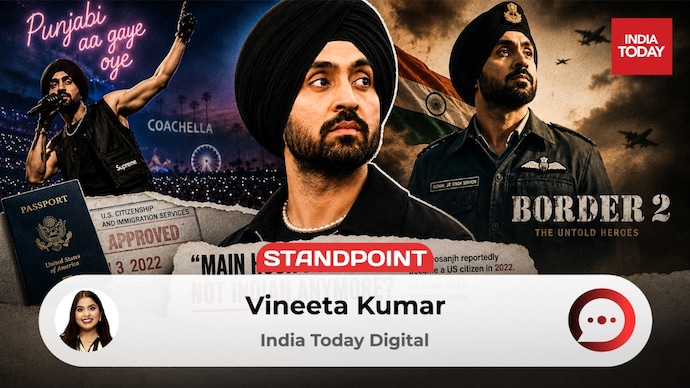
Indian-turned-American Diljit Dosanjh may have spent years proudly declaring "Main Hoon Punjab [I am Punjab]," but turns out Punjab's biggest modern mascot quietly stopped being Indian somewhere around 2022. At least, that is what a report by The Indian Express claims.
And no, the uncomfortable part is not merely that Diljit Dosanjh reportedly took American citizenship. It is that he continued to build, sell and benefit from an image deeply rooted in Indian-Punjabi identity long after quietly giving up the Indian part of it. The image being sold to people remained exactly the same: the proud Punjabi boy rooted in his mitti, emotionally tied to his land, carrying Punjab, and by extension India, to the world stage.
For us, mere muggles, nothing changed. We still screamed when he said "Punjabi aa gaye oye," celebrated him at Coachella like it was a national achievement and proudly circulated clips of him on The Tonight Show Starring Jimmy Fallon because look, our Punjabi munda has made it global. We still watched him walk into international spaces wearing his turban and speaking Punjabi without apology, and thought: this man represents us. Saada banda si.
So, no. This does not feel like random celebrity passport gossip. It feels personal. Slightly deceptive, even. Diljit did not just become famous. He became symbolic. There is a difference.
He built an entire public image around belonging, roots -- the Punjabiyat of it all. His fandom has been created around the idea that no matter how global he became, he was still deeply connected to where he came from: India, Punjab. That emotional positioning is what made people love him beyond the music. But now? Diljit's truth changed and none of us were ever told.
Oh, and before someone jumps in with "Punjab is not India," let us fix that for you. Punjab is not a floating island in the middle of nowhere. When he says "Main Hoon Punjab," audiences do not hear a geographically isolated emotion detached from nationality. They hear a Punjabi man representing a part of India with pride. Punjab is part of India. They see an Indian Punjabi representing them globally. That is literally how he has been celebrated all these years. That is what his emotional contract with his audience is all about. And that is why our next argument stings so deep and so sharp.
According to the report, Diljit had already become a US citizen before:
- performing at Coachella as a moment of Indian representation (2023)
- walking the Met Gala green carpet and carrying the heritage of Punjab in his fashion (2024)
- portraying Flying Officer Nirmal Jit Singh Sekhon in Border 2, the only Indian Air Force officer to receive the Param Vir Chakra, India’s highest military honour (2025).
You have to understand this. Watching Diljit play that war hero who died for the motherland mattered because the man himself was a revered Indian citizen, a fine actor and a deeply loved artiste who never stopped being India's global export.
Now, suddenly, are people expected to treat the citizenship reveal as an irrelevant technicality? Of course, they are uncomfortable. And the discomfort grows because Diljit has always been extremely intentional about identity.
This is not an accidental celebrity brand. His turban, Punjabi language, refusal to Westernise himself for acceptance, constant references to the idea of 'home', his roots and culture -- everything about him says "I belong here. I carry this place with pride." Then why the silence? Why the non-acknowledgement of the decision that clearly stands out?
If changing citizenship was truly no big deal, why was it never openly spoken about? Why let fans continue assuming something else? Why continue benefiting from the emotional power of being seen as India's global Punjabi star while reportedly no longer identifying as Indian legally?
In fact, wait. This is where the debate becomes bigger than Diljit.
Indian audiences have a strange emotional relationship with celebrities. We don't know how to simply consume stars -- to separate the art from the artiste. We adopt them. We celebrate their international success as our success. Every Coachella performance becomes 'India at Coachella' and every Hollywood appearance becomes 'India goes global'. All of them know this. Diljit should too. Or should have.
This means you cannot endlessly profit from nationalist and cultural symbolism and then act shocked when people ask questions about nationality.
Nobody is saying Diljit cannot love Punjab any more. Nobody is saying migration is betrayal. But there is a difference between being part of a diaspora and quietly building an entire career on Indian emotional identification while withholding the fact that you are no longer Indian yourself.
You know you might differ here, but this is exactly the part that stings the most. Diljit chose America, but India kept choosing Diljit without knowing he had already chosen otherwise.
Maybe the cut feels extra deep because this is the same author who, just days ago, proudly wrote: No one uses their sattar minute on the global stage better than Diljit Dosanjh
(Views expressed in this opinion piece are those of the author)
Indian-turned-American Diljit Dosanjh may have spent years proudly declaring "Main Hoon Punjab [I am Punjab]," but turns out Punjab's biggest modern mascot quietly stopped being Indian somewhere around 2022. At least, that is what a report by The Indian Express claims.
And no, the uncomfortable part is not merely that Diljit Dosanjh reportedly took American citizenship. It is that he continued to build, sell and benefit from an image deeply rooted in Indian-Punjabi identity long after quietly giving up the Indian part of it. The image being sold to people remained exactly the same: the proud Punjabi boy rooted in his mitti, emotionally tied to his land, carrying Punjab, and by extension India, to the world stage.
For us, mere muggles, nothing changed. We still screamed when he said "Punjabi aa gaye oye," celebrated him at Coachella like it was a national achievement and proudly circulated clips of him on The Tonight Show Starring Jimmy Fallon because look, our Punjabi munda has made it global. We still watched him walk into international spaces wearing his turban and speaking Punjabi without apology, and thought: this man represents us. Saada banda si.
So, no. This does not feel like random celebrity passport gossip. It feels personal. Slightly deceptive, even. Diljit did not just become famous. He became symbolic. There is a difference.
He built an entire public image around belonging, roots -- the Punjabiyat of it all. His fandom has been created around the idea that no matter how global he became, he was still deeply connected to where he came from: India, Punjab. That emotional positioning is what made people love him beyond the music. But now? Diljit's truth changed and none of us were ever told.
Oh, and before someone jumps in with "Punjab is not India," let us fix that for you. Punjab is not a floating island in the middle of nowhere. When he says "Main Hoon Punjab," audiences do not hear a geographically isolated emotion detached from nationality. They hear a Punjabi man representing a part of India with pride. Punjab is part of India. They see an Indian Punjabi representing them globally. That is literally how he has been celebrated all these years. That is what his emotional contract with his audience is all about. And that is why our next argument stings so deep and so sharp.
According to the report, Diljit had already become a US citizen before:
- performing at Coachella as a moment of Indian representation (2023)
- walking the Met Gala green carpet and carrying the heritage of Punjab in his fashion (2024)
- portraying Flying Officer Nirmal Jit Singh Sekhon in Border 2, the only Indian Air Force officer to receive the Param Vir Chakra, India’s highest military honour (2025).
You have to understand this. Watching Diljit play that war hero who died for the motherland mattered because the man himself was a revered Indian citizen, a fine actor and a deeply loved artiste who never stopped being India's global export.
Now, suddenly, are people expected to treat the citizenship reveal as an irrelevant technicality? Of course, they are uncomfortable. And the discomfort grows because Diljit has always been extremely intentional about identity.
This is not an accidental celebrity brand. His turban, Punjabi language, refusal to Westernise himself for acceptance, constant references to the idea of 'home', his roots and culture -- everything about him says "I belong here. I carry this place with pride." Then why the silence? Why the non-acknowledgement of the decision that clearly stands out?
If changing citizenship was truly no big deal, why was it never openly spoken about? Why let fans continue assuming something else? Why continue benefiting from the emotional power of being seen as India's global Punjabi star while reportedly no longer identifying as Indian legally?
In fact, wait. This is where the debate becomes bigger than Diljit.
Indian audiences have a strange emotional relationship with celebrities. We don't know how to simply consume stars -- to separate the art from the artiste. We adopt them. We celebrate their international success as our success. Every Coachella performance becomes 'India at Coachella' and every Hollywood appearance becomes 'India goes global'. All of them know this. Diljit should too. Or should have.
This means you cannot endlessly profit from nationalist and cultural symbolism and then act shocked when people ask questions about nationality.
Nobody is saying Diljit cannot love Punjab any more. Nobody is saying migration is betrayal. But there is a difference between being part of a diaspora and quietly building an entire career on Indian emotional identification while withholding the fact that you are no longer Indian yourself.
You know you might differ here, but this is exactly the part that stings the most. Diljit chose America, but India kept choosing Diljit without knowing he had already chosen otherwise.
Maybe the cut feels extra deep because this is the same author who, just days ago, proudly wrote: No one uses their sattar minute on the global stage better than Diljit Dosanjh
(Views expressed in this opinion piece are those of the author)

