
Vikas Bhi, Virasat Bhi: A doctrine that has not yet met its test
Somnath shows what India's spiritual economy can build. Char Dham shows what happens when it forgets the mountain underneath.
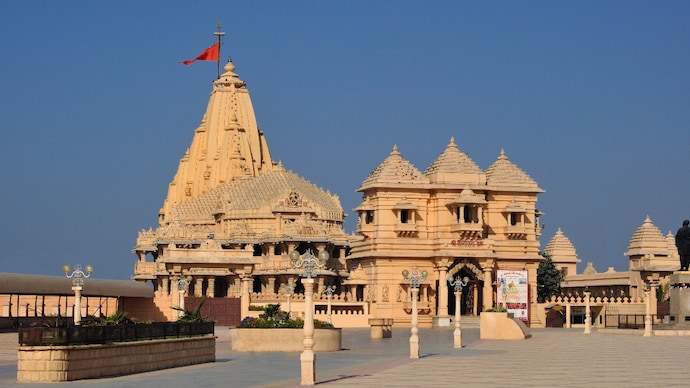
Somnath temple, Gujarat (Getty)


New Delhi,UPDATED: May 24, 2026 12:21 IST
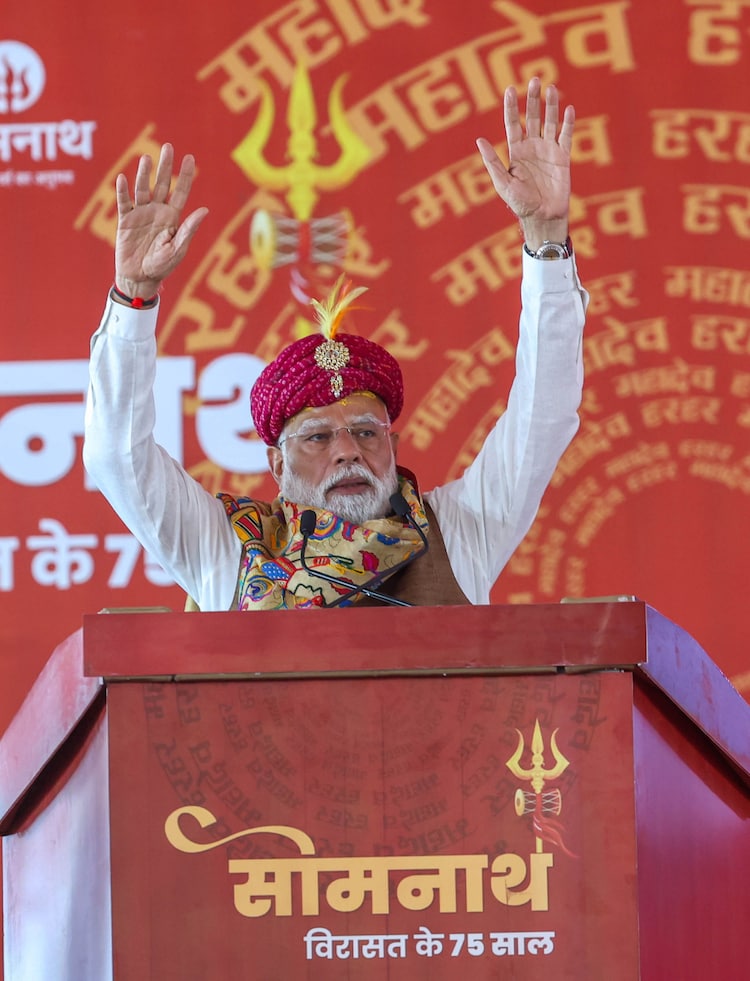
On May 11, 2026, the Prime Minister Narendra Modi stood at Prabhas Patan in Gujarat and led the Somnath Amrut Mahotsav, marking 75 years since the temple's 1951 reconstruction. This event is noteworthy not just for its commemorative value, but because it exemplifies the government's operating doctrine: linking spiritual heritage to economic and social development.
The occasion fell within the broader Somnath Swabhiman Parv, which commemorates the 1,000-year anniversary of the first attack on the temple in 1026. A commemorative postage stamp and a special Rs 75 coin were released.
There was a flypast by the Indian Air Force's Surya Kiran team, and a speech reinforced the government's central philosophy, summed up in the phrase "Vikas Bhi, Virasat Bhi." Development as well as heritage. Cultural sites, the Prime Minister said, are not obstacles to progress but centres of it.
Take the claim seriously, and the case for it is real. The practical impact of this doctrine has been observable over the last decade, applied everywhere from Varanasi to Ujjain to Ayodhya, with Kedarnath, the Kartarpur Corridor, the Buddhist Circuit and now Somnath all part of the same effort. Nothing on this scale has been attempted by any Indian government before, and the numbers reflect that.
According to the Uttar Pradesh Tourism Department, Ayodhya drew 2.39 crore visitors in 2022, 5.75 crore in 2023, and 16.44 crore in 2024, the year of the Ram Mandir consecration. Varanasi has grown from around 68 lakh visitors in 2019 to over 8 crore by 2023, surpassing Agra and Goa as a domestic destination. Faith-based travel has become an increasingly visible part of India’s domestic tourism economy in recent years. Industry reports, including those published by CBRE, suggest that the broader spiritual tourism sector is likely to continue growing over the next decade.
Against this backdrop, the criticisms warrant attention as well. Yes, the hotel chains and the big contractors have done very well out of the corridors. That is true and unsurprising.
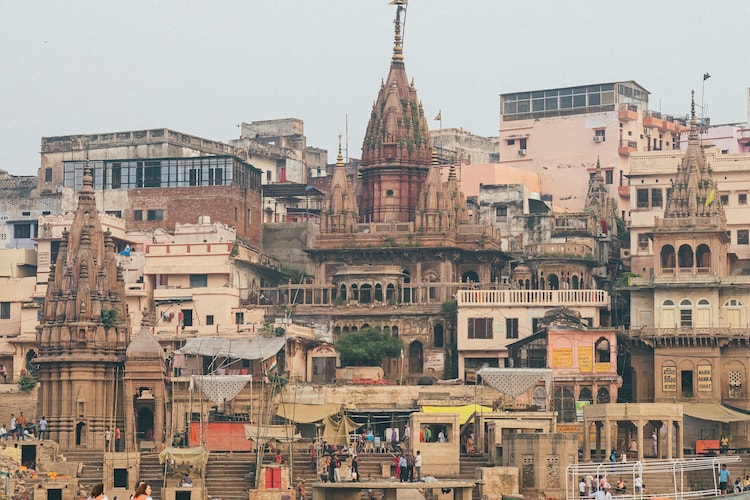
Less remarked on is the smaller economy that has grown around the same footfall. Since the Kashi Vishwanath corridor opened in late 2021, local businesses in Varanasi have noticed a rise in tourist activity and earnings. Indian business newspapers and hospitality surveys have highlighted more demand for small traders and service workers in the temple area.
Somnath also now attracts millions of pilgrims each year. This supports a wide network of small local businesses across Saurashtra. Much of the change is visible in the small everyday economy around these sites. In practical terms, pilgrimage traffic has boosted local economies. These economies had long remained at the margins of mainstream development.
Alongside these economic benefits, there is also a quieter cultural argument worth registering. India's creative economy is significantly under-monetised compared to those of East Asia, and pilgrimage circuits are among the few delivery mechanisms through which traditional crafts, music, food, and storytelling can reach a paying audience at scale.
A weaver's son who can sell to crores of visitors a year has options that his father did not. To dismiss this as mere commercialisation of the sacred is to miss what it actually represents for the people whose inheritances are being economically revalued.
However, these gains leave the doctrine open on one front, which is ecological, and here the record is harder to defend. Look at Char Dham.
The Rs 12,000 crore Char Dham Pariyojana, a road-widening project covering nearly 890 km of national highways across Uttarakhand, was designed to give pilgrims faster, all-weather access. In 2024, a peer-reviewed paper in Natural Hazards and Earth System Sciences surveyed the Rishikesh–Joshimath stretch of NH-7 and recorded more than 300 road-blocking landslides along a 247-kilometre corridor in the aftermath of the September–October 2022 rainfall.
The paper identified slope, rainfall, rock type and road widening as the main factors driving the occurrence of these landslides. Across Uttarakhand as a whole, reporting based on state and SDRF data, including by the Migration Story and the Social Policy Research Foundation, places landslide deaths between 2015 and 2023 at close to 300, with thousands of landslide events recorded in that period. Joshimath, the town pilgrims pass through on the way to Badrinath, was declared a subsidence zone in January 2023. Over 900 of its buildings cracked. One in every five became unfit to live in.
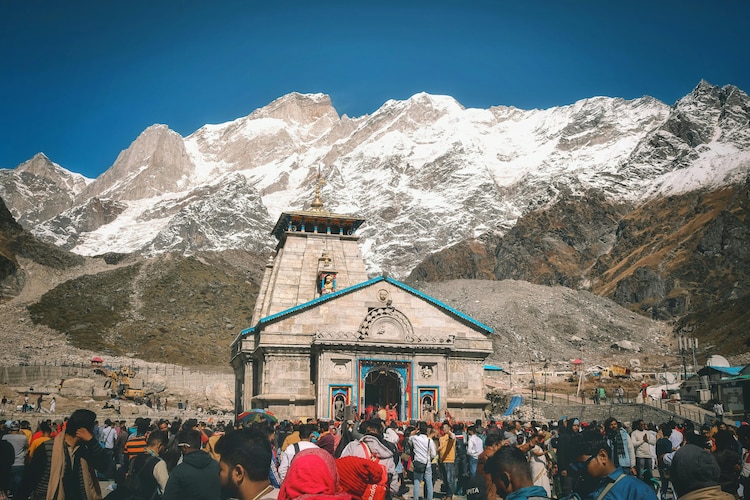
The impact of these ecological issues became even more apparent during the 2025 yatra season, making the climate dimension explicit. According to the Dehradun-based Social Development for Communities (SDC) Foundation, which tracks the pilgrimage annually, the first four months of the 2025 season saw 55 days when no pilgrim reached the temples, and another 89 days when fewer than 1,000 did.
Yamunotri and Gangotri were the worst affected. The disruption was driven by landslides, flash floods, and extreme rainfall, all of which climate change models indicate will intensify in the western Himalayas. The foundation's founder, Anoop Nautiyal, has said the disasters have “broken the backbone” of Uttarakhand's pilgrimage-driven economy.
This is where the doctrine runs out of completed thought. The economic and cultural argument for Vikas Bhi and Virasat Bhi can be defended. On the climate side, the same argument is much harder to sustain with the available evidence. What Char Dham seems to be telling us is clear. The model of mass scaling, all-weather connectivity, and rapid throughput is in active tension with the geology and climate of the regions where many of India's most sacred sites are located.
The same logic will eventually catch up with Kedarnath and Vaishno Devi. It will also affect the new corridors being planned in Bihar around the Vishnupad and Mahabodhi temples, as well as any future development in the fragile zones of the Himalayas or the coasts.
None of this is really an argument against the doctrine itself. If anything, it is an argument for thinking it through more completely. A serious version of Vikas Bhi, Virasat Bhi would treat tourist carrying-capacity assessments not as procedural formalities, but as central to how development is planned in ecologically fragile regions.
The National Green Tribunal asked Uttarakhand in September 2024 to undertake such studies. Yet, meaningful implementation has only recently begun in parts of the Nainital district. It would draw a clear distinction between corridors built on resilient terrain, such as Somnath, Ayodhya, and Varanasi, and those built on fragile terrain, such as Char Dham and Vaishno Devi
It would also concede that the second category needs slower throughput, harder caps on daily pilgrim numbers, and infrastructure built with some humility towards the landscape. It would put as much money and political signalling into climate-resilient roads, drainage, and shelters as it currently puts into commemorations.
The Prime Minister at Somnath said that temples are not obstacles to development. He is right. But the landscapes around many of these shrines, especially in the Himalayas, are far less forgiving. The geology of these regions does not always support the scale and pace of infrastructure expansion now underway.
The future of Vikas Bhi and Virasat Bhi will depend not only on what can be built in places like Somnath. It will also depend on whether the model can adapt to fragile regions, such as the Char Dham region. The economic gains are visible. The cultural revival is visible. The climate challenge is the part that still remains unresolved.
- Ends