
BJP's perfect Bengal storm: How it disrupted TMC's political stronghold
A combination of factors contributed to the BJP's strong performance in the state, where the TMC has been in power for 15 years. Here's an overview of some of the key drivers.
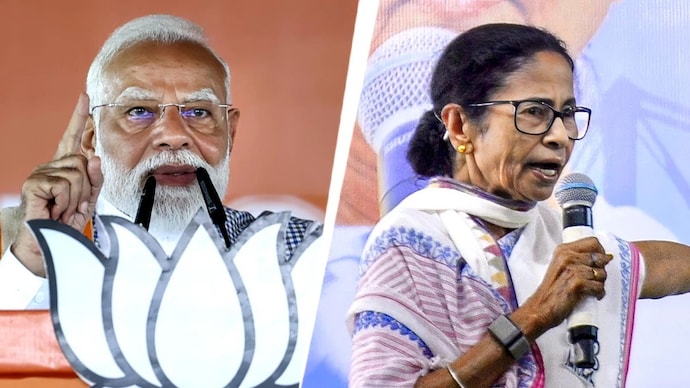

The Bharatiya Janata Party (BJP) has taken a significant lead over the Trinamool Congress (TMC) in the 2026 West Bengal Assembly elections, according to the Election Commission of India’s website. The BJP is ahead in 200 seats, while the TMC leads in 87, with counting still underway in 284 of the 294 constituencies, as per EC trends. The BJP had won 9 seats compared to the TMC’s 1 by 5 pm, with clearer results expected as counting progresses.
A combination of factors contributed to the BJP’s strong performance in the state, where the TMC has been in power for 15 years. Here’s an overview of some of the key drivers --
FACTOR 1: UNPRECEDENTED CONSOLIDATION OF HINDU VOTERS
A notable consolidation of Hindu votes emerged as a key driver, with identity-based mobilisation cutting across caste and regional lines to form a broader electoral bloc. BJP leader Suvendu Adhikari, seen as a potential chief ministerial candidate, said the party had witnessed a consolidation of Hindu votes along with significant support from Adivasi communities.
FACTOR 2: STRONG ANTI-INCUMBENCY WAVE
A pronounced anti-incumbency sentiment weighed against the ruling party, with sections of voters expressing fatigue over prolonged incumbency and dissatisfaction with governance in the state. Discontent with local leadership further fuelled an anti-TMC wave. The BJP amplified this sentiment by citing incidents such as RG Kar to question the state’s law-and-order situation.
FACTOR 3: FOCUS ON WOMEN VOTERS AND SECURITY ISSUES
A calibrated outreach to women voters, combined with a sustained focus on security concerns, helped the BJP expand its appeal into what was long considered Mamata Banerjee’s core support base. BJP’s 2026 West Bengal performance was driven by a blend of welfare promises and a strong safety narrative, with the party targeting the TMC over women’s security issues. It further reinforced this approach by fielding symbolic candidates like Ratna Debnath and Rekha Patra, alongside promises of Rs 3,000 monthly assistance and enhanced safety measures.
FACTOR 4: COUNTERING ‘OUTSIDER’ NARRATIVE
The BJP sought to counter the TMC’s “outsider” narrative by positioning itself as rooted in Bengal’s culture and identity. It promoted a “son of the soil” message, with Amit Shah stressing that the next chief minister would be Bengali-born and locally grounded, while leaders like Suvendu Adhikari were prominently projected.
The BJP also used cultural symbolism, with frequent invocations of “Jai Maa Durga” and “Jai Maa Kali” by PM Narendra Modi and others, to align its messaging with regional religious identity and reinforce a “Bengal-first” narrative.
FACTOR 5: HIGH-VOLTAGE CAMPAIGN BY PM MODI, AMIT SHAH
An intense, high-decibel campaign led by PM Modi and Amit Shah amplified the BJP’s messaging and built strong on-ground momentum. Amit Shah’s extended presence in Bengal for around 15 days in April, ahead of Phase 1 polling, underscored the party’s focus on the state. A successful attempt at installing confidence that the BJP could come to power
FACTOR 6: STRONG ORGANISATION AT GRASSROOT LEVEL
In 2021, the BJP lacked the organisational depth to effectively challenge the TMC, exposing weaknesses in its booth-level presence and grassroots reach. By 2026, it addressed these gaps through strengthened booth management.
While the TMC retained an advantage in rural pockets, the BJP’s improved ground network made the electoral contest significantly more competitive. Under the guidance of leaders such as Amit Shah, sustained local engagement, membership drives and expanded cadre strength helped plug organisational deficits.
FACTOR 7: SIR IMPACT
Special Intensive Revision (SIR) voter deletion impact benefited the BJP and helped to tip the scales in close contests in West Bengal. Earlier, the Opposition had alleged that the SIR, which saw around 2.7 million names deleted pending adjudication, disproportionately affected certain voter groups and may have benefited the Bharatiya Janata Party in closely contested constituencies.
Elections 2026 | West Bengal Election | West Bengal Election Constituencies | West Bengal Election Schedule
Tamil Nadu Election Result Live
West Bengal Election Result Live
Puducherry Election Result Live