


- Tamilakam’s Travels: Part 1
- Cosmos, Continent, Country: Part 2
- Tamilakam drew its own map: Part 4
- Name Games: Part 5
- Empires, Elites & Europeans: Part 6
- Dravida to Dravidian: Part 7
- The Caldwell Conundrum: Part 8
- Pundit's Paradoxical Passion: Part 9
- Gods, Kings & Grammar: Part 10
- Tolkappiyar: Part 11
- Valluvar: Part 12
- T’rupparam-Kundram: Part 13
- Epic Clash of Faiths: Part 14
- Tamilakam's Epic Counter: Part 15
- Vaishnavism: Part 16
- Tamil and Sanskrit: Part 17
- Anti-Brahminism: Part 18
- Rise & Rifts Part 19
- Bearded Beginning Part 20
- Alliances & Animosities Part 21
- The Thundering Thandhai Part 22
- Shadows and Succession Part 23
- Anna Arch Part 24
- Agitation Alchemy Part 25
- Anna’s CM Crown Part 26
- The Tricolour Twilight: Part 27
- Karunanidhi’s Coronation: Part 28
- Era of Scams & Defiance: Part 29
- Maximum Guarantee Ramachandran: Part 30
- MGR's 'Thottam' Theatre: Part 31
- The Second Show: Part 32
- Accord, Acrimony, Assaults: Part 33
- DMK’s Tiger-Riding: Part 34
- Jayalalithaa’s Crown: Part 35
- The JJ Juggernaut: Part 36
- Karunanidhi Springs: Part 37
- Role Reversal: Part 38
- Mercury Rises in Poes: Part 39
- Amma’s Comeback: Part 40
- An Arresting Personality: Part 41
- Sandalwood Sunset: Part 42
- Back to Future: Part 43
- Thirumangalam: Part 44
- Sangam, Spectrum: Part 45
- The Lady’s Challenge: Part 46
- Jayalalithaa’s Arc: Part 47
- Kalaignar’s Tryst with Tomb: Part 48
- Dravidian Defiance: Part 49
- Tamil Nadu Through Time: Part 50
Epic Clash of Faiths: When Tamil Turned Mass Medium
Earlier, we saw how Thirumurugatrupadai and Paripadal mapped the divine onto the very hills and rivers of Tamilakam, effectively inaugurating the sacred Sthalas and the pilgrimage tradition of the South. These texts were the spiritual GPS of the soul. But soon, the landscape shifted. The arrival of the Great Epics-Silappatikaram and Manimekalai-the Jaina and Buddhist masterpieces, launched a colossal epic battle for the Tamil soul.
If the Sangam era was the primordial pulse of Tamil-a raw explosion of Akam (love) and Puram (valour)-the era of the Epics represents a profound scholarly shift. We move from the secular soil to the spiritual sky, creating a bridge between the visceral antiquity of the South and a new, structured cosmic consciousness.
The Splintering Beyond The Kural
While the Tirukkural stands as the crowning achievement of the post-Sangam age-a monument of universal humanism-it was a part of a larger body: the Patinenkilkanakku (The Eighteen Minor Didactic Texts). Here, the concept of Aram (virtue) began to splinter along doctrinal lines, moving from Tiruvalluvar's sublime, non-sectarian ambiguity to creed-specific instruction.
Texts like the Nalatiyar, primarily compiled by Jain monks, in stunning Tamil, foregrounded asceticism and the impermanence of the body. This was a Template of Withdrawal, promoting a philosophical detachment alien to the vigorous, materialistic metabolism of the Sangam era. The Tamil mind was being taught that its physical form was a mere temporary loan-a radical departure from the celebration of the Sangam hero.
The Strategic Linguistic Appropriation
The critical break from the secular tradition and Murugan-Mayon faith framework, arrived when the Jain and Buddhist belief systems from North performed a masterstroke of Linguistic Inveigling. The decision by the epic authors to compose in highly refined Tamil-previously dedicated to indigenous themes-was a strategic appropriation of linguistic capital. This was the original imprint on which Robert Caldwell set his missionary footprint, close to two millennia later.
By using the literary sanctity of the Tamil language, these doctrines sought to weave themselves into the Tamilian heartland. They didn't just bring new ideas; they dressed them in the "Ruby and Coral" finery of classical verse. This was scholastic infiltration at its most sophisticated: the language of the lover was repurposed to describe the path of the monk, legitimising foreign doctrines through indigenous linguistic authority.
From Anklet To Ashes: The Firebrand Lady
At the heart of this transition stands the Silappatikaram, an epistemological pivot that upgraded the software of Kural's Karma (UI or Vinai) in the Tamil operating system. But before the cosmic judgment comes the human drama. The epic presents us with the Kovalan-Madhavi affair, arguably one of Tamil literature's earliest and most devastating episodes of infidelity, where the lure of the courtesan breaks the domestic hearth. A favoured film fad to the day.
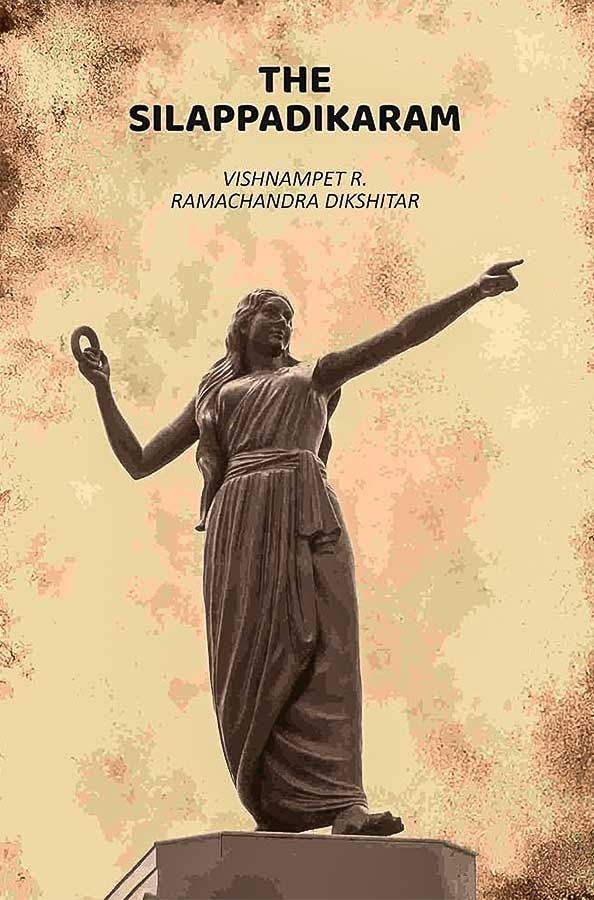
Standing against this betrayal is Kannagi, who remains to date the epitome of chastity-the Paththini (wife) whose moral power is more formidable than the Pandya King's sceptre. When justice failed in the royal court, Kannagi didn't just weep; she ignited.
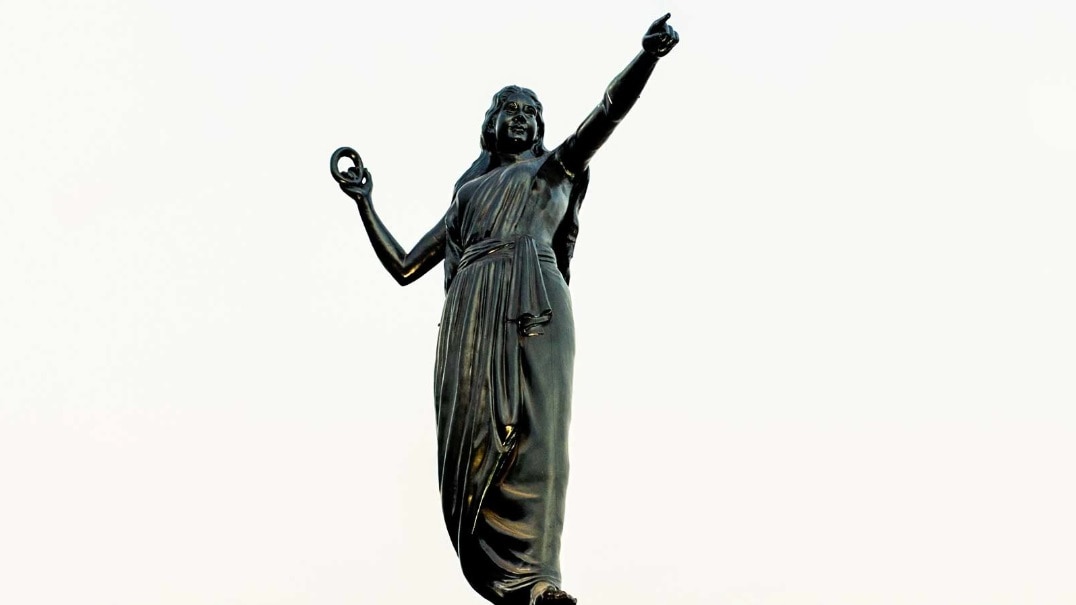
Brandishing her lone remaining anklet as a forensic cudgel, she proved her husband's innocence. But for Kannagi, justice required a purge. In a scene that remains the most powerful imagery in literature, Kannagi, the original firebrand lady, raged through Madurai (and as a precursor to Olympics!) with a flaming torch, a human furnace of grief and fury, setting the entire town afire until it was reduced to ashes. She proved that even the most powerful of Tamil Kings was subject to the inescapable moral ledger of the universe. Of course, the story is apocryphal, for lack of evidence, though Kannagi temples and tales of her sighting abound.
The Political Spectacle: Karunanidhi, Kannagi And The Lost Statue
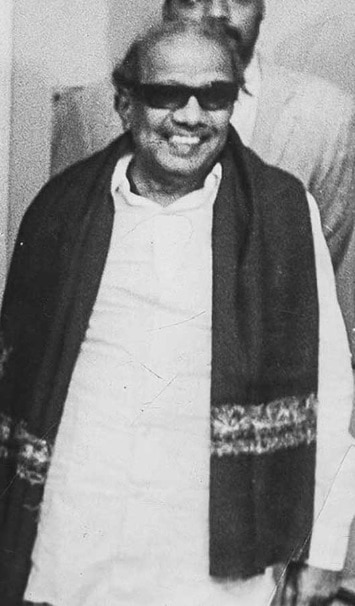
This legacy leapt onto the political stages of modern Tamil Nadu. The late Chief Minister M. Karunanidhi, with his legendary passion for the classics, immortalised Kannagi through his cinematic masterpiece Poompuhar, reclaiming her as a symbol of Dravidian self-respect, despite her apotheosis as Goddess defying rationalism.
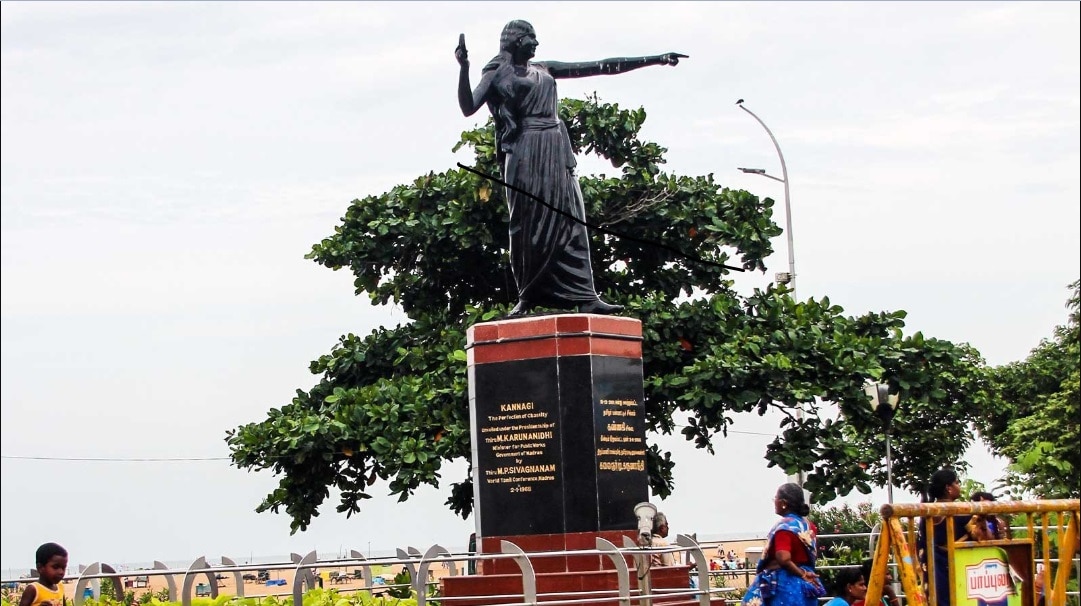
However, the "Anklet to Ashes" saga took a literal turn on the Marina Beach. The installation of the Kannagi statue by Karunanidhi became a focal point of intense drama. When the statue was unceremoniously removed in 2001 under the Jayalalithaa administration-purportedly for vaastu reasons-it triggered a cultural earthquake. For years, the empty pedestal stood as a silent witness to a modern battle for the Tamil tag. Its re-installation in 2006 was not just a political victory for the DMK; it was a second "consecration" of the firebrand lady, proving that her torch still burns in the collective psyche of the South.
The Buddhist Response: Manimekalai's Bowl Of Grace
While Silappatikaram ends in fire, its sequel, Manimekalai, begins in the ashes of renunciation. If Kannagi represents the fury of justice, Manimekalai, the daughter of Kovalan and his flame Madhavi, represents the Magnificence of Mercy. The battle moved from the physical anklet to the spiritual bowl-the Amudhasurabi.
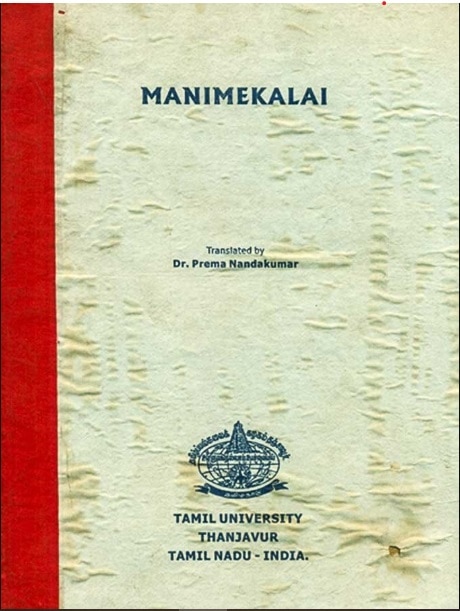
The narrative is a systematic instruction in Buddhist philosophy, where the heroine breaks the cycle of Vinai (deed) through wisdom and compassion. The focus moves from Pugazh (fame) to Vitu (salvation/ release). The Tamil literary scene was now completely committed to salvation theology, with poetry acting as a weapon in a scholarly siege where the Tamil soul was the ultimate prize. Well, the Rajas and Prajas of Tamilakam did get converted in good measure to the two expansionary, albeit exclusive religions.
The Lingering Echo And The Bhakti Revival
The era of the epics provided the Tamil people with a grand, ethical mirror. But as these highly intellectual, cold philosophies reached their limits, they failed to satisfy the emotional hunger of the common man who cannot exist in emptiness. These two renunciation faiths militate against intrinsic human nature and biological impulses.
A spiritual gap opened-a void left by the "rigorous asceticism" of the monks. This gap was overwhelmingly filled by the Bhakti Movement. The Nayanmars and Alwars were waiting in the wings, ready to reclaim the sacred Sthalas with a renewed, codified vigour and fill the blank space with profound, profuse poetry. They would take the fire of Kannagi and the logic of Manimekalai and pour them back into the temples, launching a revolution of song and total, but pleasant surrender. The sterilised Tamil gained potency and now started flowering across Tamilakam in evocative, versatile verse.
Over to the Nayanmars first.
Next | Bhakti: Tamilakam’s Epic Counter and Gift to Bharath
About


Please rotate your device
We don't support landscape mode yet. Please go back to portrait mode for the best experience