


- Tamilakam’s Travels: Part 1
- Cosmos, Continent, Country: Part 2
- Tamilakam drew its own map: Part 4
- Name Games: Part 5
- Empires, Elites & Europeans: Part 6
- Dravida to Dravidian: Part 7
- The Caldwell Conundrum: Part 8
- Pundit's Paradoxical Passion: Part 9
- Gods, Kings & Grammar: Part 10
- Tolkappiyar: Part 11
- Valluvar: Part 12
- T’rupparam-Kundram: Part 13
- Epic Clash of Faiths: Part 14
- Tamilakam's Epic Counter: Part 15
- Vaishnavism: Part 16
- Tamil and Sanskrit: Part 17
- Anti-Brahminism: Part 18
- Rise & Rifts Part 19
- Bearded Beginning Part 20
- Alliances & Animosities Part 21
- The Thundering Thandhai Part 22
- Shadows and Succession Part 23
- Anna Arch Part 24
- Agitation Alchemy Part 25
- Anna’s CM Crown Part 26
- The Tricolour Twilight: Part 27
- Karunanidhi’s Coronation: Part 28
- Era of Scams & Defiance: Part 29
- Maximum Guarantee Ramachandran: Part 30
- MGR's 'Thottam' Theatre: Part 31
- The Second Show: Part 32
- Accord, Acrimony, Assaults: Part 33
- DMK’s Tiger-Riding: Part 34
- Jayalalithaa’s Crown: Part 35
- The JJ Juggernaut: Part 36
- Karunanidhi Springs: Part 37
- Role Reversal: Part 38
- Mercury Rises in Poes: Part 39
- Amma’s Comeback: Part 40
- An Arresting Personality: Part 41
- Sandalwood Sunset: Part 42
- Back to Future: Part 43
- Thirumangalam: Part 44
- Sangam, Spectrum: Part 45
- The Lady’s Challenge: Part 46
- Jayalalithaa’s Arc: Part 47
- Kalaignar’s Tryst with Tomb: Part 48
- Dravidian Defiance: Part 49
- Tamil Nadu Through Time: Part 50
How Jayalalithaa transformed Tamil Nadu Politics after 2011: The Amma era explained
By the time the dust of 2011 had settled, one truth stood out with unusual clarity: Jayalalithaa had not merely returned to office; she had returned to habitat. The state had once again come under a single, unmistakable command signature. The clutter, drift and kinship arithmetic of the late DMK years had been replaced by something at once sharper and simpler - rule by one mind, one mood and one address.
And while Karunanidhi had spent his twilight balancing blood, burden and blowback, Jayalalithaa was beginning a new phase with a different ambition. Tamil Nadu would first become fully hers again. Delhi could wait its turn.
Rule with a Single Signature
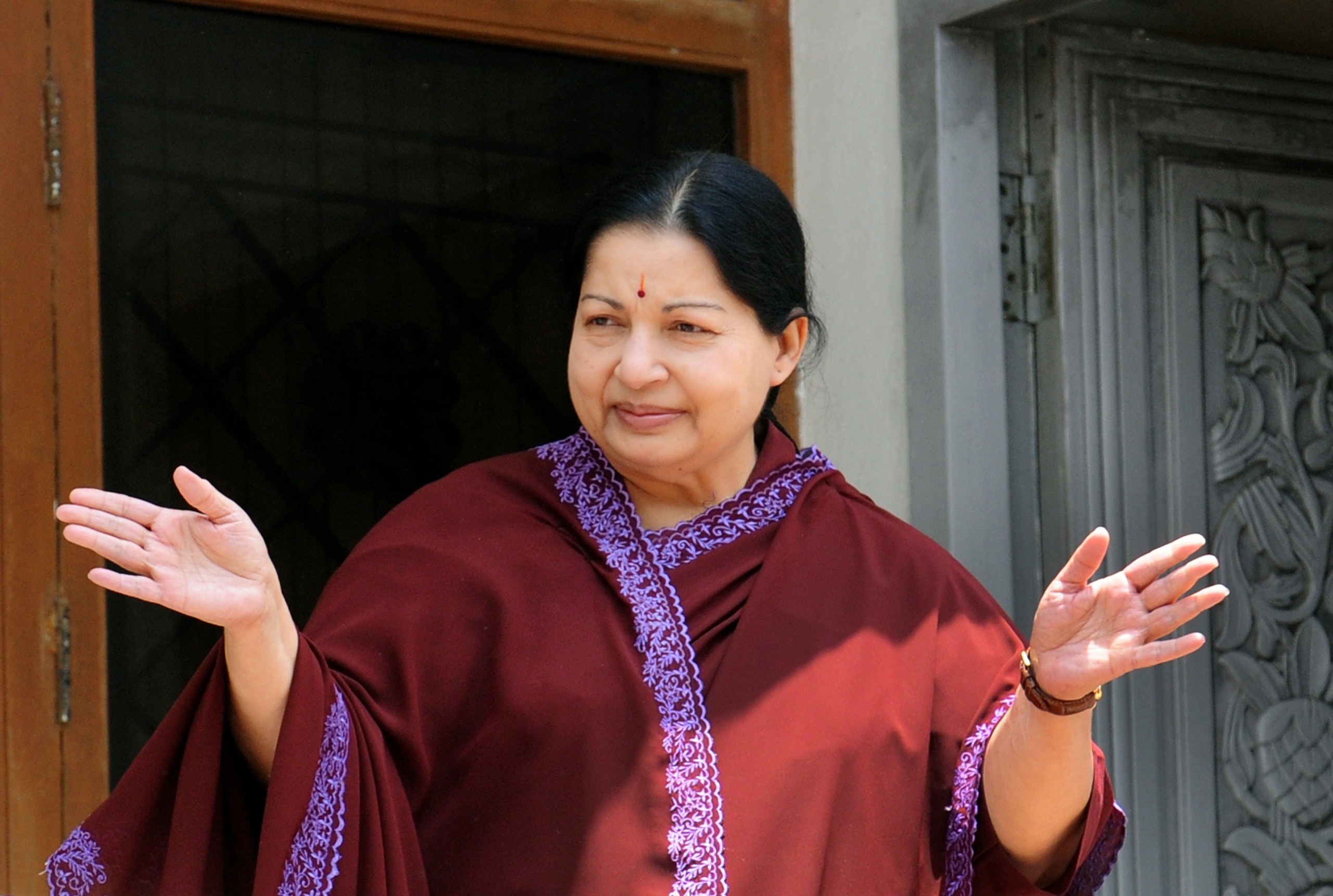
There was something almost old-fashioned about the way Jayalalithaa governed after 2011. Not democratic in the chatty, consultative, hand-holding sense that modern political brochures like to advertise, but old-fashioned in the sterner, more Indian sense — rule as authority, government as command, bureaucracy as instrument.
Firmness remained, but with a subtle, sobering difference. Files moved with caution but also with purpose. Ministers existed, but mainly as delegated limbs. Officers knew the chain of command was not to be guessed at. If the late DMK years often looked like governance by overlap—family, party, channels, fixers, allies, satraps and Delhi all tugging at the same cloth—the AIADMK state after 2011 looked more like a sealed chamber.
This gave her government a peculiar advantage. It could appear, even to critics, more coherent than it was kind. That coherence mattered in a state already weary of scandal, faction and the sticky after-smell of 2G. Jayalalithaa understood something fundamental: after a season of moral and political untidiness, order itself can become electable.
She was severe, yes. But she was also doing what many governments privately wanted to do and lacked the nerve to attempt.
The State Becomes ‘Amma’
If command was one face of this phase, branding was the other. In 1991, it was all about JJ. But two decades later in 2011, after going through a rough and tough phase of an arresting personality, she had morphed into the benevolent, quintessential Amma. A softer image that still retained the iron will.
This was the period in which Jayalalithaa began stamping the state not merely with policy, but with persona. Tamil Nadu had seen welfare before and had by then long entered the age of competitive populism. But what she did between 2012 and 2014 was more systematic. She did not merely launch schemes. She signed them herself.
The most visible and politically brilliant example was the Amma Unavagam, launched in 2013 and quickly elevated from municipal utility to political symbol. The genius of the canteen was not merely that it offered cheap, hot, dignified food to the urban poor, workers, elderly women and the invisible labouring classes who normally receive speeches instead of breakfast. Its deeper genius lay in its emotional grammar. It turned governance into care, and care into a brand.
A plate of idlis for a rupee is not merely subsidy. It is political intimacy plated in steel.
And she did not stop there. The Amma prefix began spreading with method — water, salt, pharmacies, later even more. To dismiss this as mere populist cosmetics would be lazy. This was not a random burst of maternal merchandising. It was statecraft with mnemonic precision. She was creating a welfare architecture that could be seen, touched, consumed and remembered daily.
This was the logical evolution of Dravidian populism in a more visual age. Earlier generations had distributed identity, dignity, rice, noon meals and symbolic justice. Jayalalithaa added packaging. In her hands, welfare became both instrument and imprint.
Continuity, Correction and Command
To leave it at canteens alone, however, would be unfair. The period also reflected a broader continuity in her administrative instincts — some inherited from her earlier tenures, some sharpened by experience.
Take rainwater harvesting, for instance. That had become one of the most cited and consequential markers of her earlier governance, and by this phase it had already entered the state’s administrative common sense. Tamil Nadu’s chronic water anxieties had taught the political class many lessons, but one of the few durable ones had come from that insistence on storing what the sky grudgingly gave. It was not glamorous governance. Which is precisely why it mattered.
Similarly, in the sphere of temples and religious administration, Jayalalithaa was not improvising a new personality in office. She was extending one. Temple annadhanam, renovation attention, oversight concerns and greater sensitivity toward the safety of temple jewels and assets all sat comfortably within her style of rule.
She was never doctrinaire in the old Dravidian mould. Nor was she conventionally saffron. Her politics occupied a different register — culturally comfortable with faith, ritually unembarrassed, administratively interventionist and politically unafraid of piety.
That distinction would matter enormously by 2014.
God, Governance and Hindu Vote
Here lay one of the least acknowledged but most consequential political inversions of the period.
For decades, the BJP and its wider fraternity had imagined that open religiosity would eventually become their natural bridge into Tamil Nadu. But Jayalalithaa, with far less ideological sermonising and far greater instinct, quietly stole much of that ground from under them.
She did not do this by sounding like a northern culture warrior. She did it by simply seeming like a Tamil woman of command who had no embarrassment about belief. She could speak of God, temple, ritual, solace and faith without appearing alien to the state’s political idiom. She did not have to shout Hindutva to signal civilisational ease. She wore her belief without apology or doctrinal dependence.
At one point in the Assembly, she would go so far as to say, in essence and spirit, that faith in God was indispensable — the ultimate source of solace in a mortal world where suffering is constant and human control limited. That was not merely personal sentiment. It was political positioning of considerable intelligence.
Because here was the paradox: while the DMK had long carried the reputation of a rationalist inheritance, and the BJP longed to expand its religious appeal, it was Jayalalithaa who most effectively occupied the space between the two. Her cadres, in social instinct and cultural reflex, were often far more temple-minded than many who pretended to have ideological guardianship elsewhere. Without ever formally becoming a saffron satellite, she managed to reassure conservative Hindu sentiment, outflank the BJP on lived religiosity and quietly walk away with a chunk of the Hindu vote bank.
The BJP has never fully recovered from that lesson in Tamil Nadu. It still chases the thunder she had already stolen.
After the Purge, a Harder Court
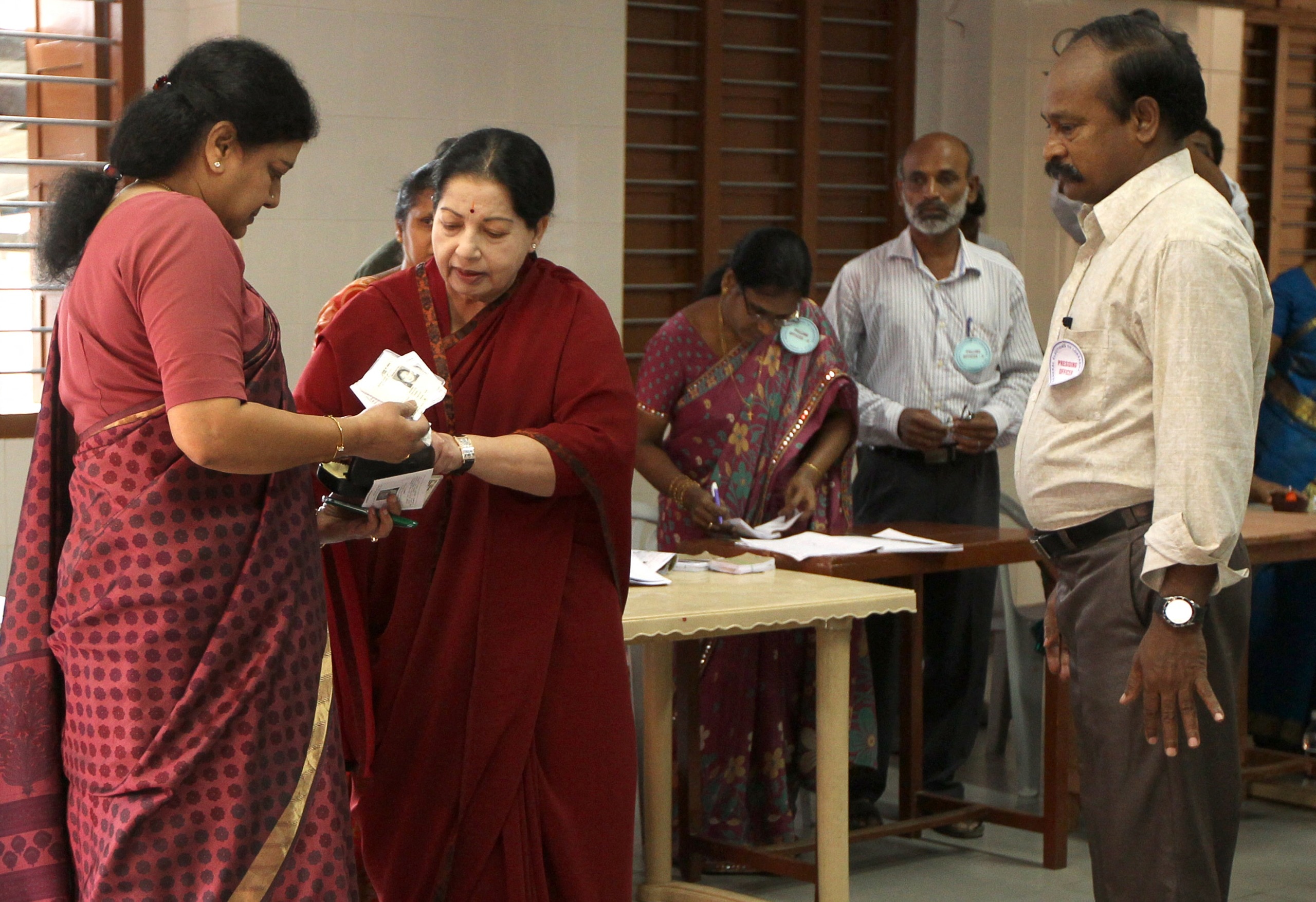
The dramatic expulsion of Sasikala and several members of the wider Mannargudi circle in December 2011 had ended the previous article on a note of palace shock. What followed in 2012 was not melodrama but recalibration.
The immediate effect was to make Jayalalithaa’s power look even more solitary. The inner court shrank or appeared to. The old suspicion that intermediaries, familial satellites and invisible hands often crowded the edges of Poes Garden gave way to a phase in which she seemed determined to signal distance, control and unshared authorship.
Whether that distance was total, temporary or strategic was another matter. In Tamil Nadu politics, as in temple corridors, the visible deity is rarely the whole story. But as a political image, the message worked. She looked less encircled, more self-contained.
This mattered because Jayalalithaa’s greatest political asset was not merely charisma. It was singularity. The public could forgive excess, severity, even fear — but only so long as power looked indivisible. Any suggestion that it was being subcontracted diluted her mystique. The purge, therefore, was not just a personal rupture. It was image repair by scalpel.
DMK in Long Shadow
While Jayalalithaa was consolidating, the DMK was entering one of the most awkward phases in its long history — not dead, not finished, but morally singed, electorally reduced and structurally uncertain.
The problem was not merely that it had lost office. Tamil Nadu parties are used to defeat; they often treat it as scheduled leave. The problem was that the DMK had lost aura. The party that had once claimed a larger ideological horizon now looked trapped within legal files, household equations and a public memory still raw from scandal.
Karunanidhi remained active, articulate and symbolically central. But he was no longer the same kind of force. The years had narrowed him. His command over language remained. His command over outcomes had weakened.
And inside the party, the old unresolved succession lines had not vanished. Stalin remained the patient, visible, organisational inheritor. Alagiri, though less theatrically central than before, still represented a strain of force and resentment that never quite dissolved. The Marans had not stopped mattering either. The household had not ceased to be a political map. It had merely become a more expensive one.
Telecom Ghosts, Family Shadows
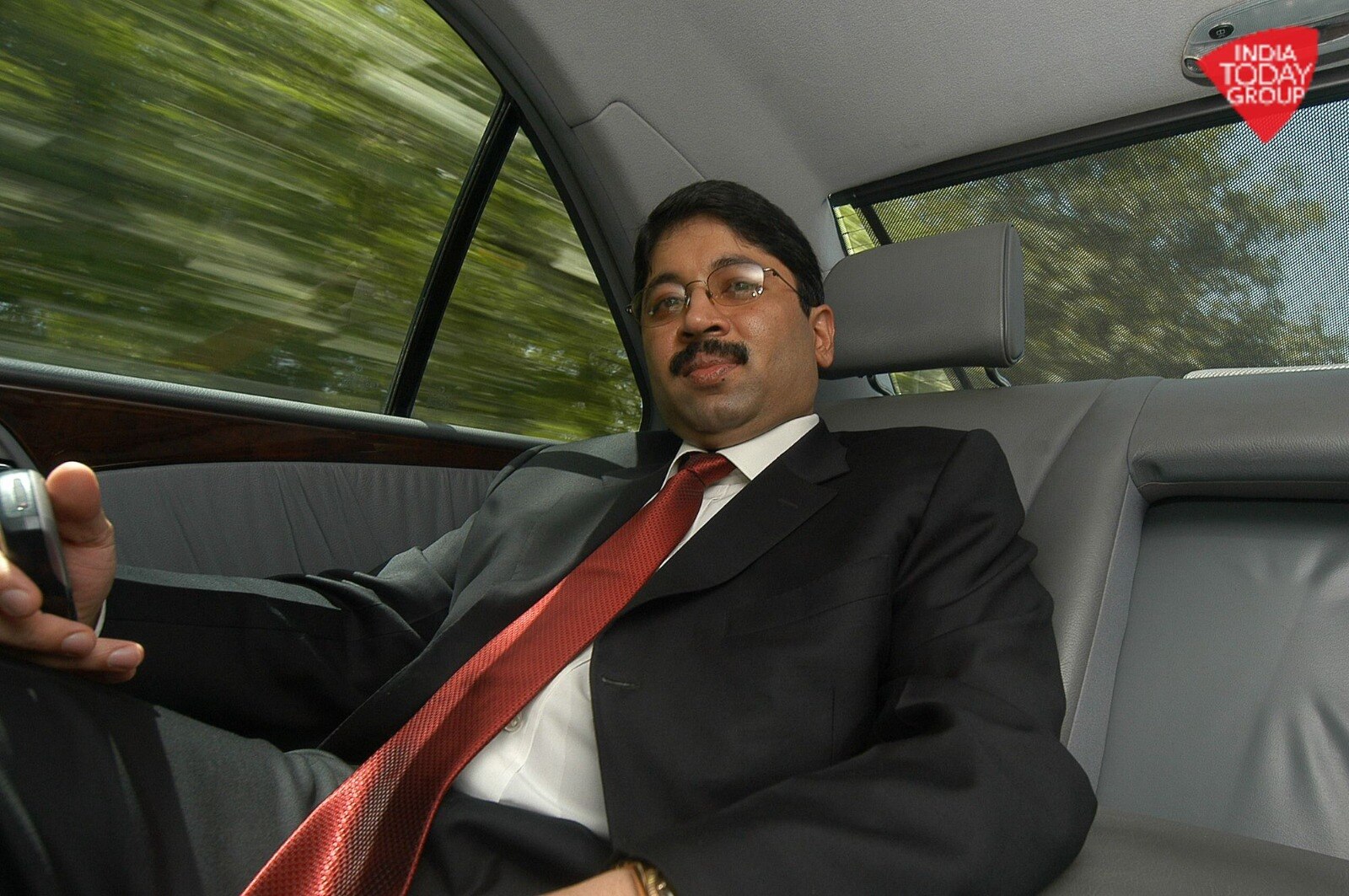
As if 2G had not already done enough damage, another telecom-tainted discomfort rose from within the family orbit itself.
The allegations surrounding Dayanidhi Maran and the alleged misuse of a high-capacity BSNL exchange — connected to the period when he held office in the Union government — had been circulating in some form earlier, but by 2013 the matter hardened into something more serious with the formal registration of a case. The accusation, in essence, was that official telecom infrastructure had been diverted or exploited in a manner that served private media or related interests.
Whether one looked at it legally, politically or symbolically, the effect was the same: the DMK could not catch a clean breeze.
This was what made the period so punishing for Karunanidhi. Trouble was no longer arriving only from opponents, hostile institutions or rival parties. It was arriving from within his own extended political bloodline. Every branch seemed capable of producing a fresh embarrassment.
One could almost imagine the old man, who had spent a lifetime scripting dialogue for power, wondering how the supporting cast had begun freelancing in scandal.
Law Walks Beside Politics
If politics was one stage, the courts were now another.
The legal residue of earlier decades did not disappear merely because power had shifted. Jayalalithaa’s disproportionate assets case, now firmly lodged in Bengaluru, continued to move with the slow but unmistakable tread of a case that had outlived multiple governments, moods and narratives. By 2012–14, it had once again begun to gather procedural seriousness, reminders that even triumphant incumbency did not guarantee legal rest.
On the other side, the 2G matter and its related branches continued to hang over the DMK, even where bail, delay, procedural complexity and political interpretation blurred the pace of consequence. The CBI, the courts, charge sheets, arguments, adjournments and investigative aftershocks had by then become part of the political atmosphere itself.
Tamil Nadu had entered a phase where law no longer merely followed politics. It walked beside it, sometimes limping, sometimes lunging, but never quite leaving the frame.
Vijayakanth: From Alternative to Appendix
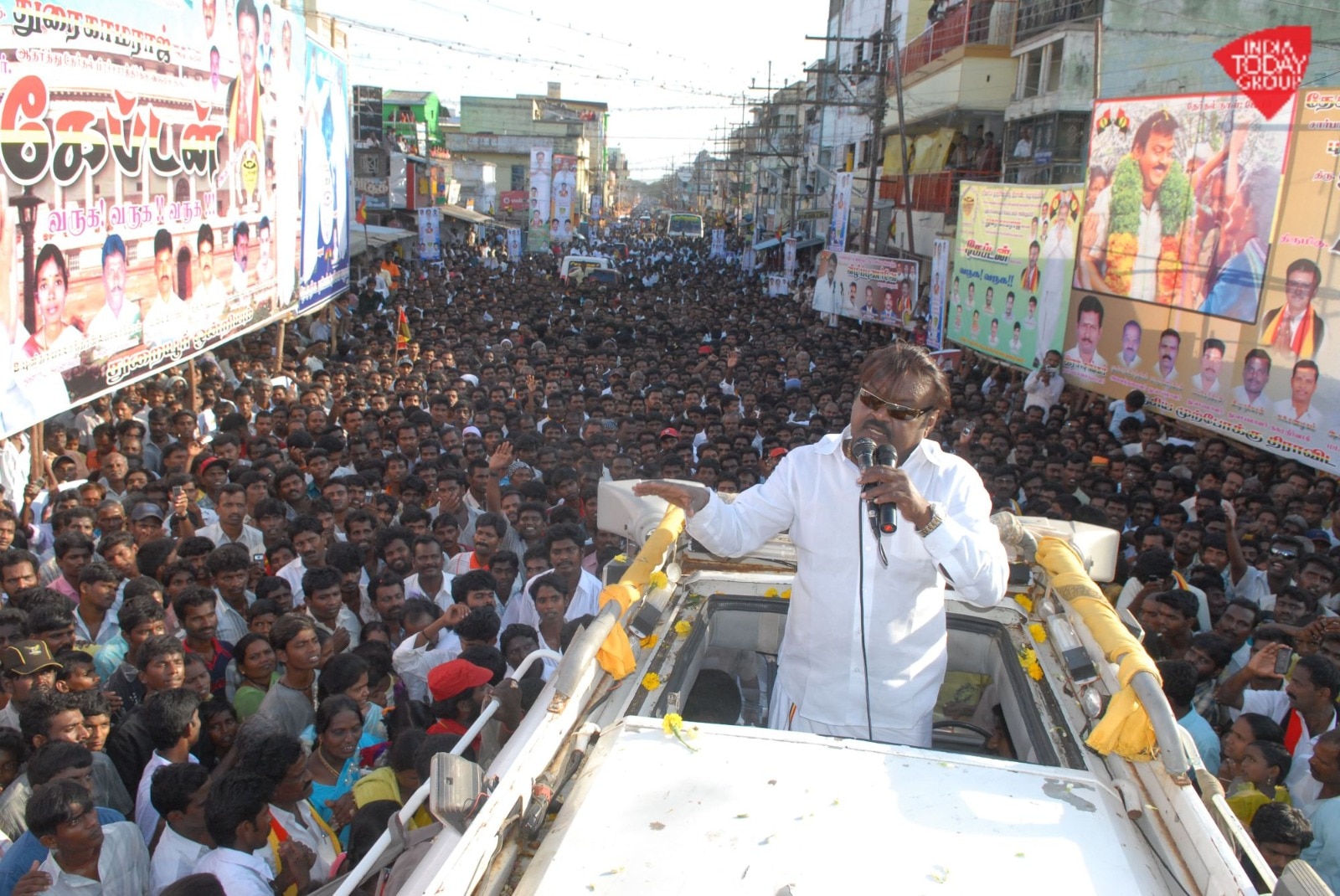
Then there was the Captain, who by now had discovered one of the oldest truths of Tamil Nadu politics: it is easier to arrive as an alternative than to survive as one.
When Vijayakanth entered the Assembly as Leader of the Opposition, there was novelty, noise and a certain rough democratic romance to the moment. Here, after all, was the man who had claimed to stand apart from the old two-sided arrangement and had managed, however briefly, to convert that stance into institutional relevance.
But institutional relevance is not the same as strategic durability.
The alliance with Jayalalithaa had helped him rise, but it also defined his limits. He had become, in effect, a Vice-Captain under a commander who had no habit of sharing the spotlight or emotional oxygen. Friction was inevitable. So were misunderstandings, ego collisions and public awkwardness.
Gradually, the promise of a third path began losing altitude. The alternative started looking less like a destination and more like an appendix to the old order.
Delhi in Sight
Yet if Jayalalithaa was firmly in charge at home, she was not looking only inward.
By 2013, she had begun increasingly speaking and acting like a leader with national weight in mind. Not in the routine federal sense of writing letters to the Centre and demanding dues — though she did that with full Tamil vigour — but in the larger sense of positioning herself as a possible force in a fractured national verdict.
This was a familiar Tamil temptation. Every time Delhi looked vulnerable, Tamil Nadu began dreaming of arithmetic with an accent. But in Jayalalithaa’s case, there was something more plausible to the ambition. She had state authority, personal command, national recognition and a formidable parliamentary appetite. If the 2014 election threw up a hung verdict, she plainly wished to be more than a spectator.
This was where the phrase capital dreams belonged most naturally. She was not merely governing Tamil Nadu. She was measuring herself against the possibility of Delhi.
And to be fair, by late UPA-II, that was not a delusion. It was scenario planning with a silk shawl.
Allies, Arithmetic and Their Lies
The approach to the 2014 Lok Sabha election brought with it the usual Indian harvest of pre-poll hypocrisy, moral flexibility and alliance acrobatics. Tamil Nadu, never one to miss a circus, participated with full seriousness and comic flourish.
The DMK, after its rupture with the Congress in the shadow of the Sri Lankan Tamil issue and its accumulated national embarrassments, entered the pre-poll season weakened and awkwardly placed. The Congress, after years of feeding off Dravidian support while weakening steadily in the state, now looked stranded. The smaller parties did what smaller parties do in such seasons: they discovered principles at the rate of seat-sharing necessity.
And then there was the BJP.
Nationally, Narendra Modi was rising with unmistakable force. The BJP sensed opportunity across the map, including in a state where it had historically been more aspiration than establishment. But Jayalalithaa, who had once suffered the abrasions of proximity to the party in 1998–99, had no intention of repeating that experiment. Her dislike of the BJP was not tactical alone. It was deep-seated, instinctive and sharpened by memory.
She had once pulled down a BJP government and publicly declared that aligning with it had been a mistake. She had no desire to become a passenger in someone else’s northern project now that she herself was commanding a southern one.
And here lay the brilliance of her positioning. She neither joined the BJP nor ceded the Hindu social space to it. She opposed it without sounding alien to the religious sensibility of much of the electorate. She refused alliance without appearing hostile to faith. In one move, she denied the BJP both arithmetic and emotional entry.
That was a masterstroke.
Lady Versus Modi Missile
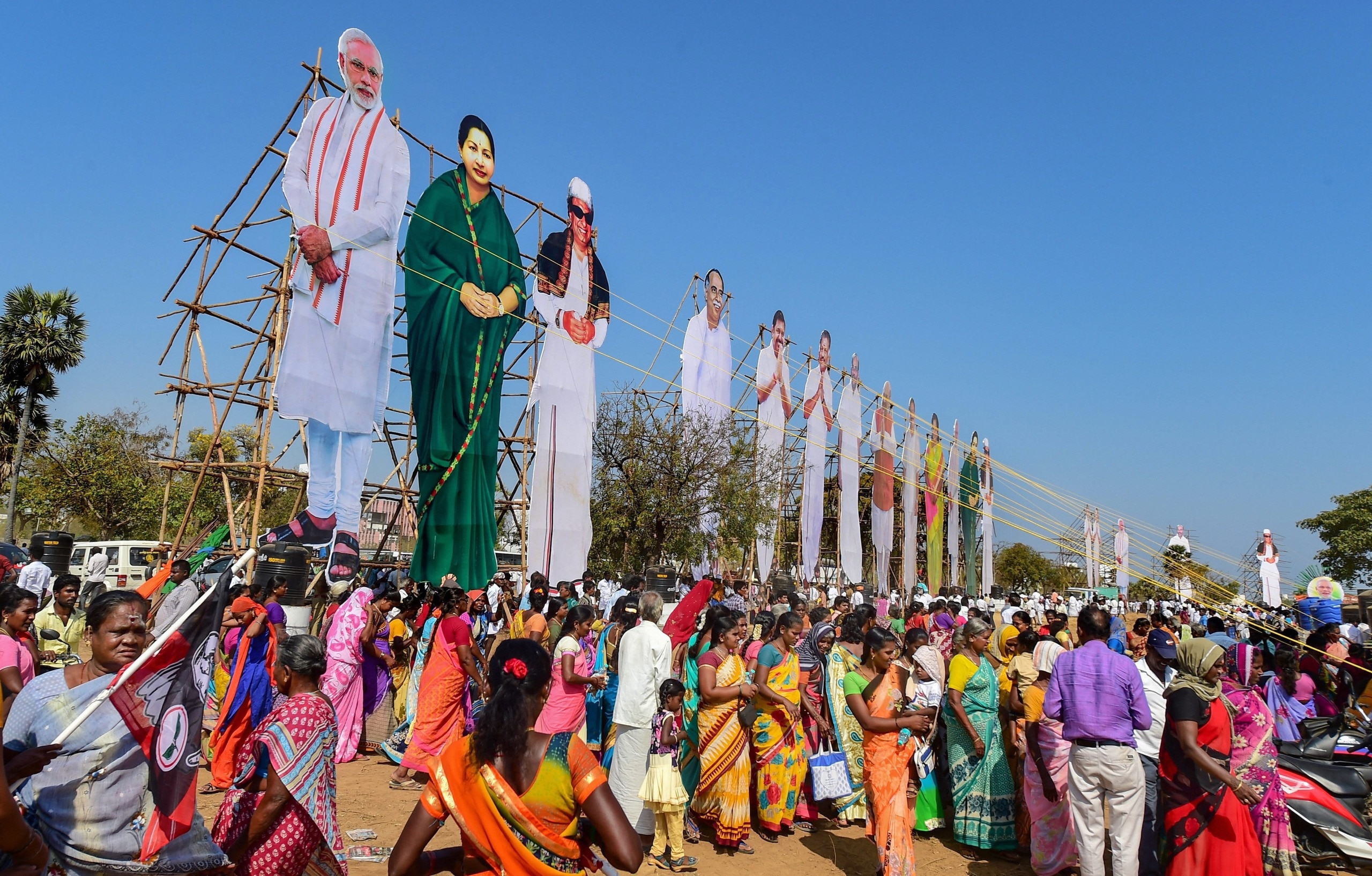
The 2014 campaign in Tamil Nadu therefore acquired a distinctive edge. It was not a simple local election. Nor was it a straightforward national wave translated downward. It became, in part, a contest between two different projections of authority.
On one side stood Modi, the national missile rising through a fatigued republic. On the other stood Jayalalithaa, the southern strongwoman who was not willing to kneel, merge or be absorbed into anyone’s grand national script. She did not openly style herself as a formal prime ministerial candidate in the institutional sense. But she certainly allowed the idea of her as a decisive post-poll force to hover in the political air.
Throughout her 2014 summer campaign, Jayalalithaa thundered with the single shock-and-awe slogan: "Do you want this Lady, or that Modi?" This instantly gained her national attention and relevance. Her pitch was elegant in its ambition: if Tamil Nadu gave her enough seats, she would not merely represent the state in Delhi — she would matter to its formation.
This was vintage Jayalalithaa. Never merely local when national space was available. Never merely reactive when stature could be performed.
And the campaign worked.
The Sweep and the Shock
When the results came in May 2014, the outcome in Tamil Nadu was staggering in its clarity.
The AIADMK swept the state, winning 37 of 39 Lok Sabha seats and emerging as one of the largest non-BJP blocs in the new Lok Sabha. It was not just a victory. It was a declaration. Jayalalithaa had converted state command into parliamentary mass with astonishing efficiency.
Nationally, of course, the script twisted in a way that did not fully serve her capital dream. Modi did not stop at rise; he reached majority. The fractured verdict that might have turned regional barons and baronesses into kingmakers never arrived. Delhi was not available for bargaining in the way she had likely anticipated.
But that should not obscure the magnitude of what she achieved. She had outwitted the BJP in Tamil Nadu, denied it oxygen, kept her distance, retained her pride, and walked away with the lion’s share of the state’s parliamentary verdict. She had outperformed everyone else while standing alone.
That mattered then. It still matters now.
Because this was the phase in which Jayalalithaa showed perhaps most clearly what made her unique in the post-MGR era. She could be welfarist without softness, devout without dependency, populist without dilution, and regional without provincialism. She could make idly into ideology, faith into social reassurance, command into coherence and a parliamentary election into a personal referendum.
That is not common political talent. That is state-level supremacy with national ambition stitched into it.
Dreams Above, Danger Below
Yet, despite the triumph of 2014, one shadow still stalked her.
The old disproportionate assets case, patient as a courthouse wall and far less sentimental than the electorate, had not vanished. Even as she stood tall in victory, that legal clock was still ticking elsewhere, beyond Tamil Nadu, beyond the reach of campaign roar and canteen affection.
That is what made the moment so classically Tamil and so cruelly Indian. At the very point where Jayalalithaa seemed most secure — state in hand, people behind her, Delhi in view — the older scripts of law and consequence were already moving toward her with unhurried intent.
The canteens were open. The command was firm. The capital had been sighted.
But fate, as ever in this state’s politics, had not yet finished editing the scene.
Next | Fort to Court, Jail and Bail, Triumph to Tomb
About


Please rotate your device
We don't support landscape mode yet. Please go back to portrait mode for the best experience