


- Tamilakam’s Travels: Part 1
- Cosmos, Continent, Country: Part 2
- Tamilakam drew its own map: Part 4
- Name Games: Part 5
- Empires, Elites & Europeans: Part 6
- Dravida to Dravidian: Part 7
- The Caldwell Conundrum: Part 8
- Pundit's Paradoxical Passion: Part 9
- Gods, Kings & Grammar: Part 10
- Tolkappiyar: Part 11
- Valluvar: Part 12
- T’rupparam-Kundram: Part 13
- Epic Clash of Faiths: Part 14
- Tamilakam's Epic Counter: Part 15
- Vaishnavism: Part 16
- Tamil and Sanskrit: Part 17
- Anti-Brahminism: Part 18
- Rise & Rifts Part 19
- Bearded Beginning Part 20
- Alliances & Animosities Part 21
- The Thundering Thandhai Part 22
- Shadows and Succession Part 23
- Anna Arch Part 24
- Agitation Alchemy Part 25
- Anna’s CM Crown Part 26
- The Tricolour Twilight: Part 27
- Karunanidhi’s Coronation: Part 28
- Era of Scams & Defiance: Part 29
- Maximum Guarantee Ramachandran: Part 30
- MGR's 'Thottam' Theatre: Part 31
- The Second Show: Part 32
- Accord, Acrimony, Assaults: Part 33
- DMK’s Tiger-Riding: Part 34
- Jayalalithaa’s Crown: Part 35
- The JJ Juggernaut: Part 36
- Karunanidhi Springs: Part 37
- Role Reversal: Part 38
- Mercury Rises in Poes: Part 39
- Amma’s Comeback: Part 40
- An Arresting Personality: Part 41
- Sandalwood Sunset: Part 42
- Back to Future: Part 43
- Thirumangalam: Part 44
- Sangam, Spectrum: Part 45
- The Lady’s Challenge: Part 46
- Jayalalithaa’s Arc: Part 47
- Kalaignar’s Tryst with Tomb: Part 48
- Dravidian Defiance: Part 49
- Tamil Nadu Through Time: Part 50
Jayalalithaa's Fall, Karunanidhi's Rise: Inside the 1996 Political Earthquake
If the first half of the nineties was an era of coronation, the final act of that tenure was a study in totalitarianism that would have made George Orwell blink. In the fictional world of 1984, the big brother was the eye that never closed; in the Madras of the mid-nineties, it was the big sister who was always watching.
The state had transitioned from a welfare engine to an Orwellian police state, where dissent was not just discouraged but systematically dismantled. The infectious initial-itis of the earlier years had hardened into structural surveillance, where every street corner and every newspaper column was under the gaze of a regime that equated disagreement with treason.
This was a pervasive paranoia reaching its peak. The administration had created a landscape where the common man felt the weight of the staff of power in his daily life. The air was thick with a deliberate dread, a sense that the queen of the south had built a fortress not just in Poes Garden, but across the entire administrative map.
As the summer of 1996 approached, the big sister narrative was the invisible script running through every household, setting the stage for a democratic retake that would be as clinical as it was colossal.
The Scorch of the Soil
The moral collapse of the regime was perhaps most pitifully and painfully visible in the dusty plains of Tirunelveli. In August 1995, the village of Kodiyankulam became a site of a state-sanctioned horror that scorched the conscience of the south. What was framed as a routine police search for militants was, in reality, a targeted rampage against a Dalit settlement that had dared to assert its economic and social dignity.
The backdrop was a simmering caste friction, where a higher caste group—reportedly aligned with the interests of the foster family in the Garden and their kinship network—sought to put the marginalised "back in their place."
The police intervention was not a search; it was a raid of retribution. Cops on a rampage destroyed televisions, ransacked homes, and looted jewellery. In the most disturbing act of administrative malice, the village well—the very lifeblood of the community—was poisoned, reportedly with pesticides. This corruption of the very soil was a both a physical and metaphorical act that highlighted the deep-seated bias within the chief minister’s machinery.
For the Dalits of the south, the motherly care preached in Madras was a lethal farce. Kodiyankulam was the pithy and poignant pointer that signalled the regime had lost its ethical anchor, turning the state force into a tool for sub-caste survival. This tragedy became a firm brick in the wall of anti-incumbency that was already building against Jayalalithaa.
The Acid Reign & Ganja Gambit
Beyond the rural plains, the urban landscape was witnessing its own culture of fear. The mid-nineties saw the rise of a peculiar and brutal form of political communication: the acid attack. When the senior IAS officer Chandralekha, who had reportedly questioned the "friendship deals" in many instances, was attacked with acid in the heart of the city a couple of years earlier, it sent a shudder through the bureaucracy.
Though never proven, there were silent suspicions of a hidden hand. Dissent was no longer met with a memo; it was dealt with a disfiguring burn. It was an acid reign that intended to silence the "paper-pushers" who dared to uphold the rule of law. The so-called permanent executive was facing an existential crisis.
Simultaneously, the Ganja Gambit became a commonly paraded pun in public discourse. Critics of the regime, ranging from activists to lawyers, sometimes even their own partymen, suddenly found themselves accused of drug trafficking. Ganja was "discovered" in their cars or homes with a magical frequency that suggested a departmental sleight of hand. It was a kind of narcotic necessity used to lock up those who could not be silenced through bribes or threats.
Media offices—ranging from established newspapers to emerging magazines—often faced the fury of the cadres. Assaults on reporters became the standard feedback mechanism of the era. The big sister didn't want a free press; she wanted a choir of compliance.
Superstar’s Sideshow: Even God Cannot Save
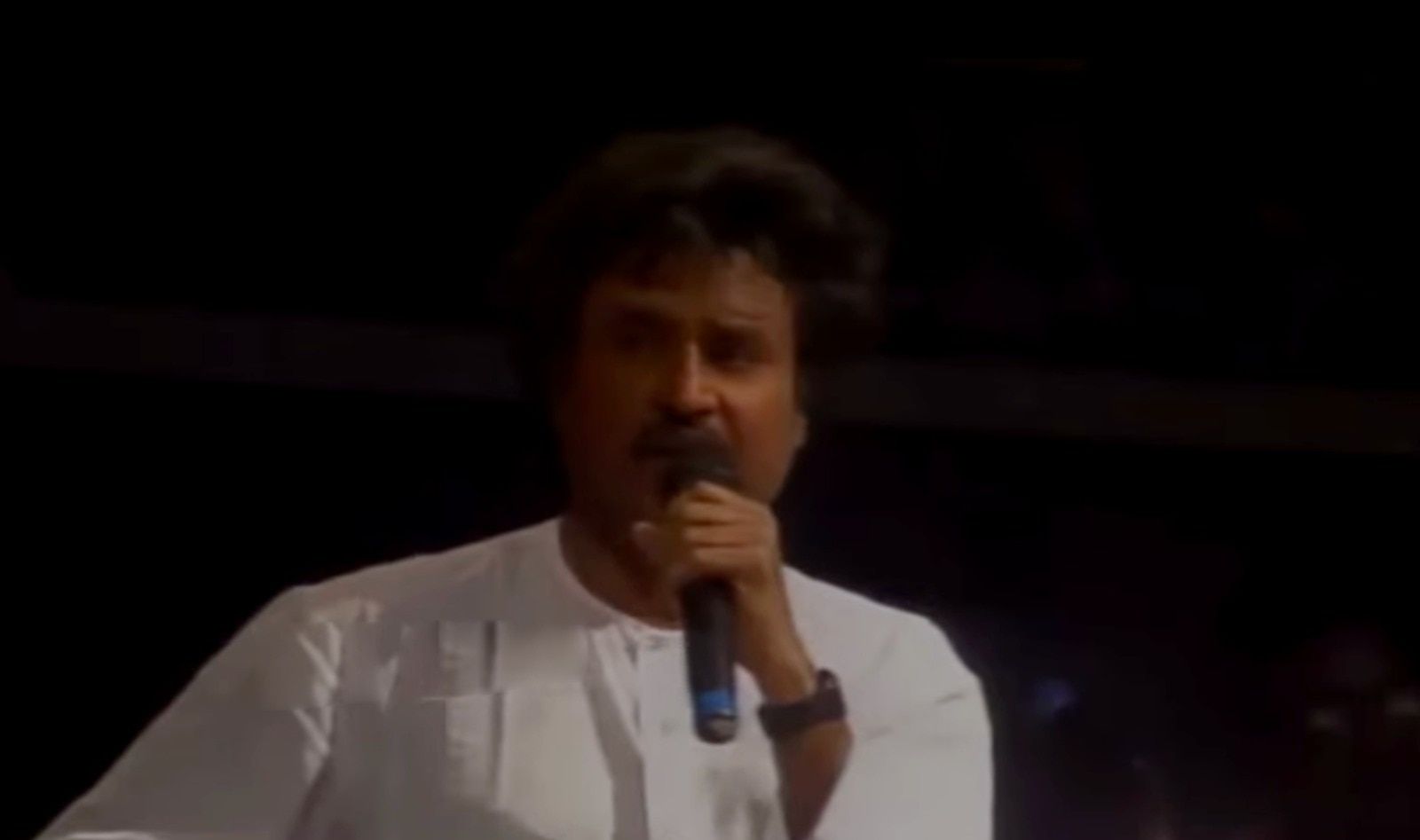
As the shadow deepened, an unlikely voice emerged from the celluloid chariot. In 1995, during a high-profile film function to celebrate the success of a blockbuster, superstar Rajinikanth delivered a linguistic lightning bolt. Disturbed by the rising "bomb culture" in the state—marked by minor blasts and the general atmosphere of violence—he stood on the stage and delivered a searing critique of the administration. It was a superstar’s salvo that resonated with the millions who viewed him as the pulse of the people.
This speech was a catalyst for the political upheaval that followed. Rajinikanth, who had previously maintained a safe distance from the Dravidian Drama, was now the dignified dissenter. His subsequent statement in the run-up to the 1996 polls was the ultimate power punch. He famously declared: If Jayalalithaa is returned to power, even God cannot save Tamil Nadu.
This was not just a comment; it was a voice political novelty. It provided the moral armour for the common man to defy the reigning Queen, turning the election into a battle between divine rescue and dictatorial hubris. Rajinikanth’s slogan soon became a welcome weapon for the opposition, proving that in Tamil Nadu, a single line from a screen star could outweigh a thousand hours of state-sponsored adulation.
The Delhi Dilemma
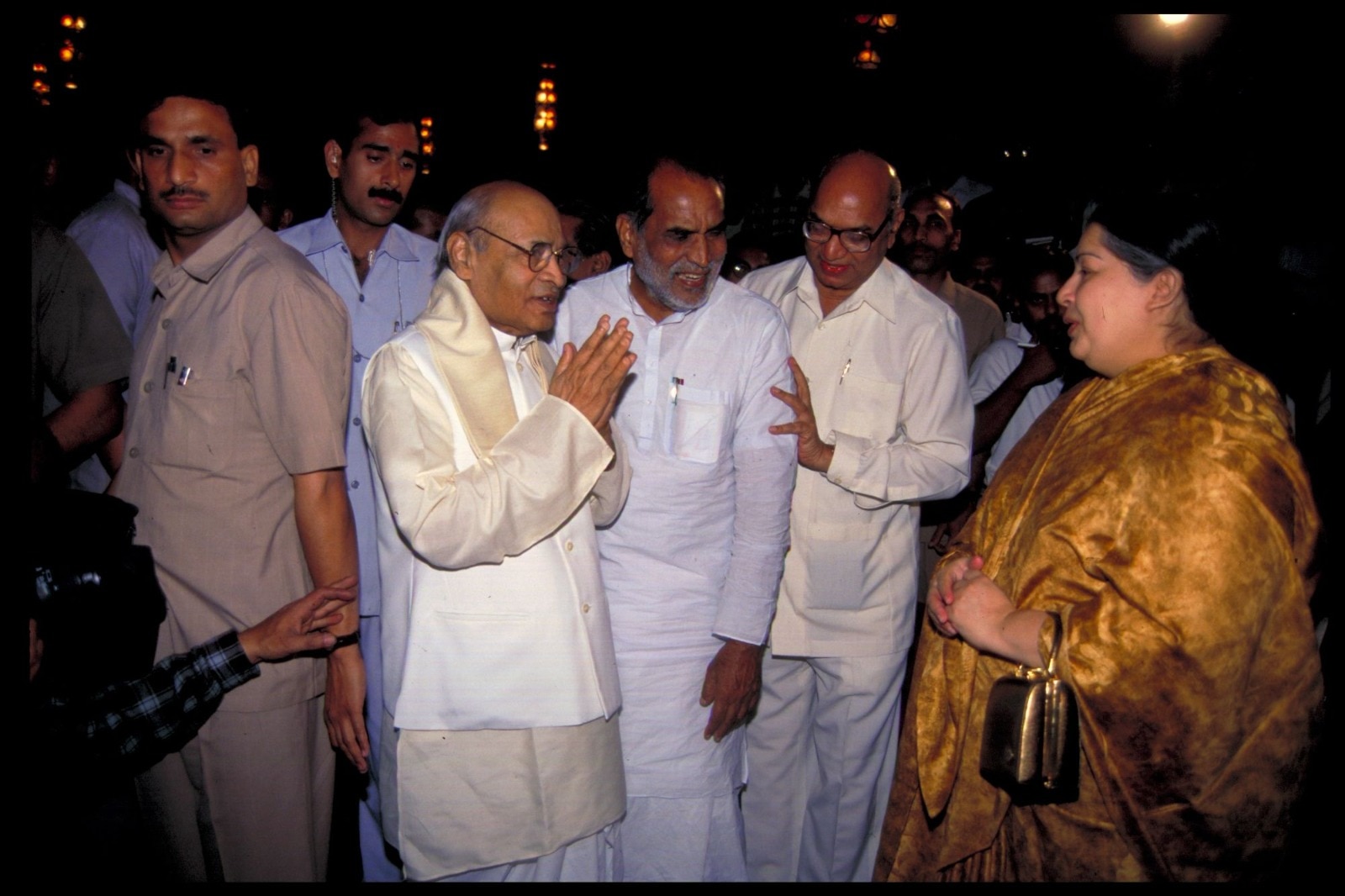
While the south was simmering, the backrooms of PV Narasimha Rao’s Delhi were conducting their own clandestine calculus. Despite the visible anti-Jaya mood in Tamil Nadu—which had reached a breaking point after the wedding whirlpool of Sudhakaran—the Prime Minister remained tethered to the Iron Lady. Whispers of an unseen, unseemly link between the two powers suggested that the Hand in Delhi needed the Two Leaves in the South to ensure a safe parliamentary passage for yet another Congress government.
Besides, there had always been hints of a secret pact between the backrooms of the PMO and Poes Garden here for mutual benefit, despite the occasional overt display of political differences, a typical twin track tango.
This was the Delhi Dilemma: a national leadership that chose strategic stability over regional reality. The imperial hand attempted to force an alliance upon the local Congress unit, ignoring the tsunami of anti-incumbency that was clearly visible to anyone on the ground. The High Command in the Capital was using the familiar hammer of authority to crush the dissent within its own ranks, unaware that the Tamil mood was already in a state of massive resentment.
This disconnect between the drawing rooms of Delhi and the dusty streets of Madras created a political fissure that would eventually swallow the Congress party’s remaining presence in the state.
The Moopanar Mutiny
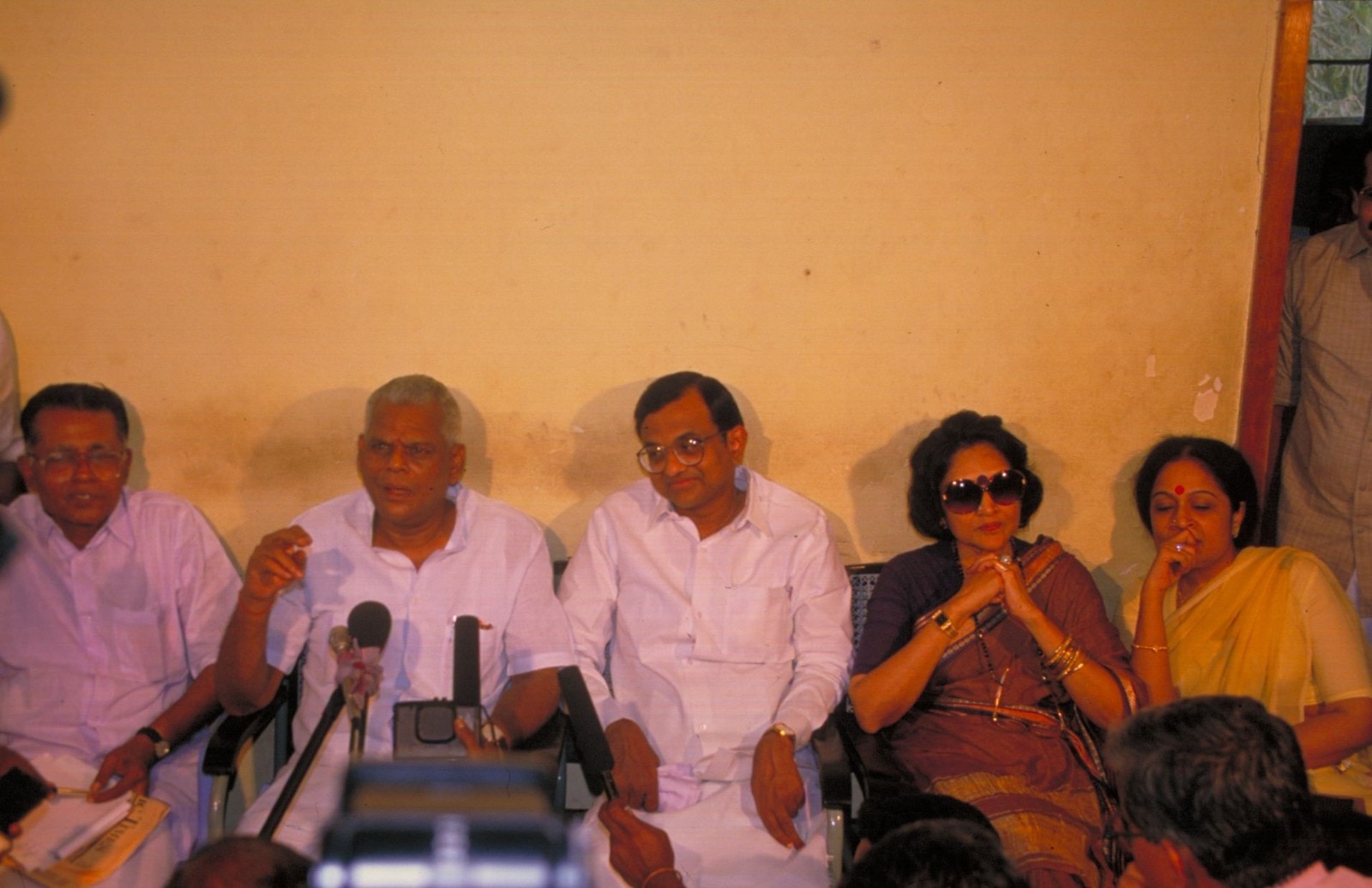
The breaking point arrived in early 1996. Faced with the Delhi decree to ally with Jayalalithaa, the senior leadership of the Tamil Nadu Congress performed a dignified departure. Led by the sophisticated strategist G.K. Moopanar and the legal eagle P. Chidambaram, besides many veterans, the state unit witnessed a mass walkout. This was the Moopanar mutiny, leading to the birth of the Tamil Maanila Congress (TMC) on April 2, 1996, just a few weeks before polls.
The TMC didn't just walk away; they pulled off a pragmatic partnership with the DMK. This Bicycle-and-Sun alliance was the electoral elixir the opposition needed. It combined the DMK’s cadre craft with the Congress-breakaway’s intellectual polish. Besides, for Karunanidhi, the company of such credible Congress veterans assuaged the accusations on Rajiv’s assassination.
Moopanar, the Kingmaker of the South, had realised that the common man would never forgive the Hand if it remained clasped with the pomp of Poes. The formation of the TMC was the final retake that ensured the opposition was a unified, formidable force, ready to reclaim the state from the Orwellian oversight.
The Ballot’s Blow
The May 1996 polls were not an election; they were a verdict of vengeance. The Rising Sun and the Bicycle swept through the state like a Dravidian deluge. The results were a staggering slaughter of the AIADMK. The numbers were of an unprecedented scale:
DMK-TMC- PLUS Alliance: A massive 225 seats out of 234. AIADMK: Reduced to a pathetic 4 seats.
The most shocking sting was the personal loss of Jayalalithaa in her own fortress of Bargur. She lost to a lightweight from the DMK, EG Sugavanam, a defeat that proved the Incensed Icon was not invincible. The gilded glow of the Sudhakaran wedding had been her waterloo. The voters had used the ballot as a baseball bat to smash the Initial-itis and the Big Sister narrative.
Karunanidhi returned for his fourth term with a mandate that was as strong as it was solemn, his pen ready to conduct the postmortem of his sworn enemy’s saga.
The National Nexus
The 1996 verdict was not just a regional shift; it was a national reset. As the Congress faced its own eclipse in the General Elections, the deciders from the South moved to the high table of Delhi. After Vajpayee’s jinxed 13-day stint, the United Front government under HD Deve Gowda was born out of the Southern sanctuary.
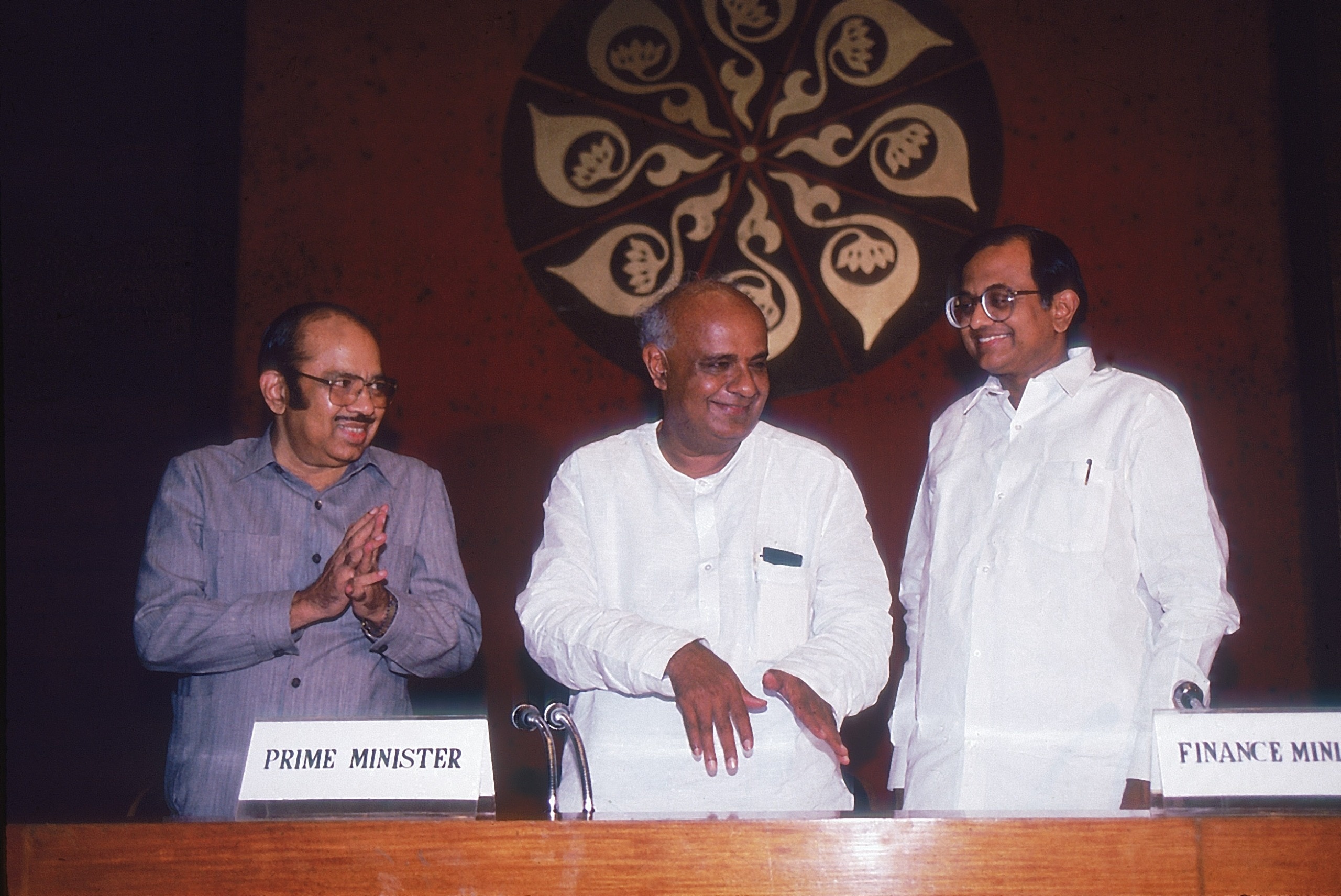
The DMK and the TMC became important members of the national cabinet. Murasoli Maran, P Chidambaram, and TR Baalu held key portfolios, with the Tamil voice now in a position to dictate the national script. This was the beginning of an 18-year era where Dravidian parties were the key holders of the Union ministries.
This significant move from regional politics to the National nursery ensured that the Northern noose was permanently replaced by a Southern partnership. The view from the veranda was now a wide vista from the Cabinet Room, a Legislative leap that changed the federal geography of India forever. From this point, for close to two decades, it was an unrelenting Dravidian invasion of Aryan political turf.
The Tamil Maanila Congress and the DMK were not just partners; they were the power brokers of the coalition. The Common Minimum Program (CMP) of the Deve Gowda government bore a heavy Southern imprint, focusing on federalism and regional autonomy.
It was a unique moment in Indian history where the decision-makers in the national capital were speaking the language of the South, a testament to the seismic impact of the 1996 verdict. The regional players had successfully migrated from the fringes of the Delhi discourse to the very heart of the national body politic.
The DA Detonator: Swamy’s Forensic Fire
With the Rising Sun warming up the fort, the legal chills began in earnest. The first forensic fire was lit by the same intellectual irritant who had started the process: Dr Subramanian Swamy. Having secured the sanction from the earlier governor, the prosecution of the Disproportionate Assets (DA) case now moved from a petition to a process.
The accusations were vivid and staggering in scope. The DA case alleged that Jayalalithaa had accumulated wealth totalling over Rs 66 crore during her five-year tenure—a sum that was deemed a metaphysical leap from her declared source of income of just one rupee per month.
The Sudhakaran wedding was cited as the visual proof of this excess. Swamy’s dossier was a meticulous deep-dive into a world of ghost companies, properties and bank accounts. This was the DA detonator that would eventually lead to a lethal legal explosion.
The Arrest of December
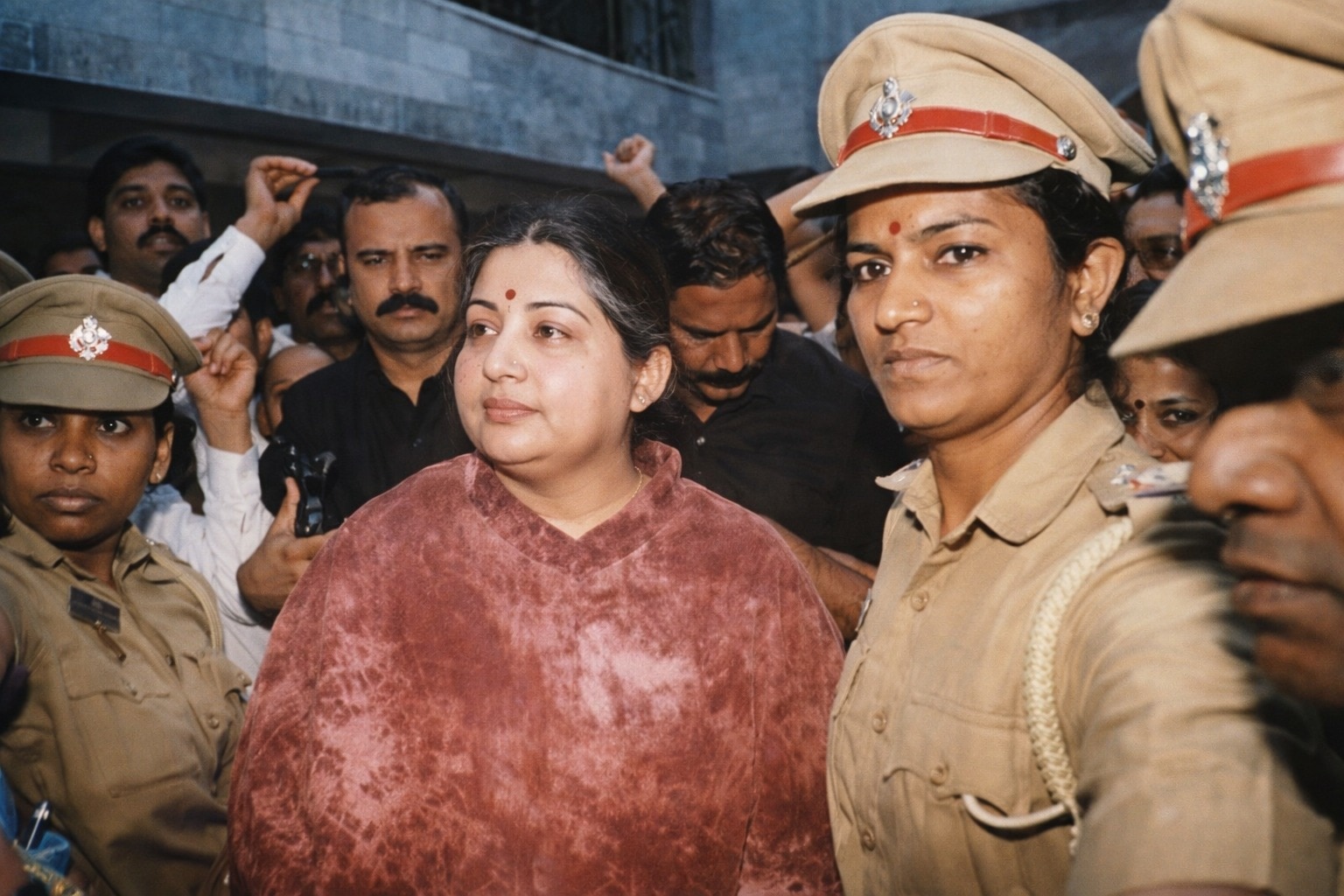
A crawl through circa-1996 unfolds a sequence of summons and scams. While the DA case was simmering, the colour TV scandal became the immediate trap. It was alleged that over 45,000 television sets meant for rural welfare had been purchased at highly inflated prices, with the shadow secretariat pocketing a massive commission.
On the morning of December 7, 1996, the unthinkable happened for Jayalalithaa: She was arrested at her Poes Garden residence. The Big Sister was no longer watching; she was being watched. Escorted by a phalanx of police, she was taken to the Chennai Central Jail.
It was a severe shock to the cadres who had only seen her at the high table. The formidable Puratchi Thalaivi was now Prisoner No. 2535. She would spend the next 27 days in a cell that was a brutal blowback of her previous luxury. The mandate of 1991 had ended in a MISA-like malady of her own making.
Jewels & Jail
The most graphic chapter of the 1996 winter was the Poes Garden raids. As the police and income tax officials moved into the fortress, the parade of the vaults of wealth was revealed to a stunned nation. The raids of the century unearthed a massive, buried treasure:
Wardrobe: Nearly 10,000 stone-laid and silk sarees. Footwear: 750 pairs of slippers, ranging from the domestic to the diamond-studded. Gold: Over 30 kilograms of jewellery and gold ornaments. Abundance of Silver and countless watches.
On balance, it must be said that the exhibition was also an exercise in character assassination and invasion of privacy: the display was disproportionate and one-sided, as Jayalalithaa was once a successful film actress and lived well. The flood of corruption charges and the resulting overflow ended up washing away her hard-earned pool of wealth too. And restarted a fresh round of eye-for-eye vindictive politics typical of TN for decades: Karunanidhi had effectively set himself up as a marked man for future arrest!
Era of Erasure
The post-poll landscape saw a flurry of activity that aimed to scrub the administration of the previous five years. Karunanidhi’s return was characterised by a clinical reversal of the personalised tagging culture. Districts that had been named after various caste leaders—a practice that had often stoked communal fires—were relabelled to reflect geographical or historical neutrality. And many monikers reversed: In an ironic inside job by the clever Karunanidhi, the JJ Film City became Dr MGR Film City.
The capital itself was officially rechristened Chennai, a move that sought to reclaim a local identity from the colonial Madras. This was an era of administrative cleansing, where the new government sought to prove that it was the custodian of a more sober, institutionalised governance.
Law’s Long Arms
Meanwhile, the ripples of the Poes Garden raids extended beyond the former leader. The Directorate of Vigilance and Anti-Corruption (DVAC) launched a systematic sweep of the former cabinet. Ministers and officials who were embroiled in the crematorium shed and sundry scandals, found their assets being calculated with a new, forensic zeal.
The shadow of the household was now under a magnifying glass, as investigators traced the flow of funds through various front companies and land deals. This was a period of high legal theatre, where the headlines were occupied not with policy announcements but with the latest discoveries of the vigilance teams.
In a marked departure from established judicial reporting, judges figured prominently in the news, with many turning household names. In courts, observations and verdicts were directed at the media gallery rather than being addressed to the accused and advocates. No malice intended, but such were the mood and milieu.
Curtains Up, Curtains Down
These images, carried into every household via the burgeoning cable networks, significantly altered Jayalalithaa’s standing with the public. Ordinary citizens who had benefited from the welfare programs of the early nineties were now confronted with the sheer scale of the private collection hidden behind the Garden curtains.
The visuals of jewels and the reality of a jail cell became the defining summary of that era. The leader who had occupied the highest seat in the state was now facing the rigours of a criminal investigation. It was a graphic detailing how the pursuit of excess can undermine even the most significant political achievements.
The Fragility of the Mandate
As the curtain falls on 1996, with Jayalalithaa spending the new year in Chennai Central Jail, the view into that time portal offers a historical lesson on the fragility of power. The year was a tectonic reversal that proved how easily a massive mandate can be lost when the focus shifts from the needs of the many to the greed of the few.
The collective power of the people, a determined opposition and a new-fangled media had performed a clinical operation on the political landscape. Starting well with the schemes of the early nineties need not mean ending well if a parade of pomp leads to an alienation from the people. The year stands as a cautionary tale of how quickly a position of absolute authority can transform into one of legal vulnerability.
Karunanidhi was back, busy rewriting the state’s industrial and social destiny, but the legal proceedings he initiated ensured that the political battle would now be fought in the courtrooms as much as in the council chambers. The Rising Sun had found a renewed place in the national landscape, while the former chief minister faced a long, difficult period of reflection.
The result of 1996 taught the peninsula a simple truth: that authority is held in trust, and when that trust is perceived to be compromised, the public will reclaim it with the quiet, devastating power of the ballot.
Next | Role Reversal: TN's Triumphs, Trends & Turmoils
About


Please rotate your device
We don't support landscape mode yet. Please go back to portrait mode for the best experience