


- Tamilakam’s Travels: Part 1
- Cosmos, Continent, Country: Part 2
- Tamilakam drew its own map: Part 4
- Name Games: Part 5
- Empires, Elites & Europeans: Part 6
- Dravida to Dravidian: Part 7
- The Caldwell Conundrum: Part 8
- Pundit's Paradoxical Passion: Part 9
- Gods, Kings & Grammar: Part 10
- Tolkappiyar: Part 11
- Valluvar: Part 12
- T’rupparam-Kundram: Part 13
- Epic Clash of Faiths: Part 14
- Tamilakam's Epic Counter: Part 15
- Vaishnavism: Part 16
- Tamil and Sanskrit: Part 17
- Anti-Brahminism: Part 18
- Rise & Rifts Part 19
- Bearded Beginning Part 20
- Alliances & Animosities Part 21
- The Thundering Thandhai Part 22
- Shadows and Succession Part 23
- Anna Arch Part 24
- Agitation Alchemy Part 25
- Anna’s CM Crown Part 26
- The Tricolour Twilight: Part 27
- Karunanidhi’s Coronation: Part 28
- Era of Scams & Defiance: Part 29
- Maximum Guarantee Ramachandran: Part 30
- MGR's 'Thottam' Theatre: Part 31
- The Second Show: Part 32
- Accord, Acrimony, Assaults: Part 33
- DMK’s Tiger-Riding: Part 34
- Jayalalithaa’s Crown: Part 35
- The JJ Juggernaut: Part 36
- Karunanidhi Springs: Part 37
- Role Reversal: Part 38
- Mercury Rises in Poes: Part 39
- Amma’s Comeback: Part 40
- An Arresting Personality: Part 41
- Sandalwood Sunset: Part 42
- Back to Future: Part 43
- Thirumangalam: Part 44
- Sangam, Spectrum: Part 45
- The Lady’s Challenge: Part 46
- Jayalalithaa’s Arc: Part 47
- Kalaignar’s Tryst with Tomb: Part 48
- Dravidian Defiance: Part 49
- Tamil Nadu Through Time: Part 50
The AIADMK Aftermath and Kalaignar's Tryst with Tomb
Jayalalithaa had departed, but her absence did not immediately become emptiness. It became occupation, speculation and a scramble for inheritance. The leader, who had made herself the party’s only grammar, was now gone, and the sentences that followed were broken, hurried and often unintentionally comic - a study in fractured syntax where the vowels of grief were frequently drowned by the consonants of greed.
Tamil Nadu had seen mourning before. This time, mourning came with power equations, queue management at Poes Garden and a party trying to discover whether devotion could be converted into succession.
Poes After Power
The immediate aftermath of Jayalalithaa’s death in December 2016 was not merely sorrow. It was spectacle, silence and calculation. The state became a theatre of the absurd where the prompt-box was empty and every actor tried to steal the spotlight during a solemn twilight burial.
Her body had been laid to rest on the Marina, beside MGR, closing one chapter of Tamil Nadu’s film-to-Fort saga with a beachside finality that only this state can produce. But even before the flowers had faded, politics had begun moving through the corridors of absence.
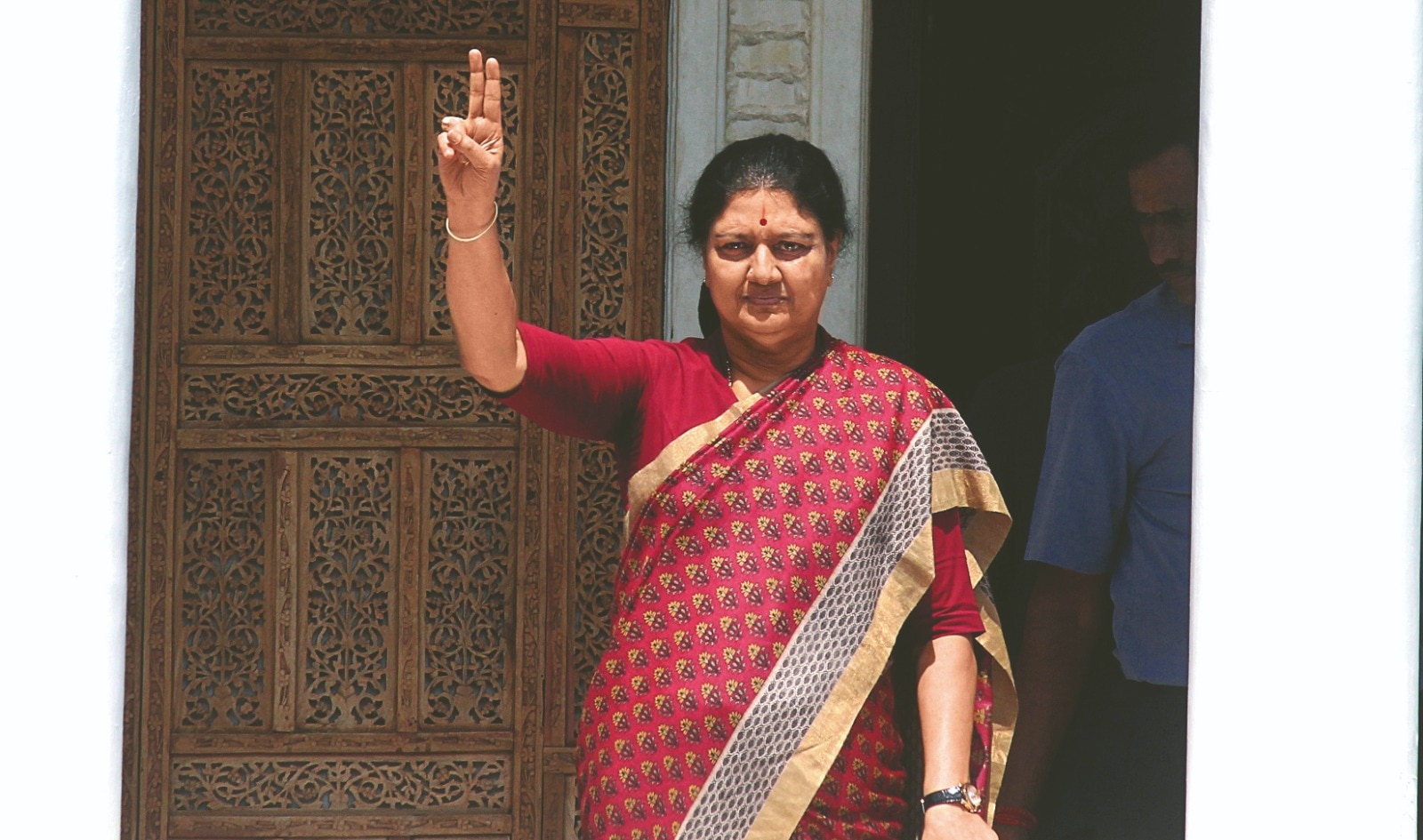
Poes Garden, once the sealed court of Amma, now appeared fully under the control of Sasikala, the companion who had lived in Jayalalithaa’s shadow and was now trying to step into the light without being burned by it. In the AIADMK, proximity was the only curriculum vitae that mattered, and for a few weeks, the video-shop owner was the de facto director of the southern storyline.
For days, political leaders, officials, party functionaries, VIP visitors and even media moguls queued up at Poes Garden, paying respects not merely to memory but to the new arrangement that seemed to be forming. It was a strange procession: half-condolence, half-recognition. The house that had once made visitors wait for the leader was now making them wait before the possible successor. It was a garden governance where the only thing being grown was a fresh batch of sycophancy. The 'Chinnamma' brand was now peddled with ominous haste.
The question was simple but dangerous: could proximity become legitimacy?
In the AIADMK, where Jayalalithaa had deliberately ensured that no second line could become tall enough to cast a shadow, the answer could never be easy. Sasikala had access, memory, money, household authority and the Mannargudi network. What she did not have was mass acceptance, electoral aura or public reverence.
She had been near power for decades. She now wanted power itself. Tamil Nadu watched with the wary curiosity reserved for a supporting actor suddenly announcing herself as the heroine after the star’s exit - a retake that the audience hadn't signed up for.
OPS, Silence and the First Pause
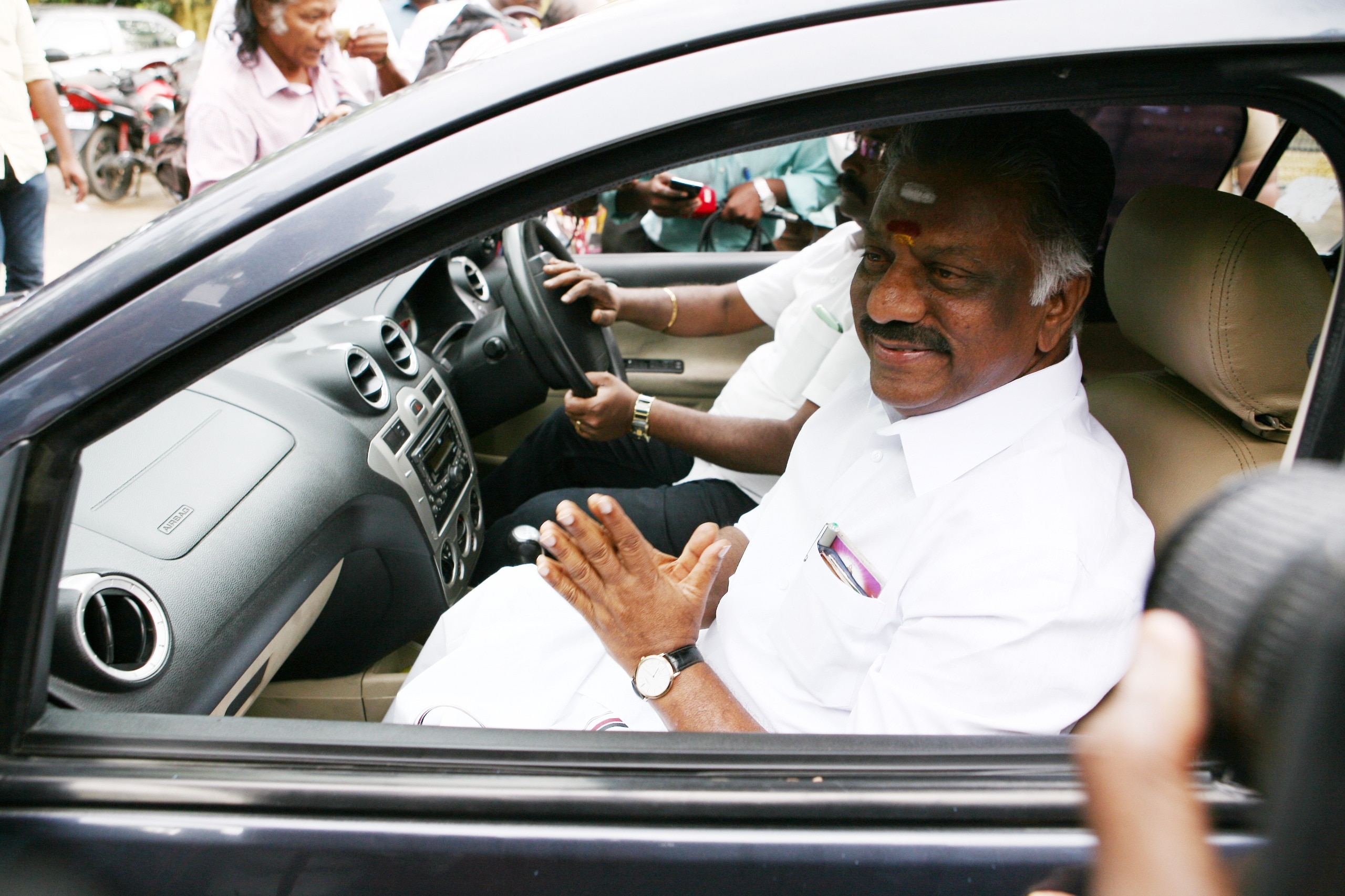
O. Panneerselvam became Chief Minister again in the immediate aftermath, because that was the only script the party knew. He had been the standby custodian twice before, the weeping loyalist who could hold office without claiming authorship. But this time the situation was different. Jayalalithaa was not away in prison or temporarily disqualified. She was gone.
That changed everything.
OPS initially appeared to continue the familiar role - quiet, deferential, careful. But the emotional pressure beneath the surface was different. The party was no longer merely waiting for Amma’s return. It was waiting for someone to own the throne she had vacated. The standby engine was suddenly being asked to fly the plane, and the pilot suddenly found he actually liked the view from the cockpit. Power does that. Impatient OPS sensed he no longer needed to be an ‘Out-Patient Selvam.’
Sasikala’s elevation as AIADMK general secretary seemed to answer these questions formally. Then came the push to make her Chief Minister. The transition was meant to be swift, ritualistic and inevitable. But inevitability in Tamil Nadu has a habit of slipping on its own garland.
Meditation at the Samadhi
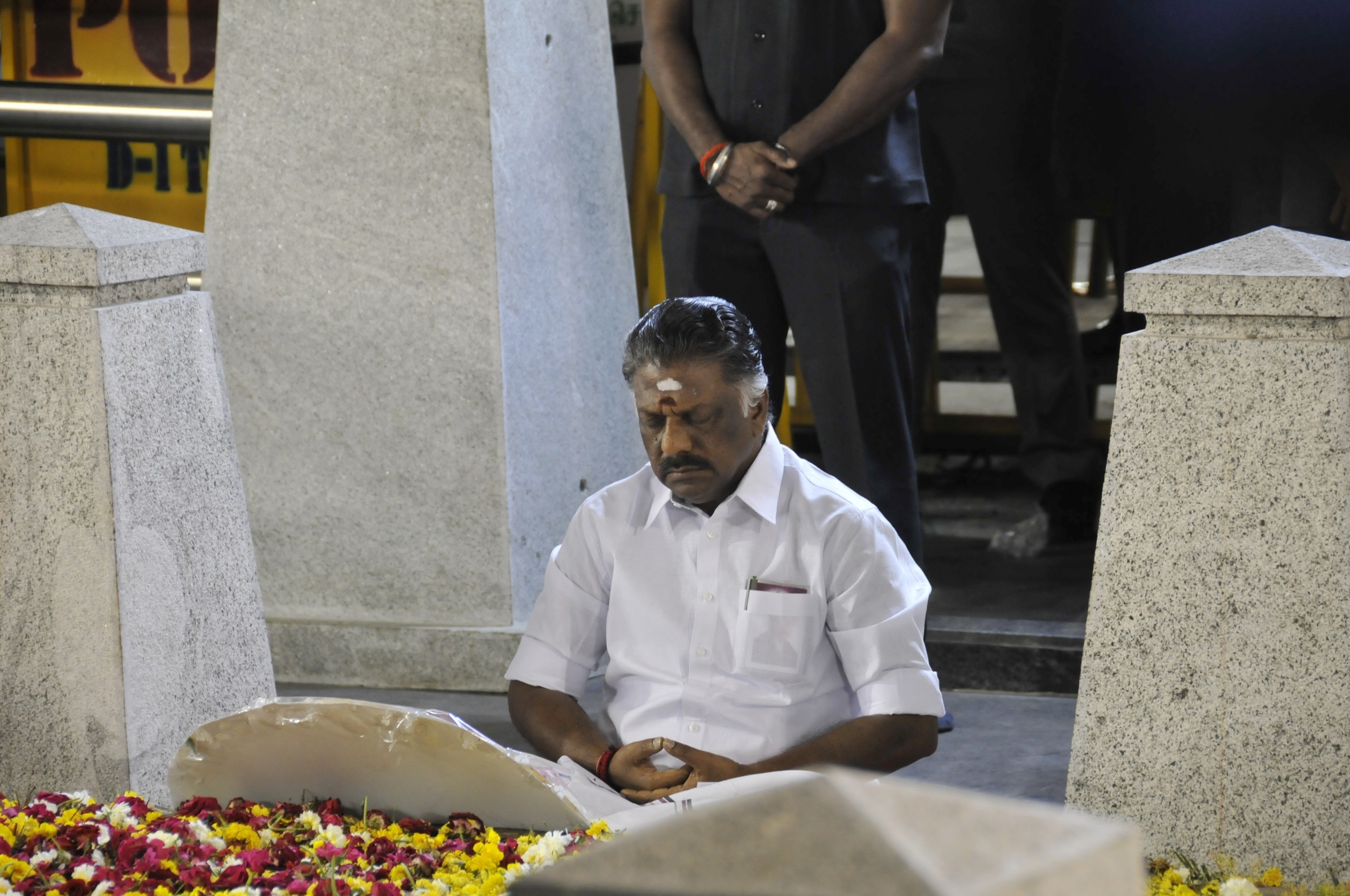
Then, one night in early 2017, OPS walked to Jayalalithaa’s memorial and sat in meditation.
It was one of those moments Tamil Nadu politics produces with perfect instinct: part rebellion, part devotion, part press conference conducted through posture. It was the original Marina Mutiny, where a man who had spent a lifetime bowing now decided to sit. Here was an incumbent chief minister, silent before his leader’s samadhi, preparing to speak not from the secretariat but from the sands of memory.
When he finally broke his silence, the result was explosive. OPS suggested that he had been pressured to resign and indicated that the truth surrounding Jayalalithaa’s death and the succession moves had to be known. It was not merely a political revolt. It was a devotional rebellion — an attempt to claim that loyalty to Amma now required resistance to those who had occupied her house. The standby had finally stood up, turning the quiet of the grave into the clamour of the street.
The symbolism was devastating for Sasikala. OPS had no great mass machinery of his own, but he had found a stage that needed no microphone. Sitting at the samadhi, he turned the memorial into a witness stand. It was a spiritual sting operation that left the garden faction gasping for breath.
Tamil Nadu, which had barely emerged from one season of hospital bulletins and controlled mystery, now entered another phase of whispered intrigue. Who knew what? Who had access? Who had decided? Who had signed? Who had been pushed? The AIADMK was no longer a ruling party. It was a mystery serial with cabinet rank.
Bull on Chennai Sands
Before the AIADMK civil war fully consumed that period, Tamil Nadu witnessed another eruption — this time not from party headquarters but from the sands of the Marina.
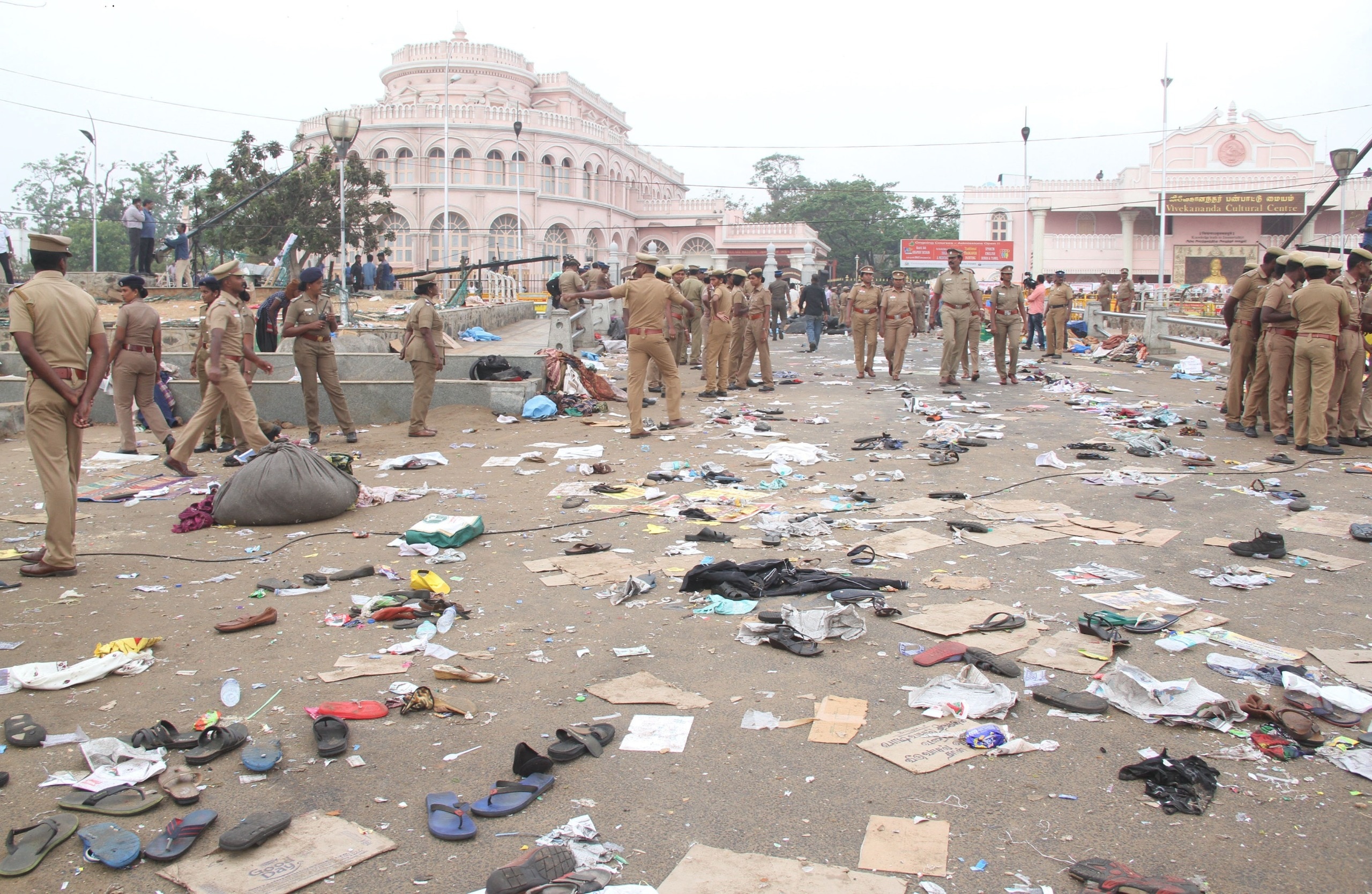
The Jallikattu protests of January 2017 became one of the most remarkable youth uprisings in recent Tamil Nadu history. What began as anger over the ban on the traditional bull-taming sport quickly expanded into a broader assertion of Tamil identity, cultural dignity and distrust of distant institutions. Students, young professionals, families and ordinary citizens gathered in huge numbers, not under the banner of a party, but under the emotional force of Tamil pride. It was a digital dawn where the hashtags were as sharp as the horns, and the youth proved they didn't need a bearded oracle to tell them when to roar.
It was a striking contrast to the AIADMK’s internal convulsions. While the ruling party fought over succession, the youth of Tamil Nadu briefly created a leaderless, decentralised public square. They were angry, articulate, digitally mobilised and instinctively suspicious of all parties that tried to appropriate them.
For a few days, the Marina belonged neither to Anna, nor MGR, nor Jayalalithaa, nor any party flag. It belonged to a generation announcing that Tamil identity could still gather without permission from the old establishments. It was the sand-and-surf version of a democratic reboot.
That too was part of the post-Jaya vacuum. When the main political house trembles, the street sometimes finds its own voice.
Sasikala’s Oath to Fate
Sasikala’s own ascent ended almost before it began. In February 2017, the Supreme Court restored the conviction in the disproportionate assets case. Jayalalithaa, having died, was beyond punishment. Sasikala was not. The verdict ended her immediate claim to the chief minister’s chair and sent her to prison in Bengaluru.
Before leaving, she went to Jayalalithaa’s samadhi and struck it with her hand in a gesture that became instantly iconic — oath, anger, defiance, theatre and threat all compressed into sharp palm-blows on stone. It was an unsettling three-thump oath on the cold granite by a furious femme fatale. It wasn't just a vow; it was a rhythmic assault on the stone of history, a palm-striking spectacle that combined the drama of the screen with the desperation of the street. She was literally banging on the door of the afterlife, demanding a retake that the law had already cancelled.
The image was unforgettable. So was the irony. The woman who had tried to inherit Amma’s political body was now departing for the same prison space that had once held Amma herself. From Poes to prison, the loop was closed with a clinical, judicial finality.
But Sasikala did not leave the field empty. Before going, she helped install Edappadi K. Palaniswami as Chief Minister. Thus began one of the most unexpected survival stories in recent Tamil Nadu politics. The proxy was in place, and a placeholder who refused to be a footnote, now held the iron throne.
EPS: Stopgap Becomes Structure
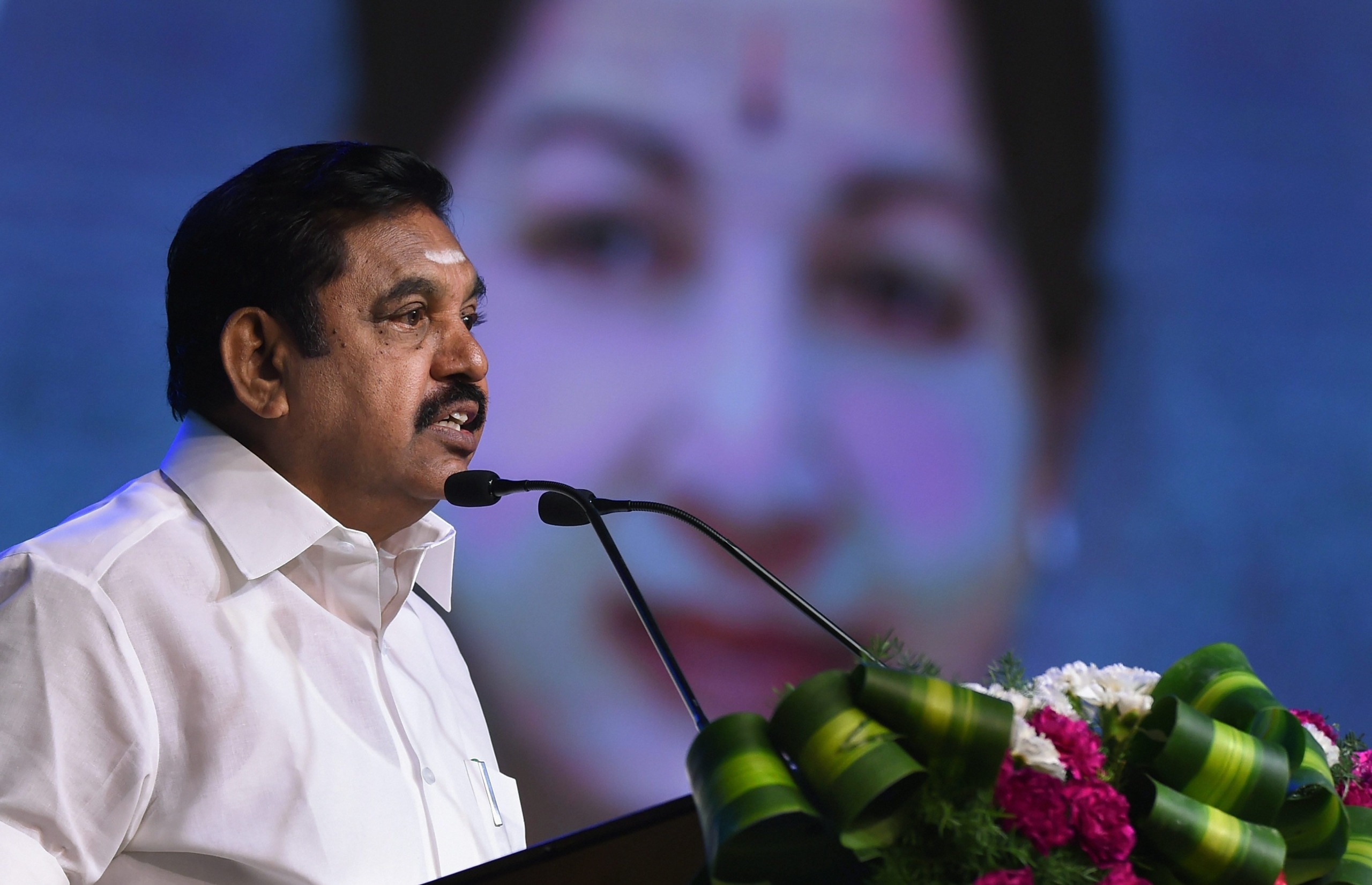
At first, EPS looked like a temporary arrangement—a leader chosen because the real claimant was going to prison and the party needed a figurehead in the chair. Few expected him to last. Fewer expected him to consolidate. But the stopgap had a structural spine that caught the veterans off guard.
But politics has a way of rewarding those underestimated by louder people.
EPS survived the initial storm, faced a confidence vote, managed a restless party, handled factional pressure and slowly converted accident into authority. He did not possess Jayalalithaa’s aura, Karunanidhi’s language or MGR’s myth. What he had was patience, caste-region anchoring, administrative caution and the instinct to hold a damaged house together without pretending it was a palace. He was the administrative clerk who ended up owning the company through sheer attendance and accommodation.
The AIADMK government looked fragile, sometimes absurdly so, but it endured. Ministers who had once cried for Amma now learned to smile for survival. Loyalty shifted from deity to arithmetic. The party that had lived by command now discovered the less romantic but useful art of balancing. It was survival by spreadsheet.
Resorts, Symbols and Pressure Cookers
The AIADMK’s internal battles soon moved from mourning to manoeuvre.
The fight over the Two Leaves symbol became central, because in Tamil Nadu symbols are not merely election marks; they are emotional shorthand. The party factions understood that whoever held the symbol could claim the inheritance more persuasively than any press conference could.
There was resort politics, shifting loyalties, legal claims, Election Commission proceedings and the familiar sight of MLAs being guarded like fragile currency. It was a political poultry-farm where the birds were MLAs and the cage was a five-star hotel. Tamil Nadu had moved from charismatic command to livestock management by another name, only the animals in question wore white shirts and carried constituency weight.
Then came T.T.V. Dhinakaran, Sasikala’s nephew, who tried to turn the family’s remaining network into an electoral challenge. The R.K. Nagar by-election, originally scheduled in March 2017 after Jayalalithaa’s death, was countermanded following allegations of large-scale cash distribution. It was a fitting sequel to the constituency that had been Amma’s last electoral home: even succession had to wait while money did its rounds. The legacy was being auctioned, and the bidders were once again using currency notes as their primary campaign brochures.
When the ‘buy’ poll was finally held later in 2017, Dhinakaran won as an independent with the pressure cooker symbol. The symbolism wrote itself. The AIADMK house was under heat, the lid was rattling, and the man outside the official kitchen had walked away with the whistle. It was a scalding defeat for the official faction, proving that in a vacuum, even a standalone moneybag can sound like a strong mandate.
Merger Without Magic
Eventually, the OPS and EPS factions merged, presenting unity where exhaustion had done much of the work. OPS returned to the fold, EPS continued as Chief Minister, and the party tried to project a reunited face. It was a marriage of convenience where the bride and groom were both looking at the exit signs.
But the merger did not recreate Jayalalithaa’s AIADMK. It created a post-Jaya management board.
Delhi’s shadow also lengthened in this period. The BJP, which had failed to grow organically in Tamil Nadu in the face of Jayalalithaa’s command over Hindu sentiment, now saw opportunity in a leaderless AIADMK. A party without Amma was easier to pressure, flatter, frighten or befriend. The BJP did not need to capture the house immediately. It merely needed to keep a door open and a corridor lit.
This was the new federal theatre of Tamil Nadu after 2016: a ruling state party trying to survive without its deity, a national party trying to enter through the cracks, and a DMK waiting for its turn with characteristic discipline.
Stalin Waits Near the Gate
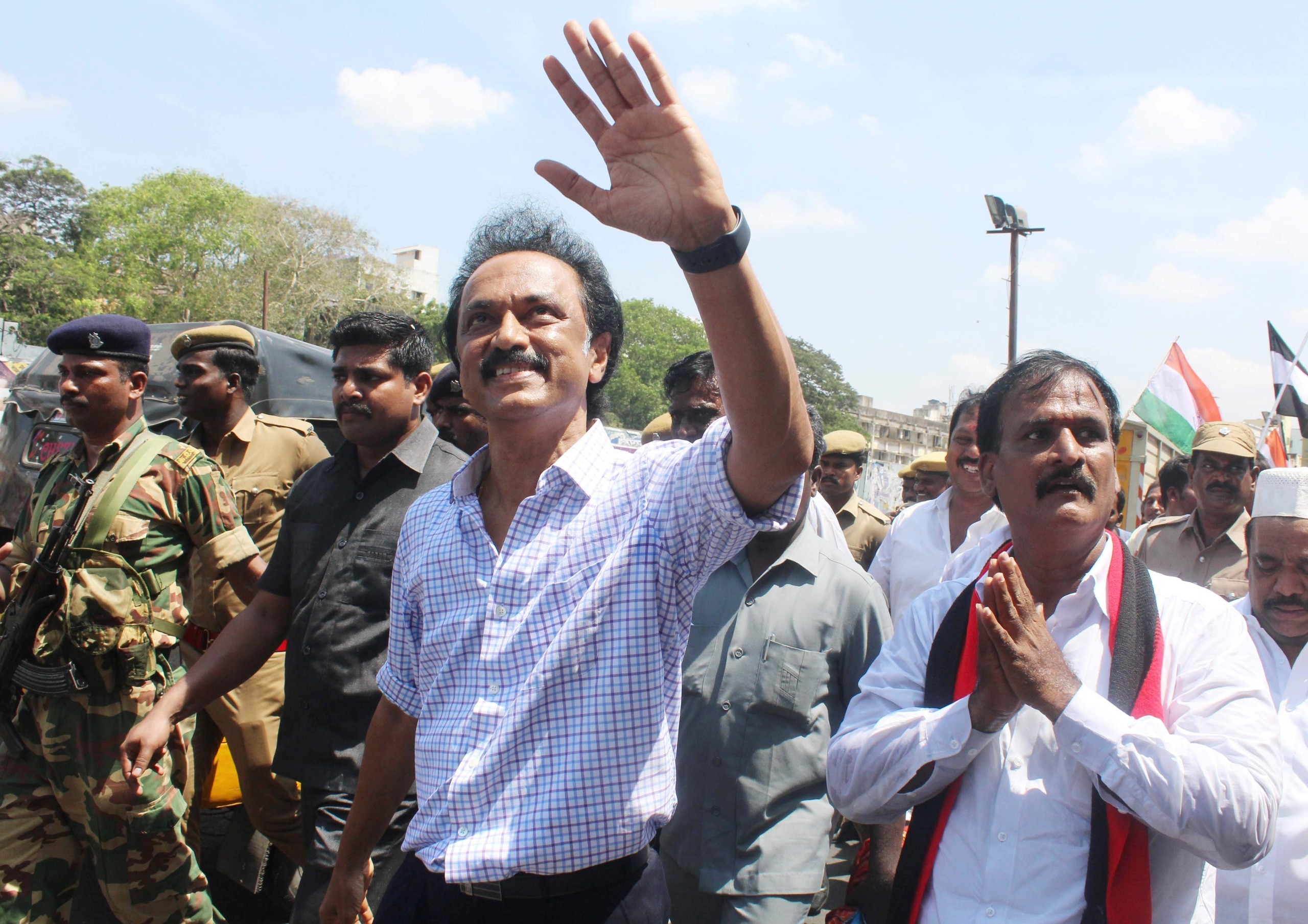
On the other side, the DMK was changing without formally announcing it.
Karunanidhi’s health had declined sharply after 2016. His public presence faded. His voice, once the sharpest instrument in Dravidian politics, fell silent. The party still carried him as symbol, but MK Stalin increasingly ran the organisation in practice.
This was a crucial transition. Stalin had waited for decades, endured comparison, suspicion and delay, and watched younger claimants, louder siblings and impatient observers speculate about his moment. Now, without needing dramatic proclamation, he became the functioning centre of the DMK.
He lacked Karunanidhi’s literary sparkle and improvisational genius. But he had steadiness, organisational patience and a less flamboyant, more managerial temperament. After years of family flame and scandal smoke, that very ordinariness began to look like an asset. He was the tortoise of the southern turf, while the hares were busy fighting over the samadhi.
The DMK did not have to storm the Fort immediately. It had to wait while the AIADMK learned the cost of living without Jayalalithaa.
NEET, Anitha and the New Anger
The post-Jaya years also brought a different kind of agitation to Tamil Nadu — one that exposed the emotional gap between policy and social justice.
The introduction and enforcement of NEET as the gateway to medical admissions struck deeply at Tamil Nadu’s long-standing educational and reservation-linked imagination. For a state that had built its modern political self-image around social mobility through education, centralised entrance testing felt not merely administrative, but civilisationally intrusive. It was seen as a northern filter being used to clog the southern pipeline.
The suicide of Anitha, a young Dalit student from Ariyalur who had scored highly in the state board system but lost out under NEET, became a searing symbol of this anger. Her death turned an acronym into anguish. It gave the anti-NEET protest a face, a family, a village and a wound. It was the moment where the cold logic of the exam met the hot reality of the grave.
For the DMK, it was an issue that aligned with its old vocabulary of social justice. For the AIADMK government, caught between state sentiment and central authority, it became a test of both autonomy and credibility. For ordinary Tamil Nadu, it reinforced a familiar suspicion: Delhi, once again, did not understand the state it was in a hurry to standardise.
Cauvery: The Old River Wound
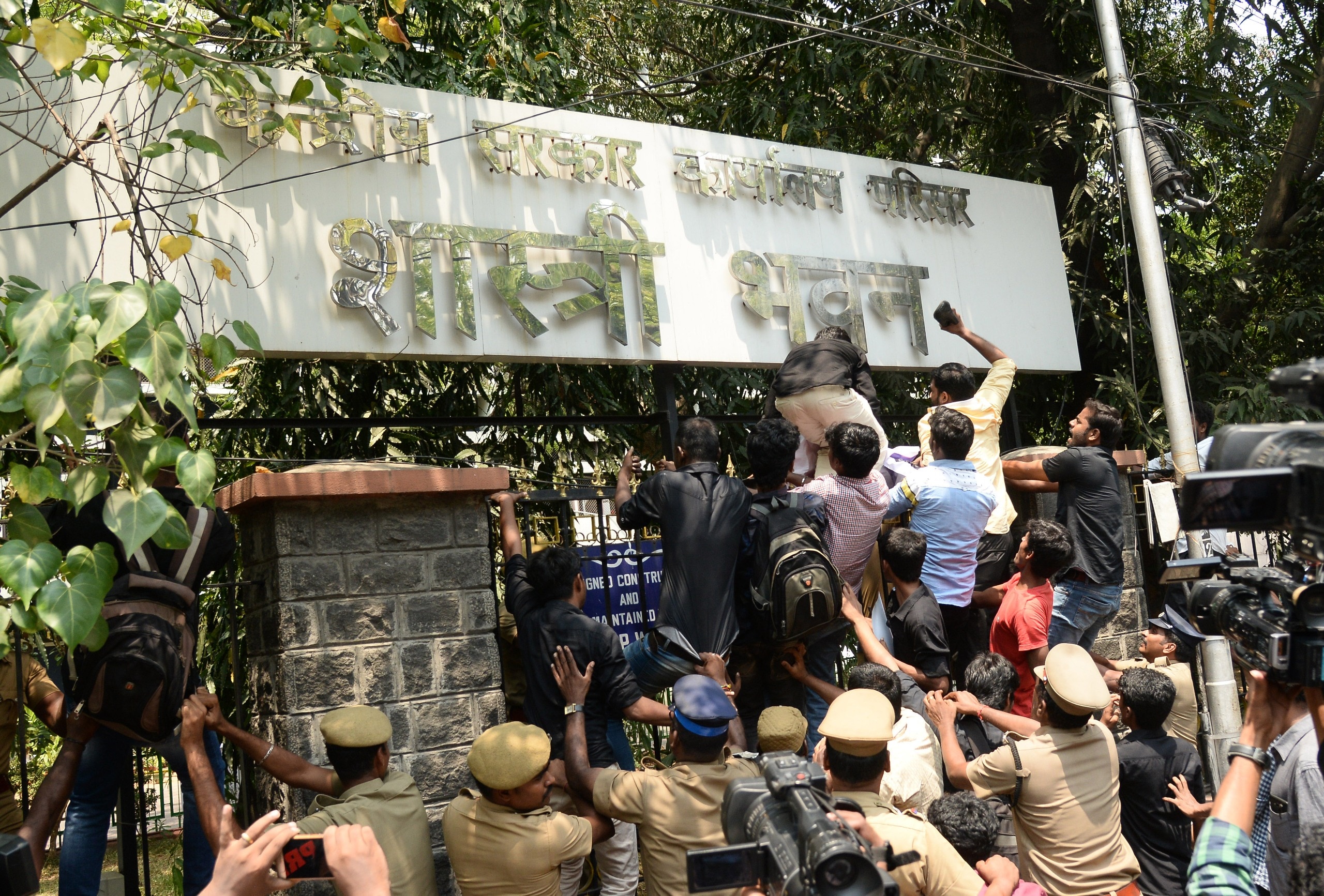
The Cauvery issue too returned, as it always does, not as a new dispute but as an old wound reopened by season, court and politics.
In 2018, anger over the delay and dispute surrounding the Cauvery management mechanism spilled into public protests. Tamil Nadu’s farmers, parties and civil society groups once again framed the matter as a question of justice denied by Delhi and dignity denied by Karnataka. The river was dry, but the rhetoric was flooding the streets.
For a marooned AIADMK, the issue was particularly difficult. Jayalalithaa had turned Cauvery into a personal legal and political campaign. Without her, the government struggled to project the same intensity of ownership. EPS tried, but the shadow of the absent leader fell across every river argument. The water flowed as slowly as justice, and the state looked smaller without the queen.
Thoothukudi: Sterlite and the State’s Bullet
Then came Thoothukudi. In May 2018, protests against the Sterlite copper plant culminated in a police firing that killed 13 people. It was one of the darkest moments of the EPS government and a brutal reminder that administrative survival is not the same as moral authority. The state’s iron fist had become a lead bullet, and the silence that followed was deafening.
The protests had grown out of long-standing environmental, health and livelihood concerns. But the state response turned a local agitation into a national outrage. Images of firing, grief and anger travelled widely. Questions rose about policing, intelligence, political judgment and the distance between government and the ground.
For a regime already seen as mechanically surviving rather than morally commanding, Thoothukudi became a deep scar.
Kalaignar’s Last Silence
While Tamil Nadu moved through these convulsions, Karunanidhi was fading into silence. For seventy-five years, he had been the rhythmic pulse of the Tamil tongue, a man whose teenaged fire grew into a civilisational furnace. He didn't just write the script; he was the script.
For a man who had lived by words, silence was the cruelest twilight. His life had stretched across nearly a century of Tamil politics, cinema, language movements, legislative battles, street agitations, ideological wars, coalition manoeuvres, personal humiliations and repeated returns. He had outlived MGR. He had outlived Jayalalithaa. He had outlasted friends, enemies, allies, rebels, critics and generations of voters who had alternately worshipped, rejected and restored him. He was the unyielding oak of the Dravidian orchard, and the wind had finally stopped blowing.
His endurance was his greatest weapon. If MGR had mastered affection and Jayalalithaa had mastered command, Karunanidhi had mastered waiting. He could wait out rivals, wait out defeats, wait out insults, wait out court cases, wait out Delhi, and often wait out history itself. He was the marathon runner of the southern soil, and his final mile was a long, dignified crawl through the annals of time, tides and Tamil itself.
But by 2018, waiting had become stillness.
When he died on August 7, 2018, it was not merely the death of a former chief minister. It was the closing of one of the longest and most complex political careers in modern India. The pen had finally run out of ink, and the state felt the weight of a century coming to an end.
Script, Screen, Street and State
Karunanidhi’s obituary cannot be written only in the language of office. It must be written in the language of the pavement, the projector and the parliament. He was a pen master and a polemic powerhouse who held sway over the southern mind for seven and a half decades, moving from the revolutionary scripts of the black-and-white era to the digital governance of the new age.
He was a five-time chief minister, yes. But he was also a writer who converted words into weapons, a screenwriter who carried Dravidian politics into the cinema hall, an orator who could make ideology sound like intimacy, and a party-builder who understood the power of symbols, structure, and stoic sagacity. He was the master of the syllable, a leader who could wound with a phrase and heal with a pun.
He was not without flaws; indeed, his flaws grew heavier in his evening. Family had narrowed his moral field. Succession had strained his party. The bloodline had damaged the brand line. The scandals of the late DMK years had dimmed his administrative reputation. The man who had once seemed to speak for a broad social movement often appeared, toward the end, trapped by the anxieties of inheritance. The patriarch had become the prisoner of his own lineage.
Yet to reduce him to those final shadows would be unjust. His contribution to Tamil Nadu’s social and political vocabulary was immense. He belonged to the line of leaders who made language a mass force, caste critique an electoral grammar, cinema a political classroom and welfare a route to dignity. He taught the Tamilian to speak for himself, and for seventy-five years, that voice was also his own.
He was sharp, vain, wounded, brilliant, patient, partisan, funny, ruthless and astonishingly resilient. He could be petty. He could also be profound. He would lose with seeming finality only to survive with a smile. He turned defeat into postponement and postponement into winning strategy. He was the scriptwriter who never allowed the director to call ‘cut’ on his career until the very end.
For decades, Tamil Nadu did not merely watch him. It argued with him.
The Last Battle for Marina
Even after death, Karunanidhi had one last political battle to fight — or rather, his party had to fight it for him. The final legislative skirmish was over six feet of earth. Even with his eyes closed forever, he forced the state to litigate his right to rest—a poignantly fitting encore for a man who had made the courts his second office.
The AIADMK government initially refused space for his burial on the Marina, near Anna, offering instead another site. The decision instantly became more than an administrative matter. For the DMK, burial near its cherished founder was not sentiment alone; it was ideological lineage, political legitimacy and Dravidian geography. It was a rational fight for the map of the afterlife.
Through the night, lawyers argued, cadres waited, and a state watched. It was poignantly fitting. The man who had spent a lifetime turning politics into text and text into politics now had his final resting place decided through legal argument. The courtroom became the last stage for the pen-master’s ultimate act.
The court allowed the burial on the Marina. Karunanidhi was laid to rest near Anna, closing a circle that had begun in the Dravidian movement’s early fire and ended on the sands where Tamil Nadu places its political gods. The battle for the beach was won, and the Kalaingar was home.
TN’s J and K: Two Towers, Same Shore
By August 2018, the Southern skyline was permanently altered. The adversaries who defined the post-MGR era became memorials on the Marina coastline. The duel ended, but the resonance was eternal. Jayalalithaa near MGR; Karunanidhi near Anna. The shore became a sanctuary of ghosts, a Dravidian Pantheon of sand and surf where its demigods rested in granite peace.
The duopoly endured, but the duelists were gone, leaving the state to heirs, standbys, and newcomers. In this total vacuum, the silence invited a new script. The AIADMK held a government without an Amma; the DMK an heir without a Kalaignar. As the BJP circled the cracks and the youth roared over Bulls, NEET and Sterlite, the old certainties lost their faces.
The Oracles and Orators were gone; the audience awaited the next retake. Tamil Nadu buried an era twice in two years, leaving the ground shifting beneath those who remained.
About


Please rotate your device
We don't support landscape mode yet. Please go back to portrait mode for the best experience