


To turn coal into much-needed gas and fertiliser, India promises Rs 37,500 crore
As global energy shocks have exposed India's import vulnerabilities, New Delhi is betting big on coal gasification to turn its vast domestic reserves into fuels, fertilisers and chemicals. India has coal reserves that can last 200 years. The Modi government this week approved a Rs 37,500-crore scheme to promote gasification projects.

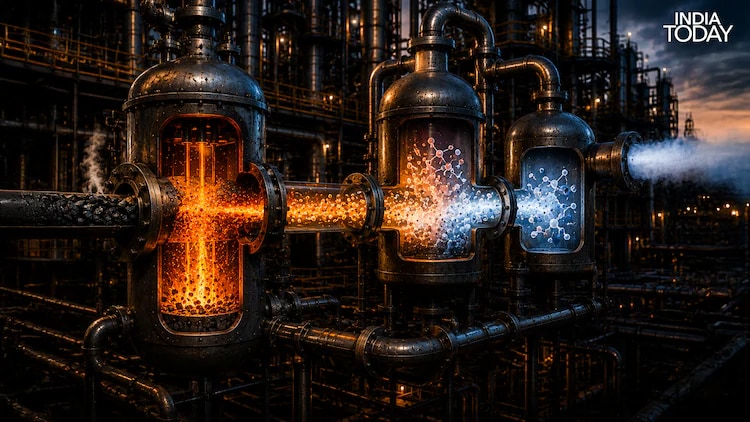
Through coal gasification, India can reduce its dependency on imported commodities like LNG, urea, ammonia, coking coal among others. (Image for Representation: AI)
New Delhi,UPDATED: May 15, 2026 16:53 IST
India sits on enough coal reserves to last nearly 200 years, but for decades, much of its economy has still depended on imported gas, fertilisers and industrial chemicals. Now, rattled by disruptions caused by the Iran war, New Delhi wants to turn that coal into a strategic shield, much like its solar manufacturing push.
With this strategy in mind, the Centre has unveiled its most ambitious coal gasification push yet. The process of coal gasification could help India convert its vast coal reserves into fertilisers, synthetic gas and industrial chemicals that are currently imported at massive cost. Instead of burning such massive reserves in thermal power plants, India now wants to use the coal to produce higher-value fuels and industrial chemicals.
India's Union Cabinet on Wednesday approved a Rs 37,500 crore scheme to promote surface coal and lignite gasification projects. The move, which is aiming to hit an annual target of gasifying 100 million tonnes of coal by 2030, seeks to strengthen India's energy security and cut dependence on imports of LNG, urea, ammonia and methanol.
Under the scheme, the government will provide incentives covering up to 20% of plant and machinery costs, capped at Rs 5,000 crore per project. It aims to gasify 75 million tonnes of coal annually, attract up to Rs 3 lakh crore in investments, create 50,000 jobs, and generate around Rs 6,300 crore in yearly revenue.
COAL GASIFICATION SCHEME COMES AMID US-IRAN WAR, GLOBAL ENERGY CRISIS
This scheme comes at a critical time, when the US-Iran war has thrown into sharp focus India's critical dependence on imported energy, chemicals and fertilisers. Supplies of these critical goods were interrupted over the course of the conflict. Amid this, India raised the price of diesel, petrol and commercial LPG for the first time in years, while paying double the market price to secure imports of critical fertilisers like urea.
The coal gasification scheme seeks to change that. "We all know about the current geopolitical situation. So we have to take all the decisions to become Atma Nirbhar. In this context, a big decision on coal gasification was taken today," Union Information and Broadcasting Minister Ashwini Vaishnaw was reported by PTI as saying.
While India has been pushing for coal gasification through the National Coal Gasification Mission launched in 2021 and a Rs 8,500-crore incentive scheme approved in January 2024, the latest initiative is by far its biggest push yet.
Alongside coal gasification, the government is accelerating renewable energy capacity addition towards the 500 GW non-fossil target by 2030, expanding nuclear power, promoting ethanol blending with petrol towards the E85 standard, advancing the National Green Hydrogen Mission, and boosting domestic oil and gas exploration.
WHAT IS COAL GASIFICATION?
Before exploring why India's coal gasification push matters, it is important to first understand the process itself.
Coal gasification refers to the process of converting dry fuel into synthetic gas (syngas), which is used as an alternative fuel and helps reduce carbon emissions. This process supports production of methanol, fertilisers, hydrogen and chemicals, cutting reliance on imports.
The process works under extreme heat and pressure. Crushed coal is fed into the gasifier, where it is exposed to a carefully controlled amount of oxygen along with steam. Temperatures inside can rise to 1,600 degrees Celsius, but because the oxygen supply is deliberately restricted, the coal does not fully combust.
Instead, the carbon atoms break apart and chemically react with oxygen and hydrogen from the steam, turning the solid coal into syngas.
Engineers can further process this gas through reactions such as the water-gas shift to increase hydrogen output or convert it into synthetic natural gas, methanol, ammonia, urea, or even liquid fuels through industrial methods like Fischer-Tropsch synthesis.
India's coal, however, presents a major engineering challenge because it has an unusually high ash content, often between 30% and 45%, far higher than global averages. In conventional gasifiers, this ash can melt and clog the reactor.
To solve this, Indian researchers and engineers are developing fluidised-bed gasifiers, where coal particles are suspended in a stream of hot gas rather than packed tightly together. This allows the particles to mix more evenly while keeping temperatures low enough to prevent ash from fusing inside the reactor. Institutions such as Indian Institute of Technology Kanpur have already carried out pilot-scale experiments tailored specifically for India's high-ash coal.
WHY IS COAL GASIFICATION IMPORTANT FOR INDIA?
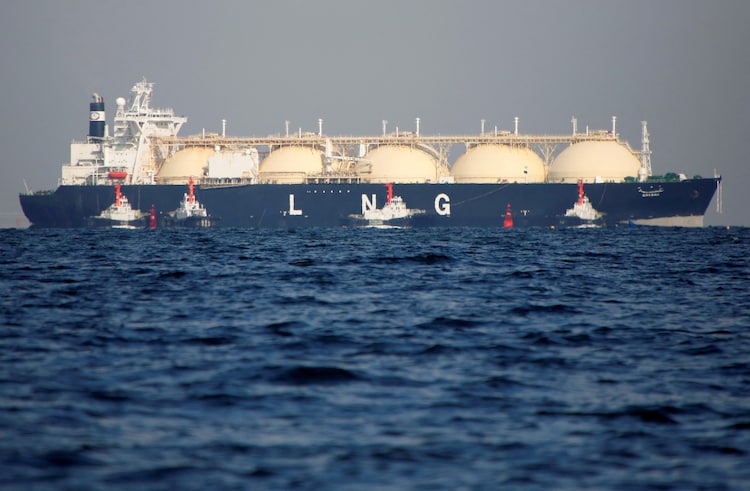
India has long depended heavily on imported gas and petroleum-derived products such as fertilisers, methanol and ammonia. This dependence not only leads to massive foreign exchange outflows, but also leaves the country exposed to global price shocks, geopolitical disruptions and currency volatility.
The vulnerability has become especially visible amid the ongoing US-Iran war, where disruptions around the Strait of Hormuz have rattled energy supply chains and driven up costs for import-dependent economies like India.
According to PTI, India's import bill for key products that could potentially be substituted through coal gasification, including LNG, urea, ammonium nitrate, ammonia, coking coal, methanol and DME, stood at around Rs 2.77 lakh crore in FY25. Supply disruptions from the Middle East forced New Delhi to source several of these commodities from alternative markets at significantly higher prices, underlining the risks of excessive import dependence.
It is this strategic vulnerability that India’s coal gasification push aims to address. By converting domestic coal into syngas and downstream products, the government hopes to gradually replace imports with locally produced alternatives.
"At present, more than 50% of the LNG is currently imported, it will be reduced. The urea which we import will also start manufacturing in India. Ammonia is 100% imported today. With this development, new avenues for ammonia production will open. Methanol is currently 80-90% imported that will also be made in India," Union Minister Ashwini Vaishnaw told PTI.
CAN INDIA RELY ON COAL GASIFICATION TO SOLVE ITS IMPORT WOES?
So, can India realistically rely on technology to meaningfully reduce, if not fully eliminate, its dependence on imported energy and industrial feedstocks?
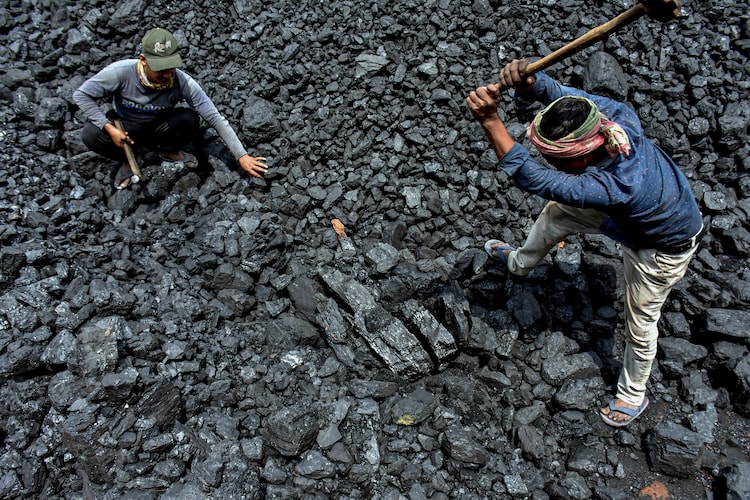
Firstly, does India have enough coal? The answer is yes. India has one of the largest coal reserves in the world, most of it of the lignite type, used mainly for power generation. According to Vaishnaw, the country has 401 million tonnes of known coal reserves, which is enough for the next 200 years. And with New Delhi steadily reducing thermal power generation, it means that more of India's vast coal reserves will be available for gasification.
Second, is coal gasification commercially viable in India? Again yes. The Centre will support up to 20% of plant and machinery costs through milestone-linked incentives, with project support capped at Rs 5,000 crore, in a scheme expected to mobilise Rs 2.5–3 lakh crore in investments, reported the news agency PTI. This utilisation of coal and lignite is likely to generate Rs 6,300 crore annually from 75 million tonnes of gasification envisaged under the scheme, plus downstream revenue from GST and other levies.
Furthermore, other countries have also used coal gasification successfully. Take for instance, China, which produces 78% of its domestic urea demand from coal. As a result, in the course of the Iran war, while urea prices outside China surged by about 70%, Beijing, which maintained ample stocks, kept domestic prices roughly a third of international benchmarks, reported the wire agency Reuters.
Coal already accounts for more than 55% of India's energy mix. If the country can successfully deploy coal gasification at a commercially viable scale, it could use its vast domestic coal reserves to produce critical fuels, chemicals and fertilisers, reducing dependence on expensive imports while shielding itself from global supply disruptions and price volatility.
- Ends